
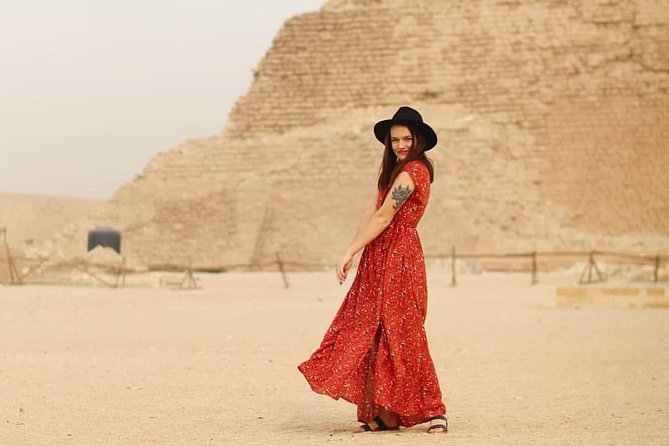
Review · NILE CRUISES
10 Days Cairo Luxor and Aswan with Nile cruise and round flight
Ancient Egypt comes at you fast. This 10-day private journey links Cairo’s pyramids, Alexandria’s Roman remains, and a four-night Nile cruise between Luxor and Aswan, with domestic flights saving you long hours on the road. I especially like the private air-conditioned car and the fact that your group has its own guide rather than being folded into a large coach tour.
The price of $1,800 per person also covers a great deal: Cairo hotels, an Alexandria hotel, a full-board cruise cabin, two domestic flights, meals, transport, and guiding. My main caution is that the schedule is busy, and a few practical details need confirming before you pay, including the exact Cairo hotel nights and what happens after disembarkation in Aswan.
Key points to know before booking
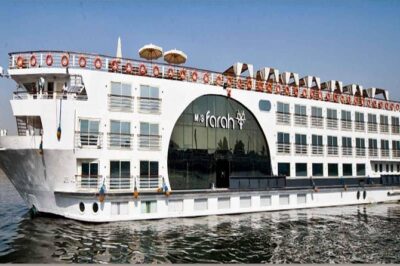
- Four nights on the Nile: The cruise connects Luxor, Edfu, Kom Ombo, and Aswan, with meals and a private cabin included.
- Two domestic flights: You fly from Cairo to Luxor and from Aswan back to Cairo, avoiding a long overland transfer.
- Private touring: Your own guide and air-conditioned car allow more direct assistance and less waiting for other groups.
- Cairo’s main sights in one day: The Egyptian Museum, Giza Pyramids, Sphinx, and Khan El Khalili are packed into an eight-hour visit.
- Alexandria adds a different Egypt: Roman theater ruins, Pompey’s Pillar, and the catacombs give the trip a Mediterranean and classical feel.
- Optional Abu Simbel and Saqqara: These major sites cost extra, $120 per person for Abu Simbel and $70 per person for Saqqara and Memphis.
What the $1,800 price really covers
At $1,800 per person, this is not a bare-bones sightseeing package. You receive four nights in Cairo hotels, one night in Alexandria, four nights aboard a Nile cruise, private transport, a private guide, two flights, taxes and fees, and meals listed as breakfast, lunch, and dinner.
That bundle can offer good value because Egypt’s major sights are spread across several cities. Instead of arranging Cairo transport, flights, hotels, cruise space, and local guides separately, you have one company coordinating the main pieces.
The cruise is especially important to the price. Four nights of full-board accommodation on a private cabin gives you a moving base between Luxor and Aswan. Meals, afternoon tea, and evening programs are included, although drinks are not. You should budget separately for beverages, entrance visa costs, and tips.
The biggest question is not the price itself, but the exact standard of the hotels and cruise boat. The information gives the number of nights but not hotel names, cabin category, or room views. Ask for those details before booking. A private tour can be excellent value, but room quality and cruise standards affect how comfortable the ten days feel.
More Nile Cruises in Cairo:
- Cairo: Dinner Cruise on the Nile River with Entertainment
★ 4.2 · 2,190 reviews - Cairo: Nile Dinner Cruise with Belly Dancer Show with Pickup
★ 4.4 · 835 reviews - Cairo: Dinner Cruise on the Nile River
★ 4.2 · 741 reviews
Day 1: A simple Cairo arrival
Your first day is designed to get you from Cairo Airport to your hotel by private air-conditioned car. The representative meets you at the airport and assists with the transfer.
That is useful after an international flight. You do not need to negotiate a taxi immediately or work out the route to the hotel while tired. The published schedule allows about four hours, though the actual transfer time depends on traffic and your arrival arrangements.
Do not expect much sightseeing on this first day. It is mainly an arrival and check-in day, which is sensible because Cairo can be tiring even before the monuments begin.
Day 2: Pyramids, the Egyptian Museum, and Khan El Khalili
The second day is the most concentrated Cairo sightseeing day. After breakfast, you visit the Egyptian Museum, the Giza Pyramids, the Sphinx, and Khan El Khalili Bazaar.
The Egyptian Museum gives you a broad introduction to ancient Egypt. Its collection includes objects from around 5,000 years of Egyptian art, with more than 250,000 artifacts listed in the tour description. The Tutankhamun collection of gold, jewelry, and burial treasures is a major draw.
Your guide matters here. A large museum can become a blur of statues and cases without a clear route. Ask your guide to focus on the pieces that best explain royal power, burial customs, and daily life rather than rushing past everything.
The Giza visit covers the Great Pyramid of Cheops, the Pyramid of Chephren, and the Pyramid of Mykerinos. You also stop at the Sphinx, with its lion body and royal face. The site is iconic, but the eight-hour day also includes two other major stops, so the time at each place may feel structured rather than leisurely.
Khan El Khalili adds a sharp change of pace. Its shops sell brassware, copper goods, perfumes, leather, silver, gold, antiques, and other souvenirs. I would treat this as a place to browse and compare prices, not a quick dash for gifts. The bazaar is part of the Cairo experience, but shopping can take more energy than expected.
Breakfast is included at the hotel. The itinerary does not clearly spell out lunch on this day, so confirm whether it is included or whether you should plan to pay separately.
Day 3: Flying to Luxor and seeing Karnak at sunset
You leave Cairo early for the flight to Luxor. From Luxor Airport, a private transfer takes you to the Nile cruise boat, where boarding occurs before lunch.
This flight is a smart use of time. Egypt is large, and moving from Cairo to Luxor by road would take much longer. Once aboard, lunch is served before the first major sightseeing session.
The afternoon covers Luxor Temple and Karnak Temple. Luxor Temple is known for its courtyard, monumental statues of Ramses the Great, and its connection to the ancient ceremonial center of Thebes. Karnak is not just one temple, but a vast group of temples built over different reigns.
The planned route includes the Avenue of Sphinxes, the unfinished propylon, the Hypostyle Hall with its 134 huge columns, obelisks connected with Hatshepsut and Thutmose III, and the temple of Amun. There is also a granite scarab associated with Amenophis III.
This is a lot for about six hours, especially after an early flight. Wear practical shoes and keep water close. Drinks are not included, so you will need to buy them separately.
A few more river trips around Cairo worth comparing
- 2-Hour Nile River Dinner Cruise From Cairo
★ 4.5 · 672 reviews - ViP Private Effective Nile River Dinner Cruise in Cairo
★ 4.5 · 370 reviews - Nile River Dinner Cruise on a Yacht with Open Buffet
★ 4.5 · 292 reviews - Cairo Dinner Cruise in Nile River With Belly Dancer & Tanora show
★ 4.5 · 256 reviews
Day 4: The Valley of the Kings and the West Bank
The West Bank of Luxor is one of the strongest days of the tour. After breakfast aboard the ship, you visit the Valley of the Kings, the Colossi of Memnon, and the Temple of Queen Hatshepsut at Deir El Bahari.
The Valley of the Kings is about enclosed tombs rather than grand exterior buildings. You visit tombs from different dynasties, where painted walls and burial scenes help explain the beliefs behind royal funerals. The exact tombs can vary, so ask your guide which ones are open that day.
The Colossi of Memnon provide a short stop with two huge seated statues of Amenophis III facing the Nile. They are easy to photograph, but the real value is the scale. These figures remind you how much power ancient rulers put into public monuments.
Deir El Bahari, the temple of Hatshepsut, has terraces cut into the rock at the edge of the desert. Hatshepsut’s reign is especially interesting because she ruled as a woman in a system built around male kingship. Your guide can help connect the architecture with her political story.
After lunch, the ship sails toward Esna. Afternoon tea, a disco party, and an overnight stay in Edfu are included in the schedule. The day is listed as about two hours for sightseeing, though the full program, including sailing and meals, occupies much more of your day.
Day 5: Edfu and Kom Ombo by boat
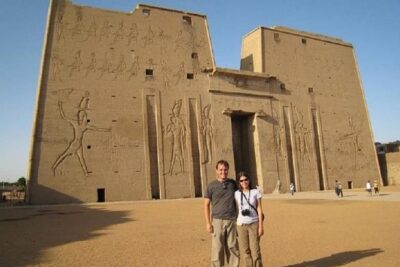
The morning visit is to the Temple of Horus at Edfu. This is one of the best-preserved ancient Egyptian temples, and its condition makes it easier to picture how a functioning temple complex once looked.
The ship then sails to Kom Ombo for lunch and another temple visit. Kom Ombo is unusual because it was dedicated to two gods, Sobek and Haroeris. Sobek had the form of a crocodile, and the shared design reflects the temple’s double religious role.
Afternoon tea, dinner, and a galabya party are planned aboard the ship. These evening programs can be fun, but they are optional in spirit even when placed on the schedule. If you are tired, the Nile views and an early night may be more rewarding than a party.
The cruise format gives this day a pleasant rhythm: breakfast, a temple, sailing, lunch, another temple, then time aboard. It is far less rushed than trying to move between these places by road.
Day 6: Aswan, Philae, and a felucca ride
After breakfast, the ship reaches Aswan. The day includes the High Dam, the granite quarries, and the Temple of Philae, followed by a felucca ride around Kitchener’s Island and the Aga Khan Mausoleum.
The High Dam is a modern engineering project with a major effect on the Nile Valley. It also led to the relocation of important ancient monuments, including Philae. The granite quarries show how the stone used in temples and obelisks was extracted, including the famous unfinished obelisk.
Philae is dedicated to the goddess Isis and was moved to protect it from rising water after the dam was built. Its island setting makes it different from the temples visited earlier. The itinerary does not specify every transfer detail, so ask your guide how the visit is arranged.
A felucca ride offers a quieter hour on the river. You pass Kitchener’s Island and the Aga Khan Mausoleum from the water, giving you a change from enclosed tombs and massive temple walls. Lunch, afternoon tea, and dinner are included aboard the ship.
Day 7: Disembarkation and optional Abu Simbel
After breakfast, you leave the cruise and transfer to Aswan Airport. This is the point where you should confirm the day’s timing carefully. The itinerary names Cairo as the destination but describes transfer to Aswan Airport, and it does not clearly state the exact Cairo hotel arrangement for that night.
Abu Simbel is offered as an optional excursion for $120 per person. The visit includes the temples of Ramses II and Nefertari, which were saved from the rising waters of the Nile. Their huge rock-cut facades and connection with the relocation project make them among Egypt’s most remarkable monuments.
The extra cost is reasonable for the distance and significance, but it adds another demanding day to an already full program. If Abu Simbel is a personal priority, arrange it in advance and confirm whether the price includes transport, guiding, and admission.
Day 8: Alexandria’s Roman and underground sights
The next stage takes you from Cairo to Alexandria by air-conditioned car. After check-in, the sightseeing begins with the Roman Theater, Pompey’s Pillar, and the Catacombs of Kom El Shoqafa.
Alexandria feels different from Cairo and Luxor. Its attractions connect Egypt with the Greek and Roman world, and the city’s history is tied to the Mediterranean rather than the desert temples of Upper Egypt.
The Roman Theater includes marble seating for up to 800 spectators, galleries, mosaic flooring, and remains of a pleasure garden surrounded by Roman villas and baths. Pompey’s Pillar is another major ancient landmark, though the name can mislead you because the column was not built for Pompey.
The Catacombs of Kom El Shoqafa are especially distinctive. The tombs extend across three levels and include a triclinium where relatives could sit and feast for the dead. The decoration combines Egyptian, Greek, and Roman elements, including images of Sobek and Anubis in Roman dress.
This is a long day, listed at about nine hours. The overnight stay in Alexandria saves you from rushing back to Cairo after the final site.
Day 9: Return to Cairo, with Saqqara as an extra
You return to Cairo by private air-conditioned car after breakfast. The optional Saqqara and Memphis excursion costs $70 per person and lasts about six hours.
Saqqara is valuable because it shows the development of pyramid building. The Step Pyramid of Djoser is identified as the first proper pyramid, evolving from the earlier mastaba form. The visit also includes the pyramids of Unas and Userkaf, mastaba tombs, and the carved and painted tombs of Mereruka, Ti, and Ptahhotep.
At Memphis, you see the colossal statue of Ramses II and the great alabaster Sphinx. This optional day is a good choice if you want more archaeology beyond the famous Giza plateau. It is less useful if your main need is rest after the cruise and Alexandria.
Since the final Cairo hotel night is not described in detail, confirm whether it is included in the quoted price and where you will stay.
Day 10: Airport transfer and departure
Your last morning includes breakfast at the hotel, transfer to Cairo Airport, and assistance with departure formalities. The schedule allows about four hours, which gives room for traffic and airport procedures, but you should still confirm the pickup time against your flight.
The tour’s private transfers are most useful on days like this. You are not left to arrange a taxi with luggage or work out the airport route alone.
Private touring, pace, and practical trade-offs
The private format is one of the strongest parts of this experience. Your group has a private guide and private air-conditioned car, and the package says only your group participates. That gives you direct help throughout the trip and avoids the fixed pace of a large bus.
The trade-off is that private touring does not make the schedule less busy. Cairo’s museum, pyramids, Sphinx, and bazaar in one day is a lot. Luxor’s East and West Bank sights are also packed into short windows.
The tour has received strong praise for professional service, punctuality, friendly guides, cleanliness, and a schedule described as sufficient. Those qualities matter in Egypt, where airport transfers, hotel changes, cruise boarding, and monument visits all need coordination.
There are still gaps to clarify. Confirm the exact hotels, cruise name, cabin standard, daily entrance fees, airport transfer after disembarkation, meals on Cairo sightseeing days, and whether the optional excursions include admission. Tipping is not included, and neither are drinks or the Egyptian entry visa.
The cancellation terms are fairly strict. You can receive a full refund only if you cancel at least three full days before the start time. Changes or cancellations inside that period are not accepted for a refund.
Should you book this Egypt itinerary?
I would recommend it for a first visit if you want the major sights arranged for you and prefer a private guide to independent transport planning. The combination of Cairo, Alexandria, Luxor, Edfu, Kom Ombo, Aswan, and a Nile cruise gives you a broad look at Egypt in ten days.
It suits couples, families, and small private groups, including honeymooners who value help with transfers and a planned route. The private cabin, air-conditioned car, and two domestic flights add real comfort.
I would hesitate only if you prefer slow mornings, independent exploration, or long stays in each city. Before booking, get the missing hotel and cruise details in writing. If those standards suit you, $1,800 per person is a solid package price for the amount of transport, lodging, guiding, and cruise time included.
FAQ
How long is the tour?
The tour lasts approximately 10 days and includes 9 nights.
Is this a private tour?
Yes. The experience is private, and only your group participates. It includes a private tour guide and private air-conditioned car.
Which flights are included?
Round-trip domestic flights are included, from Cairo to Luxor and from Aswan to Cairo.
How many nights are spent on the Nile cruise?
The package includes four nights on a Nile cruise in a private cabin, with full board.
Are meals included?
Breakfast is included at the Cairo and Alexandria hotels. Lunch is included, and two dinners are listed as included. The Nile cruise includes full board. Drinks are not included.
Is Abu Simbel included?
No. Abu Simbel is an optional excursion costing $120 per person.
Is Saqqara included?
No. The Saqqara and Memphis excursion is optional and costs $70 per person.
What is not included in the price?
Drinks, the Egyptian entry visa, and tipping are not included.
Just added around Cairo
- night-tour Nile dinner cruise with open buffet and belly dancer★ 5.0 · 9 reviews
- Dinner Nile Cruise belly dancer open buffer tanora show sailing on Nile★ 5.0 · 9 reviews
- 8 Day Stunning Cairo Pyramids and Nile cruise and Hurghada All inclusive★ 5.0 · 43 reviews
- Private Full Day Tour Giza Pyramids ,Museum & Nile Felucca Boat★ 4.0 · 3 reviews
- Cairo dinner Nile cruise with belly dancer show on Nile river★ 5.0 · 2 reviews
- Cairo Private layover tour Giza pyramids,sphinx&Nile Felucca Boat★ 4.5 · 13 reviews
- Private Tour Giza Pyramids , Sphinx & Dinner Nile cruise Show★ 4.5 · 3 reviews
- VIP Private Tour Giza Pyramids ,Nile Dinner Cruise&Pyramid Inside★ 5.0 · 3 reviews
Nile Cruises, compared.
4-Days Nile Cruise From Aswan To Luxor including Abu Simbel and Hot Air Balloon
Read our review →
Dinner Cruise on the Nile River with Entertainment
Read our review →
4-Day 3-Night Nile Cruise from Aswan to Luxor&Abu Simbel+Balloon
Read our review →
Nile Dinner Cruise with Belly Dancer Show with Pickup
Read our review →
4-Day 3-Night Nile Cruise from Aswan to Luxor including Abu Simbel, Air Balloon
Read our review →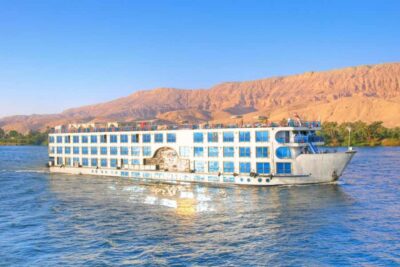
4-Day Nile Cruise from Aswan to Luxor with Guide
Read our review →Browse the lists this tour appears in