
Review · LI RIVER AND YANGTZE CRUISES
11 Days 10 Nights Leisure China Tour with Yangtze River Cruise
China rewards a big itinerary. This 11-day route links imperial Beijing, ancient Xi’an, a Yangtze River cruise, and modern Shanghai, giving you a broad first look at the country without arranging each transfer yourself. I especially like the mix of famous sights and everyday places, from the Forbidden City and Mutianyu Great Wall to Beijing hutongs and the Muslim Quarter in Xi’an.
I also like that the price of $2,484 per person covers hotels, entrance fees, cruise arrangements, many meals, bottled water, and guided transport. The main drawback is the pace: you cover several major cities in 11 days, and the Yangtze section has some optional shore trips that cost extra.
Key points to know before booking
- Four major China stops in one route: Beijing, Xi’an, the Yangtze River, and Shanghai are all included.
- A private experience for your group: The tour is listed as private, with only your party participating.
- Major admissions are covered: Entrance fees for the Forbidden City, Temple of Heaven, Great Wall, Terra-cotta Warriors, Xi’an attractions, and Shanghai sights are included.
- The cruise is the slower middle act: Days on the Yangtze offer a change from city sightseeing, with Qutang Gorge, Baidicheng, and the Three Gorges Dam.
- Meals are partly included: The package lists nine lunches, ten breakfasts, and two dinners, but optional meals and activities cost extra.
- The schedule is full: Several days include six to eight hours of sightseeing, so comfortable shoes and steady energy matter.
What this 11-day China route does well
I see this as a first-time China sampler rather than a slow, single-region holiday. You get imperial architecture, archaeological wonders, Buddhist sites, modern city life, and river scenery in one trip.
The route also has a useful contrast between grand monuments and ordinary city life. Tiananmen Square and the Forbidden City explain Beijing from the top down. The hutong visit gives you a closer look at lanes, shops, dining, and neighborhood life. In Shanghai, the Bund and Oriental Pearl Tower show the city’s modern face, while Yu Garden and the Jade Buddha Temple offer older traditions.
The strongest practical advantage is the amount of coordination handled for you. Airport pickup, hotel and port transfers, a driver or guide, accommodation, cruise arrangements, and many meals are included. For a route involving Beijing, Xi’an, a river cruise, and Shanghai, that can remove a lot of planning work.
The tour has also received high marks for organization and personal service. Hannah Liang is specifically praised for arranging a China trip with care, while Maurizio is noted for attentive guiding, timely visits, hotel and restaurant coordination, and clear explanations. Those details matter on a complicated route with several changes of place.
Still, you should know what kind of trip this is. It is not a relaxed stay in each city. Beijing alone fills four sightseeing days, Xi’an gets two, the cruise section takes three, and Shanghai receives one full touring day plus a free final day. You will see a lot, but you will also spend time moving between major areas.
More Li River and Yangtze Cruises in China:
- Huangpu Night Cruise: Cozy Vibe & Modern Shanghai Glow
★ 4.3 · 520 reviews - Private Evening Tour: VIP Huangpu River Cruise and Shanghai Lights
★ 5.0 · 150 reviews - 1 Day Li River Cruise from Guilin to Yangshuo with Private Guide & Driver
★ 5.0 · 148 reviews
Beijing begins with imperial scale
Your first day is deliberately light. You are met at Beijing Capital International Airport, transferred to the hotel, and left free after check-in. That is sensible after an international flight, especially if you arrive tired or are adjusting to the time difference.
Day two opens at Tiananmen Square, a vast ceremonial space paved with light-colored granite. The square is tied to major political and historical events, and the national flag ceremony takes place at sunrise and sunset. The schedule allows two hours, enough to take in the scale and layout before moving into the imperial complex.
The Forbidden City is the day’s main prize. This enormous palace compound covers more than 720,000 square meters and contains more than 9,000 buildings. It served as the imperial palace during the Ming and Qing dynasties and housed 24 emperors over roughly 500 years.
Two hours here gives you a useful introduction, but not a leisurely study of every courtyard and hall. Wear shoes that can handle hard paving, and stay close to your guide so you do not lose the thread among the gates and courtyards.
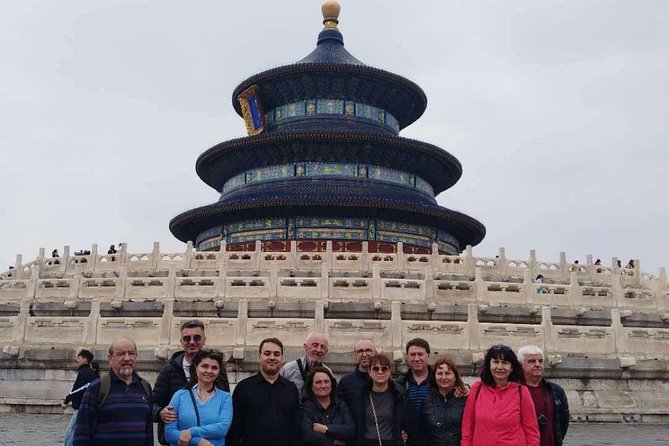
The Temple of Heaven completes the day. Ming and Qing emperors came here to worship Heaven and pray for good harvests. I like this stop because it adds a ceremonial and religious layer to the palace-centered morning. The two-hour visit should give you time to appreciate its formal design without making the day feel endless.
Mutianyu and the Olympic Green show two Beijings
Day three heads to Mutianyu, one of the best-known and best-preserved sections of the Great Wall. The route describes it as less crowded than some other sections, which is useful if you want dramatic views without the heaviest holiday crowds.
Three hours is a good allowance for walking and taking in the towers. The important thing to understand is that this is an active sightseeing stop, not simply a photo pull-off. The wall involves uneven surfaces and slopes, so good footwear is more important here than at the city museums.
The afternoon shifts sharply from medieval defense to recent international history. Beijing Olympic Park contains the main venues from the 2008 Summer Olympics and Paralympics, including the Bird’s Nest and Water Cube. The park is also associated with the 2022 Winter Olympics.
You spend two hours at the Olympic Park and one hour at the Water Cube. Admission to the Water Cube is listed as free, while the other entrance fees included in the tour cover the planned attractions. If modern architecture interests you, this part gives the day a welcome change of mood.
Day four starts with a two-hour hutong tour. These old lanes preserve traces of Beijing’s traditional neighborhood life, including local shopping, food, and street activity. This is one of the tour’s most appealing choices because it moves beyond royal monuments and gives you a sense of how ordinary city life has been organized.
The Summer Palace then takes up six hours, making it one of the longest visits of the trip. The palace gardens include pavilions, corridors, hills, rocks, ponds, bridges, paths, trees, and shrubs arranged as a carefully made miniature world. The large grounds need time, and this extended visit is more sensible than trying to rush through them.
Xi’an brings archaeology, walls, and street food
Day five shifts to Xi’an and focuses on one of China’s most famous archaeological discoveries: the Terra-cotta Warriors and Horses. The museum displays soldiers, horses, and carriages arranged in battle formations. Six hours are allotted, which suggests that transportation and a serious museum visit are built into the day.
This is not a small exhibit that you can finish in half an hour. The scale of the pits is the point, and time allows you to see the figures as an army rather than a collection of individual statues.
The Xi’an Bell Tower follows, with one hour to view this Ming dynasty landmark in the center of the old city. It dates to 1384 and is described as the largest and best-preserved example of its kind in China.
The final stop is the Muslim Quarter, where you have three hours for shopping and food. I would treat this as an important cultural stop, not just spare time for buying souvenirs. It gives you a different side of Xi’an, with its historic connection to trade and Muslim communities.
Day six continues with the old city wall. It is one of China’s oldest and best-preserved city walls, and the tour arranges either bicycles or a sightseeing car to go around it. Two hours is enough for a taste of the wall’s scale, though the cycling option will make the stop more active.
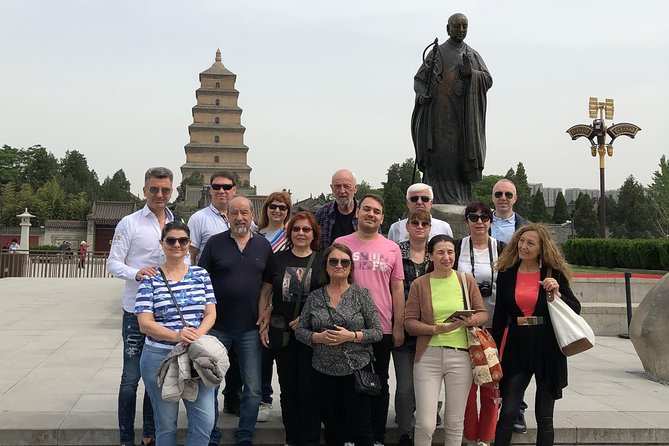
The Big Wild Goose Pagoda adds a Buddhist landmark with more than 1,300 years of history. The visit lasts one hour. After the broad military scale of the Terra-cotta Warriors and city wall, the pagoda provides a quieter religious counterpoint.
A few more river trips around China worth comparing
- Shanghai Night River Cruise Tour with Xinjiang Style Dining Experience
★ 5.0 · 324 reviews - Shanghai: Night River Cruise Tour with Xinjiang Style Dining
★ 5.0 · 210 reviews - From Guilin: 4 Star Luxury Li River Cruise with Buffet Lunch
★ 4.3 · 80 reviews - Chongqing: Two Rivers Night Cruise- Yangtze & Jialing Rivers
★ 4.5 · 64 reviews
Three days on the Yangtze change the rhythm
The cruise section begins with Fengdu on day seven. A morning shore excursion to the Jade Emperor area is arranged, while Fengdu Ghost City is available at an additional cost. This distinction is important: the cruise is included, but not every shore activity is.
A buffet lunch is served onboard, giving you a break from the schedule and a chance to watch the river rather than rush from one inland attraction to another. I like this shift in pace, though you should ask for the exact shore excursion plan and extra prices before departure.
Day eight brings Baidicheng, also called White Emperor City, near Qutang Gorge. The site sits beside the Yangtze and is connected with a dramatic setting around KuiMen and the gorge. Admission is not included for this excursion, so budget for that separately.
Qutang Gorge is the shortest of the Three Gorges at about eight kilometers. Its steep cliffs and narrow river passage make it the most dramatic section for many people. The route includes the Meng Liang staircase, associated with the Song dynasty, and the gorge runs from White Emperor City westward to Daxi Stream.
Day nine focuses on the Three Gorges Dam Site at Sandouping, about 27 miles upstream from Yichang. The dam is inside the third of the Three Gorges and provides a strong ending to the river section. It also shows the contrast that runs through this tour: ancient sites on one day, major modern engineering on the next.
The cruise portion is attractive if you want a change from city traffic and museum floors. It is less ideal if you need a precise, detailed schedule for every hour, since some shore visits are optional and not all admission costs are included.
Shanghai finishes with temples, towers, gardens, and lights
Day ten is packed. The Jade Buddha Temple is first, with two hours to see a Buddhist site founded in 1882. Its name comes from a 1.9-meter-high white jade Buddha brought from Burma to China in that year.
The Oriental Pearl Tower then provides a very different view of Shanghai. At 468 meters, it is one of the city’s defining structures, with its large and small spheres connected by the tower’s unusual design. Three hours are allowed, giving you time for the planned visit rather than a quick look from outside.
Yu Garden follows. This classical garden dates to the Ming dynasty and covers about 20,000 square meters. Its design uses pavilions, covered corridors, ponds, bridges, rocks, paths, and plants to create a compact world within the city.
I would pay attention to the contrast here. The Oriental Pearl Tower presents Shanghai from above and through modern engineering. Yu Garden makes you slow down and notice carefully arranged spaces at ground level.
Nanjing Road takes three hours and gives you Shanghai’s commercial side. The road stretches for 5.5 kilometers and includes shops, department stores, restaurants, and entertainment facilities. Admission is not required, but personal spending is not included.
The Bund completes the city tour. Along the Huangpu River, you face some of Shanghai’s most recognizable high-rise landmarks, including Shanghai Tower, Shanghai World Financial Center, Jinmao Tower, and the Oriental Pearl Tower. The Bund is best understood as a city view rather than a single monument, and the allotted three hours leaves room for a proper walk and photographs.
Day eleven is free. You can use it for rest, shopping, or another look at Shanghai before being transferred to Pudong International Airport. The provider can arrange the Maglev train to the airport or drive you there directly.
What the $2,484 price really covers
At $2,484 per person, this is not a bare sightseeing package. The fee includes hotel accommodation, entrance fees, the Yangtze cruise, driver and guide service, hotel and port transfers, bottled water, all taxes and handling charges, nine lunches, ten breakfasts, and two dinners.
That is meaningful value on a route with several major admission tickets and multiple transfer points. The price also reduces the cost of arranging separate guides and transportation in Beijing, Xi’an, and Shanghai.
The limits are just as important. International airfare and train tickets into or out of China are not included. Optional tours, extra activities, optional meals, and personal expenses are also outside the package. Fengdu Ghost City and the Baidicheng excursion have additional costs listed, so do not assume every river stop is covered.
Group discounts are available, but the exact terms are not given. Ask how the discount works for your party before paying. The tour is described as private, so only your group participates, which may offer a more personal experience than a large coach group.
Timing, meals, and practical planning
The schedule is demanding but clear. The Summer Palace takes six hours, the Terra-cotta Warriors take six hours, and Shanghai’s final touring day includes five separate stops. I would pack walking shoes, a light day bag, and clothes suitable for changing conditions between city sightseeing and the river.
Breakfast is included on ten days, while nine lunches and two dinners are included. That leaves some meals for your own choice, which is good if you want flexibility, but you should keep money available for food and shopping.
Children must be accompanied by an adult. Most people can participate, and the tour is near public transportation, but the provided information does not give detailed accessibility notes. If you have mobility concerns, ask how the wall, palace grounds, cruise landings, and city walking portions will be handled.
Confirmation is provided at booking, and passport name, number, expiry date, and country are required for every participant. Cancellation terms are strict near departure: a full refund is available if you cancel at least six full days ahead, a 50 percent refund applies two to six days before, and cancellations less than two days before receive no refund.
Who should book this China tour?
I would choose this trip if you want a guided overview of China’s essential first stops and prefer having hotels, transfers, admissions, and much of the food organized. It is especially suitable for couples, families with an adult supervising children, and private groups that want a set route without joining a large public tour.
I would hesitate if you prefer long stays, spontaneous changes, or detailed independent exploration in one city. The route moves quickly, and the cruise excursions require attention to extra charges.
My advice is to book it for breadth and convenience, not for a slow holiday. The best parts are the variety, the strong historic sequence from Beijing to Xi’an, the change of pace on the Yangtze, and the sharp modern finish in Shanghai. Confirm the optional cruise costs and transfer details before booking, then expect a busy but rewarding introduction to China.
FAQ
How long is the tour?
The tour lasts 11 days and 10 nights.
Where does the tour begin?
It begins at Beijing Capital International Airport in Shunyi District, Beijing.
Where does the tour end?
It ends at Pudong International Airport in Shanghai.
What time does the tour start?
The listed start time is 9:00 am.
Is this a private tour?
Yes. Only your group participates in the private tour or activity.
Are entrance fees included?
Entrance fees for the included attractions are covered. Some river shore excursions, including Fengdu Ghost City and Baidicheng, are listed as extra or not included.
Is the Yangtze River cruise included?
Yes. The Yangtze River cruise is included in the package.
Which meals are included?
The package includes nine lunches, ten breakfasts, and two dinners. Optional meals are not included.
Are international flights included?
No. International airfare and train tickets entering or leaving China are not included.
Can the airport transfer in Shanghai be arranged?
Yes. The provider can arrange the Maglev train to Pudong Airport or drive you directly to the airport.
Just added around China
- 8 Hour Private Excursion Cruise Ship Pick up Tour Driver & Guide★ 5.0 · 11 reviews
- Li River Cruise Reed Flute Cave Elephant Hill Daxu Town Day Tour★ 5.0 · 5 reviews
- 3-Day Private Guilin Tour with Li River Cruise and Yangshuo★ 5.0 · 35 reviews
- Short Li-River cruise and Longji Rice Terraces Private Day Tour★ 5.0 · 4 reviews
- Li River Cruise ticket from Guilin to Yangshuo with pickup★ 4.0 · 8 reviews
- Li River Cruise with bamboo Rafting & Xianggong Hill Private Tour★ 5.0 · 14 reviews
- Li River cruise & Yangshuo countryside private day tour★ 4.5 · 34 reviews
- 1 Day Private Tour: Li River Cruise from Guilin & Yangshuo Biking★ 5.0 · 35 reviews
Li River and Yangtze Cruises, compared.
Huangpu Night Cruise: Cozy Vibe & Modern Shanghai Glow
Read our review →
Private Evening Tour: VIP Huangpu River Cruise and Shanghai Lights
Read our review →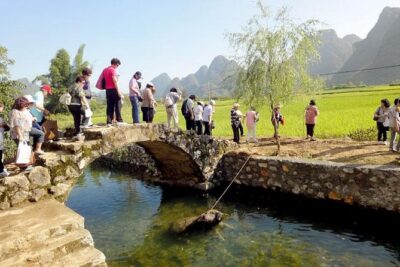
1 Day Li River Cruise from Guilin to Yangshuo with Private Guide & Driver
Read our review →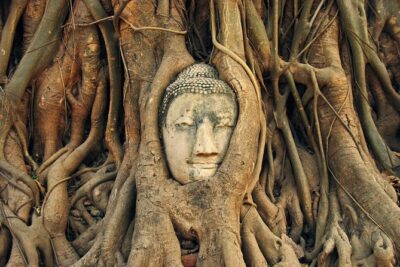
Ayutthaya Temples Tour from Bangkok with Grand Pearl River Cruise
Read our review →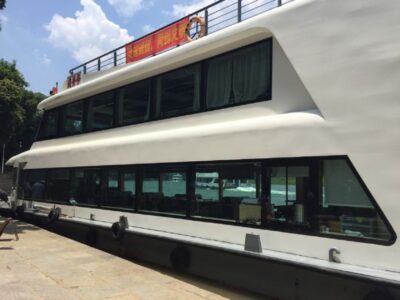
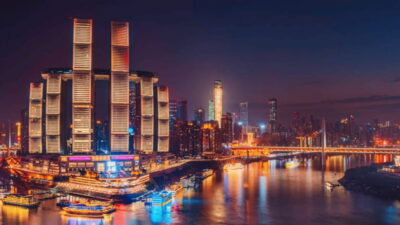
Chongqing: Two Rivers Night Cruise- Yangtze & Jialing Rivers
Read our review →
Li River Cruise and Yangshuo Private Day Tour from Guilin
Read our review →
Guangzhou: Pearl River 1-hour Night Cruise (Optional Piers)
Read our review →Browse the lists this tour appears in