
Review · NILE CRUISES
3 Night 4 Day Luxor and Aswan Nile Cruise From Aswan
Nile days reward a little planning. This four-day cruise links Aswan and Luxor with Philae Temple, Edfu, Kom Ombo, and the Valley of the Kings, while your ship handles meals, beds, and the long river journey. I especially like the strong sightseeing route and the chance to see Upper Egypt without arranging a new hotel and transfer every night. The main caution is organization: some departures have involved itinerary changes, uneven communication, and guides who did not always meet expectations.
The $350 price is unusually low for three nights aboard a ship described as five-star, with breakfast, lunch, dinner, port transfers, and an Egyptologist guide included. I also like the relaxed rhythm of moving by river between major sites. Just remember that entrance fees are extra, and the group can reach 40 people, so this is not a private, tailor-made trip.
Key points to know before booking
- Aswan begins the cruise with three major sights: Philae Temple, the High Dam, and the Unfinished Obelisk.
- The ship carries you between famous temples: you visit Kom Ombo and Edfu before reaching Luxor.
- Luxor’s west bank gets a full day: the Valley of the Kings, Hatshepsut’s temple, and the Colossi of Memnon are included.
- Buffet dining keeps the budget predictable: four lunches, three breakfasts, and three dinners are provided.
- The price leaves out entrance tickets: budget extra money for every major archaeological site.
- Communication is the chief risk: the river cruise itself has earned strong praise, but tour organization and guide quality have been inconsistent.
Why this Aswan to Luxor cruise is such good value
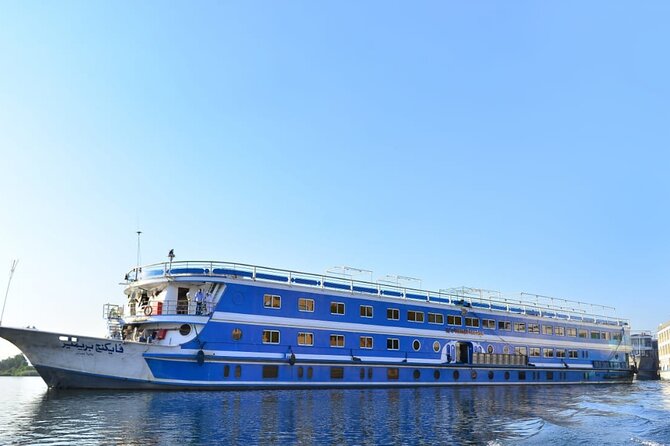
A four-day Nile cruise gives you something that a string of road trips cannot: you unpack once and let the river set the pace. The ship becomes your moving hotel, while Egypt’s major temples arrive in manageable portions.
At $350 per person, the package offers a lot for the money. You receive three nights of accommodation, three breakfasts, four lunches, and three dinners. Port pickup and drop-off are included, along with a qualified Egyptologist guide. That combination can cost much more when booked separately.
Still, the low price needs a careful reading. Entrance fees are not included, and that is important because nearly every major stop lists an additional admission charge. GST is also excluded. Ask for a clear estimate of ticket costs before you commit, especially if you want extra tombs at the Valley of the Kings.
The cruise is listed in connection with Cairo, but the actual journey begins in Aswan and ends in Luxor. You need to arrive at Aswan airport or train station, where a representative meets you and takes you to the ship. The package then provides a port transfer at the other end. Do not assume that transportation from Cairo to Aswan or from Luxor onward is included unless the operator confirms it directly.
More Nile Cruises in Cairo:
- Cairo: Dinner Cruise on the Nile River with Entertainment
★ 4.2 · 2,190 reviews - Cairo: Nile Dinner Cruise with Belly Dancer Show with Pickup
★ 4.4 · 835 reviews - Cairo: Dinner Cruise on the Nile River
★ 4.2 · 741 reviews
Day one: Philae, the High Dam, and Aswan’s stone quarries
Your first day begins with arrival at Aswan airport or train station. The meeting time is listed as 8:00 a.m., and the representative transfers you to the cruise ship. The schedule says you have breakfast aboard before the sightseeing begins.
The first major stop is Philae Temple, reached on an island in the reservoir created by the Aswan dams. The temple complex was moved from its original island when water levels threatened it, an important detail that makes the setting feel even more remarkable. Allow about two hours here. Admission is extra.
Philae is the sort of site that rewards an Egyptologist guide. Columns, reliefs, and religious spaces can look like a wall of symbols if you walk through alone. With a good explanation, the surviving pieces become easier to read. Guide quality matters here, and this is one of the stops where clear communication can make a real difference.
Next comes the Aswan High Dam, planned for about an hour. The dam changed water control, farming, and settlement patterns along the Nile, while creating Lake Nasser behind it. The visit is more about scale and modern Egyptian engineering than ancient stonework. It provides useful context for understanding why Philae had to be moved.
The Unfinished Obelisk follows, with roughly an hour scheduled. You can see the enormous monument still attached to the bedrock, along with the cracks that stopped the work. It is a practical lesson in how ancient stoneworkers shaped granite. The site is exposed, so smart-casual clothing should also be comfortable for walking and sun.
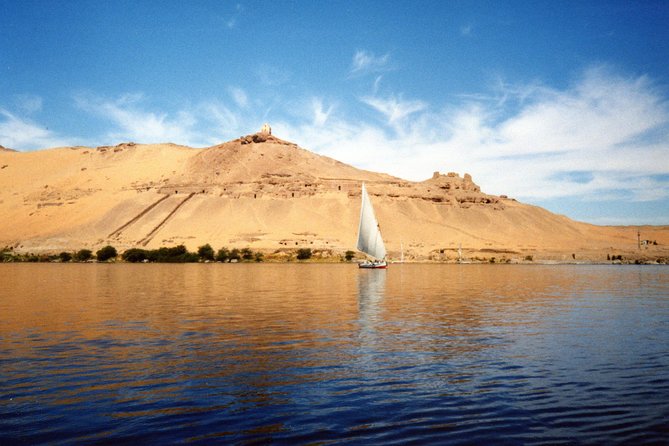
The day includes a felucca sailing experience in the overall tour description, although the timed itinerary does not assign it a separate stop. Confirm when and how this is arranged. A felucca is a small traditional sailboat, and the ride can be a pleasant change from temple visits, but you should know if it is weather-dependent or included in your specific departure.
Day two: the double temple at Kom Ombo
The ship continues north toward Kom Ombo and Edfu. This is one of the pleasures of a Nile cruise: the sightseeing is broken up by time on deck, meals, and views along the river instead of another long road transfer.
Kom Ombo is unusual because it is a double temple. Its design reflects worship of two deities, and the later Ptolemaic and Roman construction gives the site a different feel from the older pharaonic monuments. The schedule allows about three hours.
That is generous time for a site of this size. You can listen to the guide, inspect the carved walls, and walk at a sensible pace rather than rushing from one photo stop to the next. The itinerary lists admission as free here, although you should still confirm the current arrangement with the operator because site policies can change.
The ship and its staff have received some of the warmest praise in the available feedback. The river portion is often described as the best part of the trip, with friendly service and punctual movement. That is valuable because the ship is where you spend most of your time, not just a place to sleep.
At the same time, do not confuse pleasant ship service with flawless land arrangements. The main complaints concern communication, guide quality, and changes made without enough notice. Keep your plans flexible, and ask for the next day’s departure details before you turn in for the night.
Day two continued: Edfu’s Temple of Horus
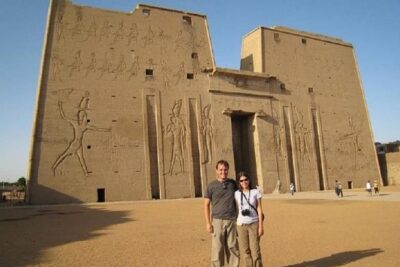
Edfu Temple receives about three hours and is one of the strongest archaeological stops on the route. It was built for Horus and is unusually well preserved compared with many Egyptian temple ruins. Its large gateways, columns, and carved surfaces give you a strong sense of the original scale.
The temple sits on the Nile’s west bank at Edfu, and the visit usually feels more enclosed and complete than a stop at a heavily ruined site. That makes the Egyptologist’s explanations especially useful. You can follow the story of Horus and the temple’s religious purpose rather than simply admiring the largest doorway.
The 40-person maximum matters here. A group of that size can be perfectly manageable if the guide uses a clear meeting point and a strong voice. It can also make narrow areas feel crowded and make it harder to ask personal questions. If you prefer quiet study time, stay near the guide during the main explanation, then use the remaining time to walk on your own.
A few more river trips around Cairo worth comparing
- From Cairo: 4-Day Nile Cruise to Luxor with Balloon Flight
★ 4.2 · 112 reviews - From Cairo 4-Day Nile Cruise to Aswan by Flights& Hot Air Balloon
★ 4.5 · 44 reviews - 4 Day Luxor&Aswan Nile cruise&Abu Simbel by plane from Cairo.Hot deal
★ 5.0 · 31 reviews - 4 Day Nile Cruise from Cairo to Aswan and Luxor
★ 5.0 · 27 reviews
Day three: royal tombs in the Valley of the Kings
Luxor brings the cruise’s most famous day. The schedule gives four hours to the Valley of the Kings, which is the right kind of generous timing for a place where the entry ticket normally covers a limited number of tombs and optional tombs may cost more.
The valley served as a burial area for pharaohs and powerful nobles during the New Kingdom. Instead of pyramids rising above the desert, the tombs are cut into the hills. Their interiors contain painted corridors and chambers, but conditions vary from tomb to tomb.
Your entrance fee is not included. Ask exactly which tombs are covered and how many you can enter. If there is one extra tomb you particularly want, find out the additional charge before the visit. The sun, uneven ground, and walks between tombs also make sensible shoes and water important, although the tour description does not specify what refreshments are supplied away from the ship.
The guide can help you understand why royal tombs were hidden here and how the decoration connects to Egyptian beliefs about the afterlife. But the experience depends heavily on the guide’s English and presentation. Past departures have had excellent communication from guides, while others have found the guiding weak. That inconsistency is the tour’s largest practical drawback.
Hatshepsut’s terraces and the Colossi of Memnon
The Temple of Hatshepsut at Deir el Bahari is scheduled for two hours. Its three broad terraces rise against the cliffs, creating one of Luxor’s most striking architectural settings. Hatshepsut ruled during the Eighteenth Dynasty, and the monument was built as her mortuary temple.
Two hours lets you see the main terraces without turning the stop into a marathon. Your guide should explain the temple’s design and Hatshepsut’s place in Egyptian royal history. The terraces also mean some walking and stairs, so consider your pace if you are traveling with children or anyone who tires easily.
The final west-bank stop is the Colossi of Memnon, planned for one hour. These huge statues once guarded the entrance to the mortuary temple of Amenhotep III. The temple itself is largely ruined, so this is a shorter, open-air stop rather than a full complex to explore.
One hour may feel long for two statues, but the stop works well as a pause between larger sites. It gives you time for photographs and a chance to appreciate their scale. Do not expect a museum-style visit here. The power comes from the size of the figures and the remains around them.
Day four: Luxor Temple and Karnak
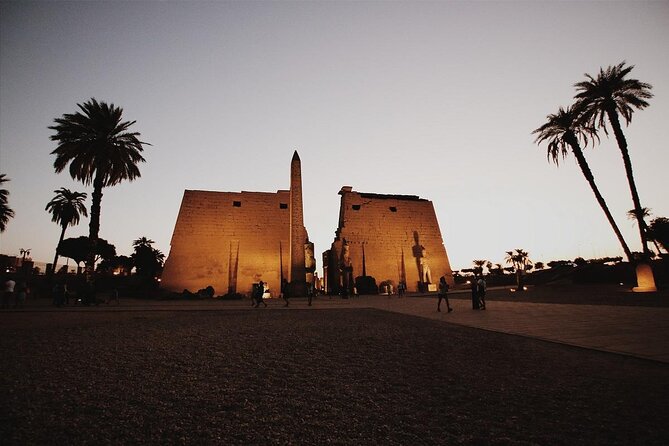
The final sightseeing day shifts to Luxor’s east bank. Luxor Temple receives about three hours and sits within the modern city. Construction began around 1400 BCE, and the complex is closely tied to royal ceremonies and the ancient city’s religious life.
Unlike the remote west-bank sites, Luxor Temple feels connected to the present city. That contrast is part of its appeal. You see ancient columns and statues while daily life continues nearby. The temple is also a good place to review what you have learned during the cruise because its design brings together many of the themes introduced earlier.
Admission is not included, so set aside money for the ticket. Three hours is enough for a detailed guided visit, though the actual pace will depend on group size and the guide’s approach.
The last major visit is Karnak Temple, scheduled for four hours. Karnak is not a single building but a vast collection of temples, pylons, chapels, and other structures. The scale can be hard to grasp at first. Give yourself time to look up, across, and down, because the most impressive details are not always at eye level.
Four hours is a strong allocation. A rushed hour would reduce Karnak to a few giant columns and a photograph. Here, you have room for explanations and independent walking. Since the day includes two large temple complexes, expect it to be full. The schedule is rewarding, but it is not restful.
Food, cabins, group size, and the onboard rhythm
Meals are served buffet-style aboard the ship. The package includes three breakfasts, four lunches, and three dinners. Vegetarian food is available if requested in advance, and you should give the operator any other dietary requirements when booking.
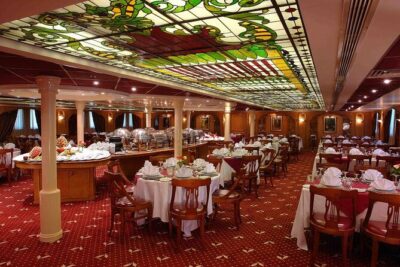
Buffets are useful on a sightseeing cruise because you can choose quickly and return to your day. They also make the package easier to budget. The food quality and selection can vary by ship, so keep expectations sensible even though the cruise is marketed as five-star.
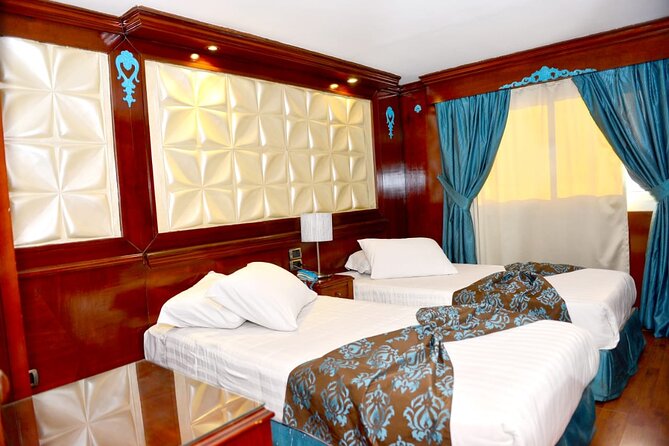
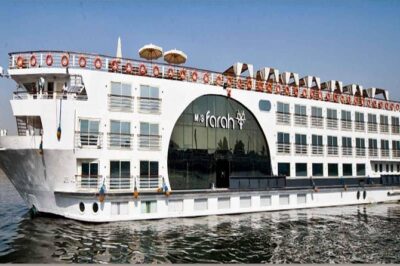
The ship name Semiramis I has been associated with particularly strong praise for value and service on some departures. That does not guarantee the same vessel for every date, so confirm the ship name and cabin details before paying. The tour promises three nights of accommodation, but it does not provide cabin categories or a detailed list of onboard facilities.
A maximum of 40 people is large enough to affect the feel of the tour. You will have company at the major sites and may need to wait for the whole group. In exchange, the price is far below what a private cruise and private guide would usually cost.
Communication matters more than the low price
The cruise works best when the operator communicates clearly. Some departures have had timely service, friendly staff, and guides with strong English. Other experiences included changed arrangements that were not explained in advance and poor coordination between the ship, transfers, and sightseeing.
I would send specific questions before booking:
- Which ship will operate your date?
- Are the listed sightseeing times fixed?
- What entrance tickets are included, if any?
- When is the felucca ride scheduled?
- Where does the final port transfer take you?
- Is transport from Cairo to Aswan included?
Keep written confirmation of the answers. The booking confirmation arrives at the time of reservation, but that does not remove the need to clarify the details above.
The cancellation terms are strict near departure. You can receive a full refund by canceling at least six full days before the start time. Cancellation two to six full days ahead receives 50 percent, while cancellation less than two full days ahead receives no refund. Changes are not accepted inside those cutoffs.
Who should book this Nile cruise?
I would recommend it to a first-time Egypt visitor who wants the major Aswan and Luxor sights in one compact trip. It suits you if you value a low fixed price, buffet meals, an onboard room, and organized port transfers more than private attention.
Families can use it too, since children must be accompanied by an adult and most people can participate. Still, the early starts, heat, walking, and full temple days may test younger children. Ask about the daily rhythm before booking if you are traveling with kids.
This is less suitable if you want a quiet luxury cruise, guaranteed guide quality, or control over every stop. The advertised five-star ship and low price are appealing, but organization has not been equally dependable on every departure. The best value comes when you treat it as a budget-friendly group cruise with major sightseeing, not as a fully private luxury journey.
Should you book it?
Book this cruise if you want the classic Nile route at a remarkably low price and can tolerate some uncertainty around communication. The route itself is excellent: Aswan’s island temple, Kom Ombo, Edfu, the Valley of the Kings, Hatshepsut, Luxor Temple, and Karnak give you a strong first look at Upper Egypt.
Before booking, confirm the ship, entrance fees, felucca arrangements, and transfers in writing. If the operator answers clearly, $350 can be an exceptional deal. If answers remain vague, pay more for a company with firmer coordination. The temples will be magnificent either way, but your peace of mind depends on the people moving you between them.
FAQ
Where does the cruise begin?
The cruise begins in Aswan. Pickup is provided from Aswan airport or train station, followed by transfer to the cruise ship.
Where does the cruise end?
The itinerary finishes in Luxor after visits to Luxor Temple and Karnak Temple. Port drop-off is included, but the supplied details do not specify the final drop-off location.
How long is the cruise?
The experience lasts approximately four days and includes three nights of accommodation aboard the ship.
Are entrance fees included?
No. Entrance fees for the sights are not included in the tour price.
Are meals included?
Yes. The package includes four lunches, three breakfasts, and three dinners. Meals are served as buffets aboard the ship.
Is an Egyptologist guide included?
Yes. A qualified Egyptologist guide is included.
Is pickup included?
Port pickup and drop-off are included. Arrival pickup is provided from Aswan airport or train station.
Can vegetarian meals be provided?
Yes. A vegetarian option is available, but you should request it when booking. You should also advise the operator about other dietary requirements in advance.
What is the cancellation policy?
You can receive a full refund if you cancel at least six full days before the start time. Cancellation two to six full days ahead receives a 50 percent refund, while cancellation less than two full days ahead is nonrefundable.
Just added around Cairo
- night-tour Nile dinner cruise with open buffet and belly dancer★ 5.0 · 9 reviews
- Dinner Nile Cruise belly dancer open buffer tanora show sailing on Nile★ 5.0 · 9 reviews
- 8 Day Stunning Cairo Pyramids and Nile cruise and Hurghada All inclusive★ 5.0 · 43 reviews
- Private Full Day Tour Giza Pyramids ,Museum & Nile Felucca Boat★ 4.0 · 3 reviews
- Cairo dinner Nile cruise with belly dancer show on Nile river★ 5.0 · 2 reviews
- Cairo Private layover tour Giza pyramids,sphinx&Nile Felucca Boat★ 4.5 · 13 reviews
- Private Tour Giza Pyramids , Sphinx & Dinner Nile cruise Show★ 4.5 · 3 reviews
- VIP Private Tour Giza Pyramids ,Nile Dinner Cruise&Pyramid Inside★ 5.0 · 3 reviews
Nile Cruises, compared.
4-Days Nile Cruise From Aswan To Luxor including Abu Simbel and Hot Air Balloon
Read our review →
Dinner Cruise on the Nile River with Entertainment
Read our review →
4-Day 3-Night Nile Cruise from Aswan to Luxor&Abu Simbel+Balloon
Read our review →
Nile Dinner Cruise with Belly Dancer Show with Pickup
Read our review →
4-Day 3-Night Nile Cruise from Aswan to Luxor including Abu Simbel, Air Balloon
Read our review →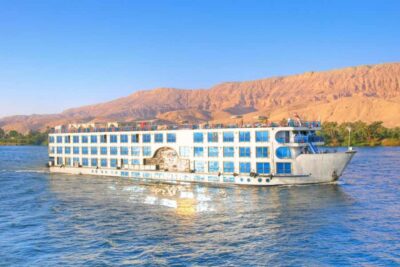
4-Day Nile Cruise from Aswan to Luxor with Guide
Read our review →Browse the lists this tour appears in