
Review · NILE CRUISES
4 Days Nile Cruise From Aswan To Luxor
The Nile is the main attraction. This four-day cruise links Egypt’s great southern sights with time on the river, including Philae, Abu Simbel, Kom Ombo, Edfu, Luxor Temple, and Karnak. I like the private group format and the chance to see the riverbank at a slower pace, and I also like that the itinerary combines famous monuments with a felucca ride and sailing through the Esna lock.
The main caution is the pace. Abu Simbel requires an early start and a long road journey, while the final two days pack several major temples into a short schedule. The cruise is listed at $646.01 per person, which can be good value for four days of sightseeing and accommodation, but you should confirm exactly which meals, transfers, and cruise dates are included before paying.
Key points to know before booking
- Abu Simbel requires an early morning road trip: You leave Aswan before the heat, with about three hours of driving to the temples.
- The cruise covers Egypt’s major southern highlights: Philae, the High Dam, the Unfinished Obelisk, Kom Ombo, Edfu, Luxor Temple, Karnak, and the Valley of the Kings are all included.
- A private activity gives your group more flexibility: Only your own group participates, rather than joining a large shared excursion.
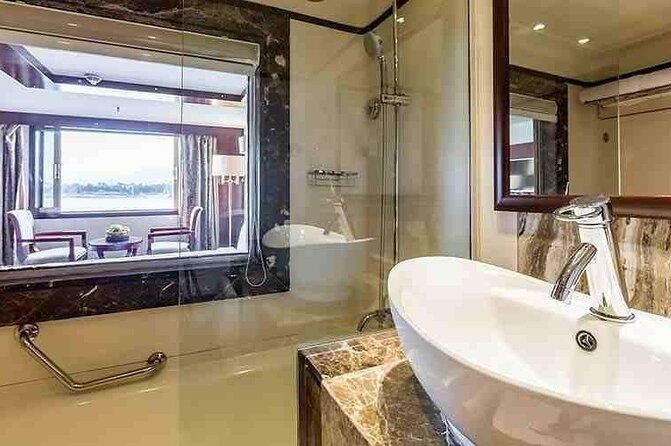
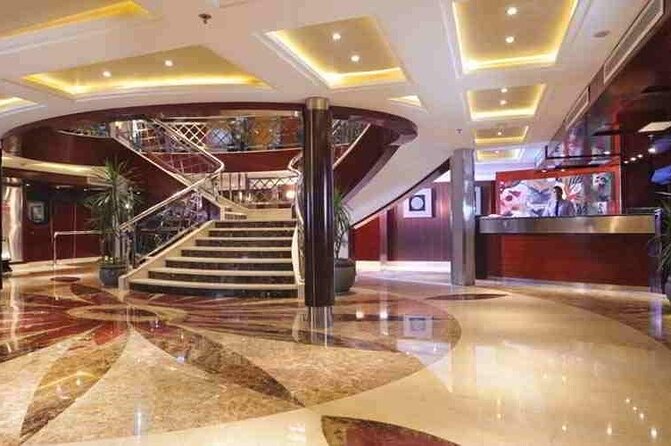
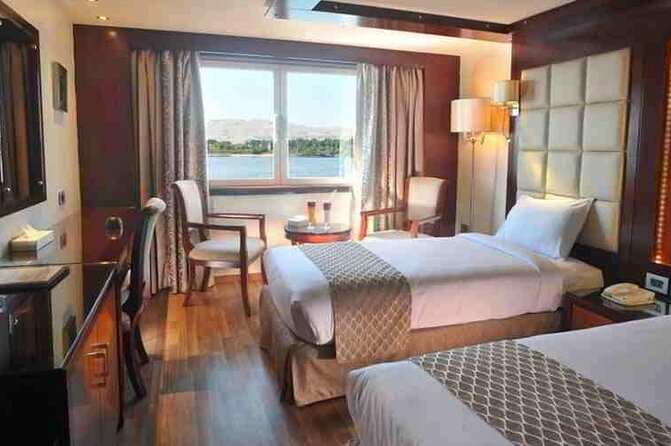
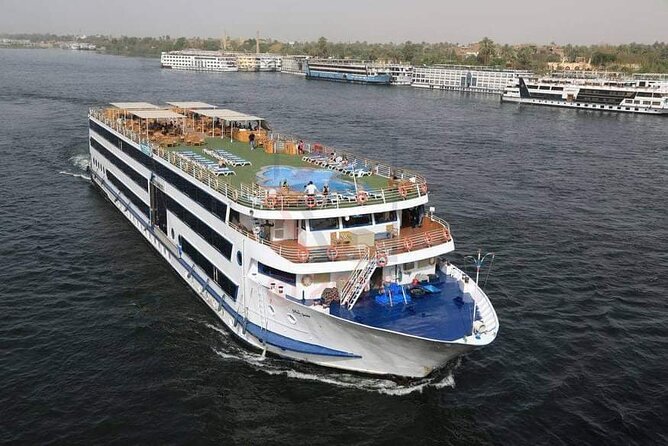
- The Royal Princess has useful onboard facilities: You can expect a sundeck, pool, jacuzzi, shaded pool bar, lounge bar, gym, massage service, games, gift shop, laundry, and internet in public areas.
- The final day is sightseeing-heavy: The Valley of the Kings, Colossi of Memnon, Hatshepsut Temple, and Karnak all come before disembarkation.
- The river views are part of the experience: Time aboard lets you watch daily life along the Nile instead of moving between monuments entirely by road.
What this four-day Nile cruise is really like
This is a compact introduction to Upper Egypt. You spend three nights aboard the Royal Princess, beginning in Aswan and finishing in Luxor. The route works well because the Nile connects the major sites, so you are not constantly packing, unpacking, and changing hotels.
The cruise is best understood as a sightseeing trip with a floating base, not as a lazy boat holiday. You will have meals aboard, scheduled temple visits, early starts, and guided excursions. Between stops, the river gives you breathing room. You can sit on the sundeck, watch the banks pass, and see the Nile as part of living Egypt rather than just as a backdrop to ancient monuments.
The strongest appeal is the combination of comfort and coverage. In four days, you see a remarkable number of major places. The trade-off is limited free time. If you want long, quiet visits at each temple, this schedule may feel tight. If you want an efficient first look at the major sights, it does the job well.
More Nile Cruises in Aswan:
- 4-Days Nile Cruise From Aswan To Luxor including Abu Simbel and Hot Air Balloon
★ 5.0 · 3,142 reviews - 4-Day 3-Night Nile Cruise from Aswan to Luxor&Abu Simbel+Balloon
★ 5.0 · 2,023 reviews - 4-Day 3-Night Nile Cruise from Aswan to Luxor including Abu Simbel, Air Balloon
★ 4.5 · 612 reviews
Day 1 in Aswan: Philae, the High Dam, and ancient granite
The first day begins with embarkation and lunch aboard the cruise. The sightseeing then focuses on three important Aswan sites, with a felucca ride around Elephantine also included in the plan.
Philae Temple and the worship of Isis
Philae is one of the most atmospheric stops on the route. The temple was built for Isis and is known as the last temple constructed in the classical Egyptian style. Work began around 690 BC, and worship of Isis continued here long after many older Egyptian religious centers had faded.
The temple’s history also gives the visit extra weight. Philae was moved to higher ground after the construction of the Aswan High Dam threatened its original location. That means you are seeing an ancient site that was carefully saved in the modern era.
Allow about two hours for the visit. Look closely at the carvings and columns, but also give yourself time to notice the setting on the island. The boat access and water around the temple make this feel different from the larger temple complexes you see later.
Aswan High Dam
The High Dam offers a sharp change of subject. Instead of pharaohs and gods, you are looking at one of modern Egypt’s largest engineering projects. Construction began in 1960, the dam was completed in 1968, and it was officially inaugurated in 1971.
The dam controls the Nile and created Lake Nasser. Its effect on Egypt was enormous, bringing major changes to water management, electricity, agriculture, and nearby archaeological sites. It also explains why Philae had to be moved.
The scheduled visit lasts about two hours, which may feel generous compared with the time needed at some other stops. Still, the site helps you understand modern Aswan and the practical importance of the river. I consider it worthwhile because it gives the cruise route a wider frame than ancient monuments alone.
A few more river trips around Aswan worth comparing
- From Aswan: 4-Day Nile Cruise from Aswan to Luxor with Guide
★ 4.1 · 593 reviews - 4-Day 3-Night Nile Cruise from Aswan to Luxor – Private Tour
★ 5.0 · 369 reviews - 4 Days Nile Cruise from Aswan to Luxor including Abu Simbel and Hot Air Balloon
★ 4.5 · 356 reviews - 4-Day 3-Night Nile Cruise from Aswan to Luxor With Balloon and Abu Simbel
★ 5.0 · 327 reviews
The Unfinished Obelisk
At the Northern Quarries, you see a huge obelisk still attached to the bedrock. Aswan granite was prized throughout ancient Egypt, and this quarry supplied stone for statues, temples, pyramids, and obelisks.
The unfinished shaft is nearly 42 meters long. Had it been completed, it would have weighed about 1,168 tonnes, making it the heaviest single piece of stone the ancient Egyptians are known to have fashioned.
This is one of the better stops for understanding how monuments were made. You can see the cracks that ended the project and imagine the enormous effort required to shape and move such a block. The visit is listed as about an hour, and that is generally enough to understand the site without tiring before the evening aboard the ship.
The day finishes with dinner and an overnight stay on the cruise. Because the itinerary begins on a Friday, confirm your exact departure date and boarding instructions before setting out.
Day 2: Abu Simbel, Kom Ombo, and an evening on the river
Day two is the most demanding morning of the cruise. You leave Aswan early for Abu Simbel, then return to the ship for lunch and sailing toward Kom Ombo and Edfu.
Abu Simbel and the colossal figures of Ramesses II
The road journey to Abu Simbel takes about three hours. The early departure is not a minor detail. It helps you reach the temples before the worst heat, but you should still expect a long morning in a vehicle followed by several hours on your feet.
Abu Simbel was carved into the mountainside during the reign of Ramesses II in the 13th century BC. The Great Temple is fronted by four enormous seated statues of the pharaoh. Each figure reflects a different stage of his life, according to the description of the site, and the scale is hard to grasp until you are standing in front of the facade.
Inside, the temple is associated with Amon-Re Horakhty and Ptah, while its decoration also presents the power and image of Ramesses II. An Egyptologist guide explains the site during the visit, which matters here because the symbolism and layout can be difficult to read without context.
The Abu Simbel excursion lasts about three hours, not counting the road journey. It is the longest travel segment of the program, but it is also one of the most memorable. If you have only a few days in southern Egypt, I would give this stop serious priority.
The drawback is simple: the day can feel tiring. You have an early start, a long drive, a major archaeological visit, and more sightseeing later. Families with young children should consider the schedule carefully, even though the tour’s age policy allows children at reduced rates.
Kom Ombo and the unusual double temple
After returning to the cruise, the ship sails toward Kom Ombo. The temple sits about 40 kilometers north of Aswan and was built mainly during the Ptolemaic and Roman periods, from 332 BC to AD 395.
Kom Ombo is unusual because it was dedicated to two deities, Sobek and Horus. The layout reflects that shared purpose, giving the complex a divided character. Sobek, the crocodile god, is especially memorable, and the site connects religious practice with the Nile’s animals and farming life.
The visit is scheduled for about three hours. Depending on the exact sailing timetable, the afternoon may feel tightly arranged. Still, the temple makes a useful contrast with Philae and Abu Simbel. It is later in date, different in design, and less focused on one royal figure.
The ship then continues toward Edfu for the overnight stay. A Galabeya party is also listed for the evening. This is a festive onboard event, so bring something comfortable and easy to wear if you want to join in. You can also simply enjoy dinner and the river after a long day.
Day 3: Edfu, the Esna lock, and Luxor Temple after dark
The third day begins with breakfast aboard the ship and a visit to Edfu. The boat then continues toward Luxor through the Esna lock before an evening visit to Luxor Temple.
Edfu Temple and the story of Horus
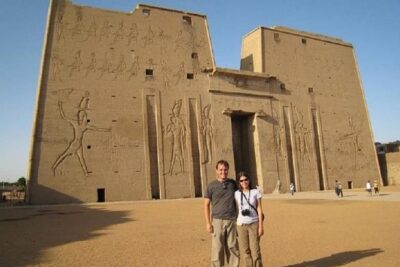
Edfu has one of the best-preserved large temples in Upper Egypt. It was dedicated to Horus, the falcon-headed god, and construction took place during the reigns of the Ptolemies, beginning with Ptolemy III in 246 BC.
The walls describe the myth of Horus and Seth. These scenes may have been connected with an annual religious drama, giving you a glimpse of how myth, ceremony, and public performance worked together.
The temple’s preservation makes it easier to understand than many damaged sites. You can follow the broad structure, gateways, halls, and carved walls without having to reconstruct everything in your imagination. The planned visit lasts around three hours, so there is time for explanation and photographs.
Sailing through the Esna lock
The passage through the Esna lock is one of the quieter highlights. It shows the working side of Nile travel. Instead of looking only at temples, you watch the ship move through a piece of river infrastructure that allows boats to continue toward Luxor.
The timing of the lock passage can affect the day’s rhythm. You may spend some time waiting or adjusting to the ship’s schedule. That is part of the appeal of cruising, but it also means the program does not move with the precision of a bus tour.
Luxor Temple in the evening
Luxor Temple was built largely by Amenhotep III and Ramesses II. It served as a setting for the Opet Festival, which connected the human ruler with his divine office.
A scheduled two-hour visit gives you enough time to see the main features without rushing through every corner. The evening setting can make the columns, statues, and open courts feel especially impressive, though the exact atmosphere depends on the timing of your arrival.
Luxor Temple works well after the smaller and more remote sites because it brings you into the heart of the modern city. It is not an isolated ruin. The contrast between active Luxor and the ancient temple is part of what makes the visit effective.
Day 4: tombs, royal monuments, and Karnak
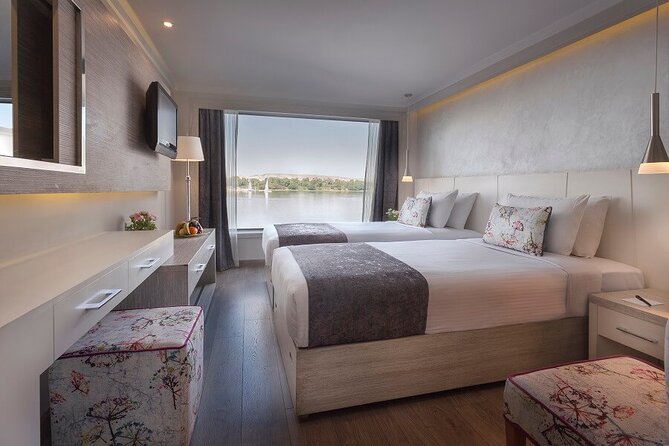
The final day begins after breakfast with visits on Luxor’s west bank, followed by Karnak. Disembarkation takes place after breakfast according to the schedule, but the itinerary also lists several morning visits, so confirm the precise luggage and departure arrangements with the operator.
Valley of the Kings
The Valley of the Kings served as the burial place of Egypt’s rulers from the 18th through the 20th dynasties. The tombs were stocked with objects intended for the afterlife, and many retain well-preserved decoration.
The itinerary refers to tombs connected with Ramesses II and Tutankhamun. Entry arrangements for individual tombs can vary, so check what is covered in your admission and whether any special tomb tickets require an additional payment.
This is a site where the guide’s explanations are especially useful. From outside, many tomb entrances look modest. Inside, the painted scenes and inscriptions reveal the careful planning behind royal burial. You should expect walking, uneven ground, heat, and a busy schedule.
Colossi of Memnon
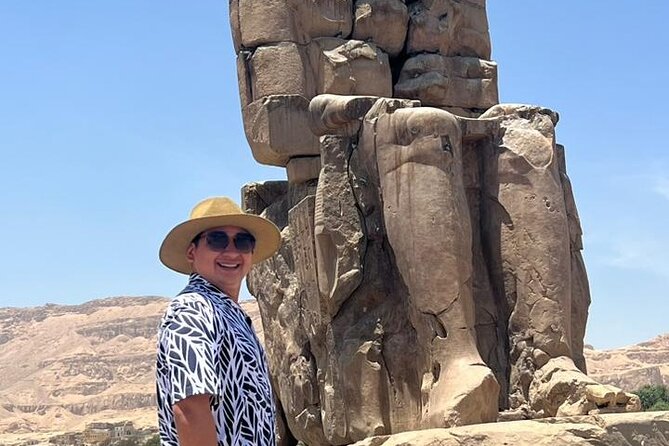
The Colossi of Memnon are two enormous statues of Amenhotep III. They are the surviving remains of a much larger mortuary temple.
The stop lasts about 30 minutes and admission is listed as free. That makes it a brief but useful photo stop on the way between the valley and Hatshepsut’s temple. Do not expect a long visit. The value is in seeing the scale of the statues and understanding how much of the original complex has disappeared.
Hatshepsut’s temple at Deir el Bahari
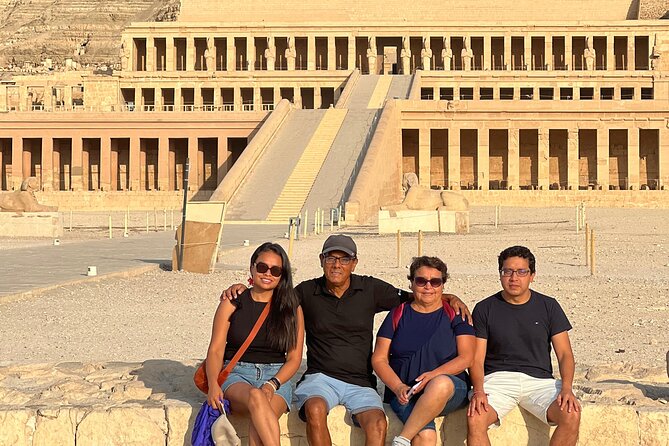
Hatshepsut’s temple is arranged on three levels, connected by wide ramps. Its design is more open and geometric than the tombs in the valley, and the setting against the cliffs gives the visit a strong sense of place.
The program allows about two hours here. That is enough to look at the terraces, reliefs, and approaches without reducing the stop to a quick photograph. Hatshepsut’s reign and her unusual position as a female pharaoh also make this one of the most interesting historical stops.
Karnak Temple
Karnak is the grand finale. The complex covers about 247 acres and includes three main temple areas, smaller enclosed temples, and outer sanctuaries built by many generations of rulers.
You need at least two hours to get a useful first look. The scale can be overwhelming, so stay close to the guide at the start and note a meeting point before wandering among the columns and courtyards.
Karnak is not one single building. It is a vast religious center that grew over centuries. That layered construction is exactly why it deserves time, but it is also why the final day may feel crowded with sights. By this point, you will have seen several temples, and fatigue can affect how much you absorb.
The Royal Princess and the value of the $646.01 price
At $646.01 per person, this trip is not a budget day tour, but it includes a substantial amount of sightseeing across four days. The value comes from combining the cruise, organized visits, an Egyptologist guide, accommodation aboard ship, and major admissions in one route.
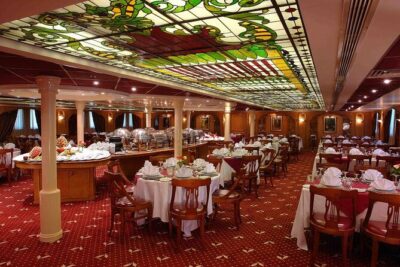
The vessel lists a main dining room, lounge bar, sundeck, swimming pool, jacuzzi, shaded pool bar, gym, massage therapist, pool table, chess and card tables, gift shop, internet in public areas, and laundry service. These facilities matter because the itinerary is active. A place to sit outdoors between excursions can make the schedule easier.
The published inclusion specifically lists four lunches. The daily plan also describes breakfast and dinner aboard the ship, but the inclusion section is not equally detailed about every meal. Ask for a written breakdown of meals, drinks, entrance fees, transfers, and any Abu Simbel transport before booking.
Tipping is not included. It is described as optional, though commonly used to show satisfaction with service. Plan for this separately rather than treating it as part of the quoted fare.
Who should book this cruise?
I would choose this cruise if you want a structured first visit to Upper Egypt and prefer moving between the main sites with a private group. It suits people who value coverage, onboard facilities, and guided explanations more than a slow, independent schedule.
Families can benefit from the child pricing policy: children under two are free, ages two to 5.99 pay 25 percent, and ages six to 11.99 pay 50 percent. Still, the Abu Simbel road journey and the final day’s sightseeing require stamina.
You may want a different plan if you dislike early starts, long drives, or fixed meal and sailing times. The four-day format is efficient, but it does not leave much room to add extra Luxor sights or linger at every temple.
Free cancellation is available up to 24 hours before the local start time for a full refund. Since the additional notes refer to older pricing dates and holiday deposits, confirm the current fare and payment terms rather than relying on the stated historical conditions.
Should you book it?
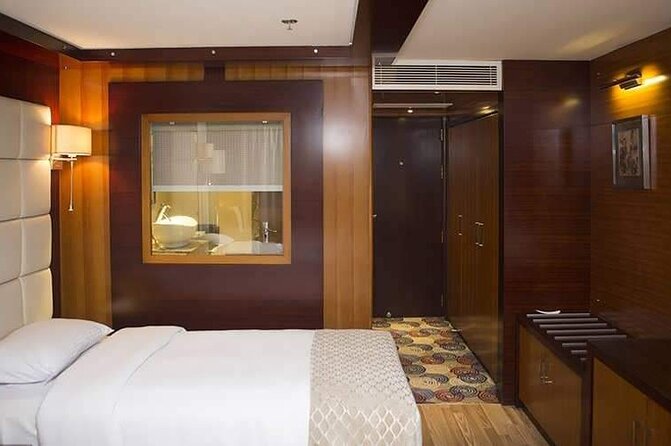
Book this cruise if you want the major Aswan to Luxor route handled in one organized package, with Abu Simbel included and a private group instead of a large shared tour. The river views, strong collection of temples, and comfortable onboard facilities make the price reasonable when the current inclusions match the advertised program.
Before booking, confirm three things: the exact cruise date, which meals and transfers are included, and how disembarkation works on the final morning. If those details suit you, this is a practical and rewarding way to see southern Egypt in four busy days.
FAQ
Where does the cruise start?
The experience starts in Aswan, in Aswan Governorate, Egypt.
Where does the cruise end?
The activity ends back at the meeting point after the Luxor visits.
How long is the cruise?
The program lasts four days and includes three nights aboard the Royal Princess.
What time does the experience start?
The listed start time is 5:00 am.
Is pickup available?
Yes. Pickup is offered, though the supplied details do not specify the exact pickup area or transfer arrangements.
Is this a private tour?
Yes. Only your own group participates in the activity.
Is Abu Simbel included?
Yes. The itinerary includes an early visit to the Abu Simbel Temple Complex from Aswan, with admission listed as included.
Which temples are visited?
The route includes Philae Temple, Kom Ombo Temple, Edfu Temple, Luxor Temple, Hatshepsut’s Temple, and Karnak Temple. It also visits the Valley of the Kings, the High Dam, the Unfinished Obelisk, and the Colossi of Memnon.
Are meals included?
The inclusion details specifically list four lunches. The daily schedule also describes breakfast and dinner aboard the cruise, so confirm the complete meal plan before booking.
Is tipping included?
No. Tipping is not included. The supplied information describes it as optional.
Can I cancel for a full refund?
Yes, if you cancel at least 24 hours before the experience’s local start time. Cancellations made less than 24 hours before the start are not refunded, and late changes are not accepted.
Just added around Aswan
- Sailing Nile Cruise from Aswan to Luxor for 2 Nights★ 4.5 · 139 reviews
- 4-Days Aswan sails Nile Cruise Luxor &Abu Simbel.Hot air Balloon★ 4.5 · 77 reviews
- 4-Days Nile Cruise From Aswan To Luxor Abu Simbel and Air Balloon★ 4.5 · 2 reviews
- 4 Days Nile Cruise &Hot Air Balloon on M/S Movenpick Royal Lilly★ 5.0 · 4 reviews
- Sailing Nile cruise from Aswan to Luxor includes tours for 3 nights★ 5.0 · 16 reviews
- 8 Nights Egypt Tour,Cairo,Luxor,Aswan&Abu Simbel,Nile Cruise,Hot Air Balloon★ 4.5 · 11 reviews
- 4-Day Nile Cruise: Aswan to Luxor & Abu Simbel + Hot Air Balloon★ 4.5 · 35 reviews
- Sailing Nile cruise from Aswan for 2 nights★ 4.0 · 11 reviews
Nile Cruises, compared.
4-Days Nile Cruise From Aswan To Luxor including Abu Simbel and Hot Air Balloon
Read our review →
Dinner Cruise on the Nile River with Entertainment
Read our review →
4-Day 3-Night Nile Cruise from Aswan to Luxor&Abu Simbel+Balloon
Read our review →
Nile Dinner Cruise with Belly Dancer Show with Pickup
Read our review →
4-Day 3-Night Nile Cruise from Aswan to Luxor including Abu Simbel, Air Balloon
Read our review →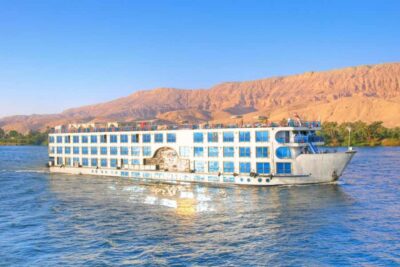
4-Day Nile Cruise from Aswan to Luxor with Guide
Read our review →Browse the lists this tour appears in