
Review · NILE CRUISES
4Days 3Nights Nile Cruise from Aswan to Luxor All Tours Included
Egypt’s greatest temples line the river. This four-day cruise combines a comfortable Nile voyage with visits to Philae, Kom Ombo, Edfu, the Valley of the Kings, Karnak, and other major sites. I like the way the tour handles the awkward parts of southern Egypt, including transfers, entrance tickets, meals, sightseeing vehicles, and a private Egyptologist guide.
I also like the steady pace of moving by ship instead of packing and unpacking for Aswan and Luxor. The main consideration is that this is a full sightseeing schedule, with early starts, hot outdoor sites, stairs, and several long touring days. The ship gives you rest, but the monuments still require a moderate level of fitness.
The price is $690 per person. That includes three nights aboard a five-star ship, three breakfasts, three lunches, three dinners, entrance fees, bottled water during excursions, transfers, and a private guide. Drinks aboard the ship, tips, shopping, laundry, massages, and personal spending cost extra.
Key points at a glance
- Philae begins the trip beautifully: Reach Isis’s island temple by motorboat through granite-studded Nile scenery.
- The route includes major temples: Visit Kom Ombo, Edfu, Karnak, Luxor Temple, and Hatshepsut’s temple.
- A private Egyptologist leads the visits: John is repeatedly praised for clear storytelling, patience, careful planning, and personal attention.
- The schedule packs in ten sites: You see much more than a simple point-to-point cruise, though the pace can feel busy.
- Meals and transport are covered: This removes much of the daily haggling and planning that can wear you down in Egypt.
- The cruise ends in Luxor: After checkout at 10 a.m. on the fourth day, your luggage can remain aboard while you are transferred to the airport, train station, or another Luxor address.
Why the Aswan to Luxor route works so well
A Nile cruise is useful here because the main monuments are spread along the river. Instead of arranging separate cars, tickets, guides, and hotel changes, you return to the same ship after each outing. That makes the trip easier, especially if this is your first visit to Egypt.
The direction from Aswan to Luxor also creates a natural buildup. You begin with the island setting of Philae and the modern engineering story of the High Dam. You then move through the temples at Kom Ombo and Edfu before reaching the great royal tombs and enormous sanctuaries around Luxor.
The cruise itself is not just a means of transport. There are long stretches of sailing, including much of the second day and an evening docked at Luxor. You can watch the Nile pass by, rest between temple visits, and avoid spending every hour inside a vehicle.
Still, the schedule is not a slow, leisurely voyage from start to finish. The tour includes many stops and guided visits. You should think of it as a sightseeing program with time on a cruise ship, not a cruise with only occasional excursions.
More Nile Cruises in Aswan:
- 4-Days Nile Cruise From Aswan To Luxor including Abu Simbel and Hot Air Balloon
★ 5.0 · 3,142 reviews - 4-Day 3-Night Nile Cruise from Aswan to Luxor&Abu Simbel+Balloon
★ 5.0 · 2,023 reviews - 4-Day 3-Night Nile Cruise from Aswan to Luxor including Abu Simbel, Air Balloon
★ 4.5 · 612 reviews
Day 1: Philae, the High Dam, and the Unfinished Obelisk
The first day covers three very different sides of Aswan.
Philae Temple by motorboat
Philae is one of the most memorable stops on the route because of its setting. The temple is on an island and can only be reached by motorboat, so the short ride through the granite rocks of the Nile becomes part of the visit.
The temple is dedicated to Isis, one of ancient Egypt’s most important goddesses. Your guide explains the story of Isis and Osiris, including the conflict with Seth, and shows you how the sanctuary and other parts of the complex fit into that story.
Philae also helps explain the changing face of Egyptian religion. Much of the temple was built or rebuilt during the Graeco-Roman period. Later, Christianity reached Egypt, and parts of the older religious world were altered or abandoned. This gives the visit more depth than a simple look at columns and carved walls.
Plan on about two hours here. Wear shoes with a good grip, bring water, and keep your sun protection handy. The boat ride and island setting are excellent for photographs, but the open site can feel hot during the day.
The Aswan High Dam
The High Dam is a short stop, about 30 minutes, but it gives you a useful look at modern Egypt. Built from 1960 and inaugurated in 1971, it created Lake Nasser, a huge reservoir stretching south toward Sudan.
The guide explains how the dam supplies water and hydropower, along with its effect on the country. The scale is hard to picture, so the comparisons help: the amount of concrete and rock used is described as enough for 22 pyramids the size of those at Giza.
This stop is less atmospheric than Philae and the ancient quarry, but it adds an important modern chapter to the trip. You see that Egypt’s story is not only about pharaohs and temples.
A few more river trips around Aswan worth comparing
- From Aswan: 4-Day Nile Cruise from Aswan to Luxor with Guide
★ 4.1 · 593 reviews - 4-Day 3-Night Nile Cruise from Aswan to Luxor – Private Tour
★ 5.0 · 369 reviews - 4 Days Nile Cruise from Aswan to Luxor including Abu Simbel and Hot Air Balloon
★ 4.5 · 356 reviews - 4-Day 3-Night Nile Cruise from Aswan to Luxor With Balloon and Abu Simbel
★ 5.0 · 327 reviews
The Unfinished Obelisk
At the ancient granite quarry, you see an enormous obelisk still attached to the bedrock. It is associated with Hatshepsut and is estimated to weigh about 1,167 tons. Cracks in the stone caused the project to be abandoned.
The site makes ancient stonework easier to understand. You can see the channels and cuts made to separate granite from the mountain, rather than only seeing a finished monument in a temple courtyard.
The visit takes around 45 minutes. Stairs lead up to the quarry area, so this is one of the places where the stated moderate fitness requirement matters. After the touring, you return to the ship for the rest of the day.
Day 2: Kom Ombo, Edfu, and the Esna Lock
The second day shifts from Aswan’s granite country to two temple visits with very different personalities.
Kom Ombo and its unusual double temple
Kom Ombo is smaller than the grand complexes at Karnak or Luxor, but it has an unusual plan. The temple was dedicated to two gods, Sobek, the crocodile god, and Haroeris, the local falcon-headed god.
Your guide points out how the shared dedication affected the design. You also see the Nilometer, an ancient device used to measure the Nile’s level, and visit the crocodile museum, where mummified crocodiles found nearby are displayed.
Allow about 90 minutes. The temple sits beside the river, so you can often move from ship to monument with very little fuss. The site is compact, making it a manageable visit, but the open stone surfaces can be tiring in strong sun.
Edfu Temple and the story of Horus
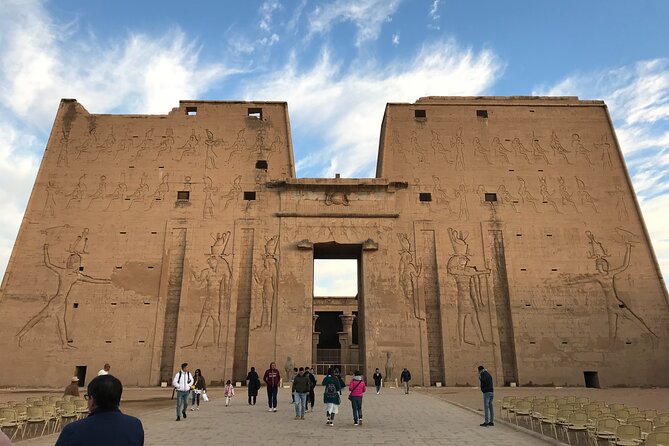
Edfu is one of the strongest stops on the entire cruise. A short horse-carriage ride or minivan transfer takes you from the ship to the temple. The approach hides much of the complex until you are close, and then its size becomes clear.
The temple honors Horus, the falcon-headed son of Isis and Osiris. The carvings tell the story of Horus taking revenge on Seth for the death of his father. The setting gives your guide a good chance to connect mythology with the reliefs in front of you.
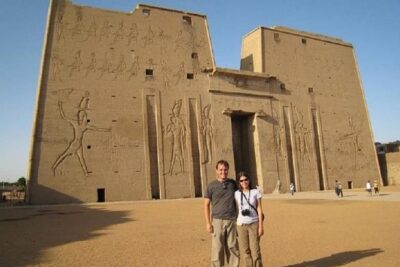
Edfu is also one of Egypt’s best-preserved major temples. Built during the Graeco-Roman period, it retains large walls, gateways, columns, and carved surfaces. You should allow about two hours here, not counting the transfer.
The horse carriage is part of the stated transport, though a minivan may be used instead. If you prefer not to ride in a carriage, ask about the vehicle option when arrangements are confirmed.
Passing through the Esna Lock
The cruise then reaches the Esna Lock, the only lock listed on this route. Watching the ship enter, wait behind the closed gates, and descend as the water level changes is a small but memorable piece of river travel.
You may also see vendors trying to sell galabeyas, towels, and tablecloths by throwing goods onto the ship. This is a lively moment, but you should not feel obliged to buy anything. If you are interested, agree on a price before committing, and keep personal spending separate from the tour cost.
Much of the rest of the day is spent aboard ship sailing toward Luxor. This is your best chance to rest, enjoy the river views, and recover before the demanding schedule around Luxor.
Day 3: Royal tombs and the great temples of Luxor
The third day is the busiest and most important sightseeing day. It covers the west bank in the morning and the major east-bank temples later.
The Valley of the Kings
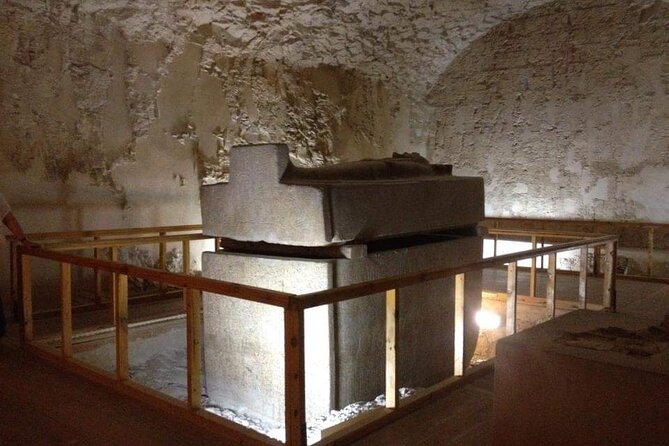
The Valley of the Kings was the burial ground for New Kingdom pharaohs from about 1500 B.C. and was used for roughly 500 years. About 62 tombs are associated with the valley, including those of major rulers such as Ramesses II, Seti I, and Tutankhamun.
The experience is not about a grand exterior. From outside, many tomb entrances can look like plain openings in the rock. Inside, the vivid painted scenes are the surprise, with colors that have survived for thousands of years.
Your guide explains how the tombs were cut and decorated, and discusses the labor involved. The visit lasts about two hours. Conditions vary from tomb to tomb, and the combination of heat, uneven ground, and stairs can make this a demanding morning.
Admission to the mentioned sites is included, but the supplied details do not specify which individual tombs or how many tombs are covered inside the Valley of the Kings. If a particular tomb is important to you, ask about the current admission arrangement before the visit.
Hatshepsut’s temple at Deir el-Bahari
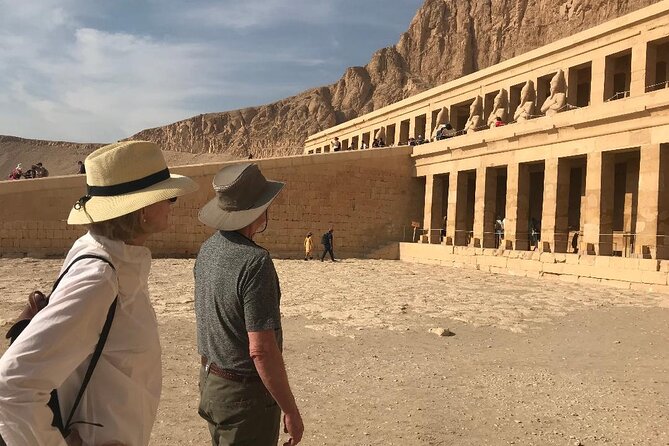
A short distance away, Hatshepsut’s temple rises in a dramatic setting below the cliffs. Its terraces and broad lines differ sharply from the enclosed temple spaces you see elsewhere.
This is also the place for one of ancient Egypt’s most compelling political stories. Hatshepsut ruled as pharaoh, not simply as a queen, and your guide explains how she gained power and governed Egypt. The temple later suffered damage under her successor, Thutmose III, which adds another layer to the story.
Plan on about 90 minutes. The site is exposed, and its terraces require walking in the sun. The approach is visually impressive, but you will appreciate water, a hat, and a steady pace.
The Colossi of Memnon
The two Colossi of Memnon are a quick 15-minute stop. They once flanked the entrance to the mortuary temple of Amenhotep III, a complex that was said to be among the most luxurious in ancient Egypt.
The temple is now largely ruined, but the two statues remain. Your guide explains why the Greek name Memnon is used even though the statues belong to an Egyptian pharaoh.
This is mainly a photo stop and a brief history lesson. It breaks up the morning without demanding another long walk.
Karnak Temple
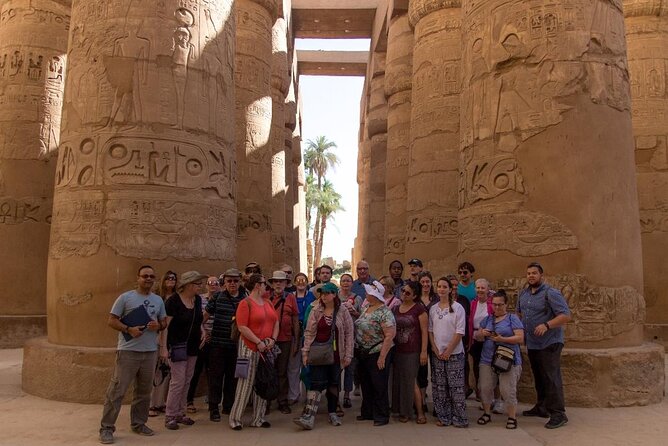
Karnak is where the scale of Luxor becomes almost difficult to grasp. The complex covers about 200 acres and records roughly 2,000 years of religious building and change.
You see gateways, sphinxes, statues, sanctuaries, a sacred lake, and the Great Hypostyle Hall, with its huge forest of columns. The visit centers on the temple of Amun-Ra and gives your guide plenty to explain about rulers, rituals, and additions made over centuries.
The listed visit lasts 90 minutes, which is enough for a guided introduction to major areas but not enough to inspect every corner. Stay close to your guide and save questions for the most important features. Karnak can feel overwhelming without a clear route, so the private Egyptologist is especially useful here.
Luxor Temple and the Avenue of the Sphinxes
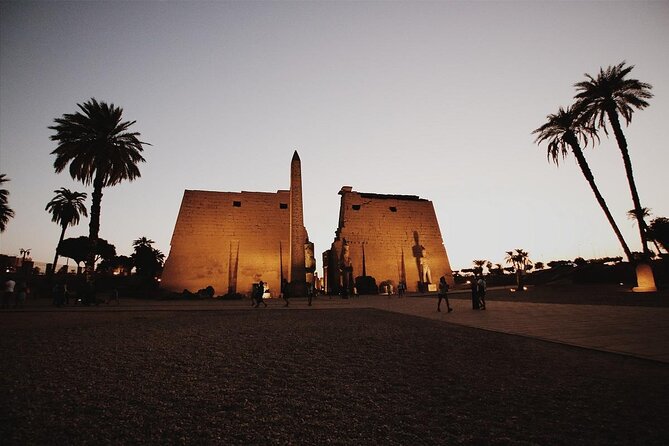
Luxor Temple sits in the modern city beside the Nile. Amenhotep III began the temple, and Ramesses II later added major sections, including large statues and an obelisk area.
The temple reflects several periods of Egyptian history, including ancient Egyptian, Roman, early Christian, and Arab use. That mixture makes it different from a site that belongs mainly to one era.
The Avenue of the Sphinxes once linked Luxor Temple with Karnak. Priests used the route during religious festivals, carrying the sacred boats of the gods. More than 2,000 sphinxes once lined the avenue, though many have not survived.
You spend about an hour at Luxor Temple, with time to see parts of the avenue from the temple and other points in town. The evening setting can be particularly appealing because the temple is close to the city and river, though the exact light and atmosphere depend on the day’s timing.
After the touring, you return to the ship, which remains docked at Luxor overnight.
Day 4: A flexible finish in Luxor
Checkout is at 10 a.m. You can remain aboard until departure, take a walk, and leave your luggage stored on the ship.
The final transfer can take you to the Luxor airport, train station, or another location in Luxor. This is practical if you are continuing to Cairo, flying onward, or arranging a separate stay in the city.
The fourth morning is not another major sightseeing block. Treat it as a departure window rather than a full touring day. If your transport is later, confirm how long you may remain aboard and what transfer time is planned.
What the $690 price really covers
At $690 per person, the package offers solid value if you want a guided, organized route. Three nights aboard a five-star ship, all listed meals, entrance fees, road transfers, sightseeing vehicles, bottled water during excursions, and a private Egyptologist would be costly and time-consuming to arrange separately.
The biggest value is control of the daily details. You do not need to negotiate every ride to a temple, find ticket offices, or work out how to connect Aswan with Kom Ombo, Edfu, and Luxor.
There are still costs to plan for. Drinks aboard the ship are not included, and tips are expected as part of normal tour etiquette. Laundry, massages, shopping, and other personal purchases are also separate. Abu Simbel is not part of the stated four-day route, so you should not assume that site is included.
The maximum group size is 20, while the package describes a private Egyptologist guide. Ask how the guide arrangement works for your booking, particularly if you want the most personal experience possible.
The guide can shape the entire trip
The strongest praise centers on John. His careful attention, patience with groups of different ages, and ability to explain ancient Egypt in a clear way are repeatedly highlighted.
That matters most at places such as Karnak, the Valley of the Kings, and Philae. Without context, a large temple can become a blur of columns and carved figures. A good guide gives you a story to follow, points out details you might miss, and keeps the day moving.
The feedback also points to strong organization from John and the drivers and local staff working with him. Families valued his effort to accommodate their needs, while couples appreciated his communication before and during the trip. The overall rating is 5 out of 5, with 14 reviews and 100 percent recommending the experience.
That praise should not make you ignore the schedule. Even with a strong guide, three major touring days can leave you tired. Ask questions early about start times, included tombs, the exact ship, and how private the guide service will be.
Who should book this cruise?
I would choose this experience if you want the major Aswan to Luxor sights handled in one package, with meals, tickets, transport, and guiding already arranged. It suits first-time visitors, families who want help with logistics, and anyone who prefers to spend time looking at temples rather than planning connections.
It is also a good match for people who want a balance of ancient sites and time on the Nile. You get serious sightseeing, but you also have long periods aboard ship to rest.
I would hesitate if you want a very slow cruise, dislike fixed schedules, or need extensive mobility support. The itinerary includes stairs at the Unfinished Obelisk, walking through large temple complexes, uneven surfaces, heat, and a full day around Luxor.
Before booking, confirm the ship name, cabin details, guide arrangement, daily pickup times, and any extra charge for special tombs or optional visits. Also remember that the cancellation deadline is three full days before the start time for a full refund, and poor weather may lead to a different date or a full refund.
Final verdict
This is a strong value-focused Nile itinerary, especially for a first visit to southern Egypt. It covers the essential temples, adds useful modern and religious context, and removes much of the transport work that can make independent planning tiring.
I would book it if your priority is a well-organized route with a highly praised guide, full meals, and a long list of included sites. I would look elsewhere only if you want fewer monuments per day, more free time, or a cruise designed around relaxation rather than thorough sightseeing.
FAQ
How long is the Nile cruise?
The experience lasts four days and three nights, traveling from Aswan to Luxor.
What meals are included?
The package includes three breakfasts, three lunches, and three dinners. Drinks aboard the ship are not included.
Which major sites are visited?
The route includes Philae Temple, the Aswan High Dam, the Unfinished Obelisk, Kom Ombo Temple, Edfu Temple, the Valley of the Kings, Hatshepsut’s temple, the Colossi of Memnon, Karnak Temple, and Luxor Temple. It also includes the Esna Lock and the Avenue of the Sphinxes.
Is transportation included?
Yes. Pickup and drop-off are offered, and transport between the ship and sightseeing sites is included. On the final day, you can be transferred to the Luxor airport, train station, or another Luxor location.
Is a guide included?
Yes. A private Egyptologist tour guide is included. John is the guide most closely associated with the experience and is praised for his explanations, care, patience, and organization.
What is the cancellation policy?
You can receive a full refund if you cancel at least three full days before the experience start time. Cancellations or changes made less than three full days ahead are not refunded or accepted. If poor weather causes cancellation, you are offered another date or a full refund.
Just added around Aswan
- Sailing Nile Cruise from Aswan to Luxor for 2 Nights★ 4.5 · 139 reviews
- 4-Days Aswan sails Nile Cruise Luxor &Abu Simbel.Hot air Balloon★ 4.5 · 77 reviews
- 4-Days Nile Cruise From Aswan To Luxor Abu Simbel and Air Balloon★ 4.5 · 2 reviews
- 4 Days Nile Cruise &Hot Air Balloon on M/S Movenpick Royal Lilly★ 5.0 · 4 reviews
- Sailing Nile cruise from Aswan to Luxor includes tours for 3 nights★ 5.0 · 16 reviews
- 8 Nights Egypt Tour,Cairo,Luxor,Aswan&Abu Simbel,Nile Cruise,Hot Air Balloon★ 4.5 · 11 reviews
- Sailing Nile cruise from Aswan for 2 nights★ 4.0 · 11 reviews
- 4-Day Nile Cruise: Aswan to Luxor & Abu Simbel + Hot Air Balloon★ 4.5 · 35 reviews
Nile Cruises, compared.
4-Days Nile Cruise From Aswan To Luxor including Abu Simbel and Hot Air Balloon
Read our review →
Dinner Cruise on the Nile River with Entertainment
Read our review →
4-Day 3-Night Nile Cruise from Aswan to Luxor&Abu Simbel+Balloon
Read our review →
Nile Dinner Cruise with Belly Dancer Show with Pickup
Read our review →
4-Day 3-Night Nile Cruise from Aswan to Luxor including Abu Simbel, Air Balloon
Read our review →
4-Day Nile Cruise from Aswan to Luxor with Guide
Read our review →Browse the lists this tour appears in