
Review · NILE CRUISES
12 Days Cairo – Alexandria and Nile Cruise by Flight (Ancient Egypt)
Egypt rewards a well-planned route. This 12-day private tour links the Pyramids of Giza, ancient temples, royal tombs, Cairo’s Islamic and Coptic quarters, Alexandria, and Abu Simbel without asking you to arrange the complicated pieces yourself. I especially like the private transfers and the Egyptologist guide, two features that make a first visit to Egypt far easier to manage.
I also like the balance between famous sights and less familiar places, from the Unfinished Obelisk in Aswan to the Roman Amphitheatre in Alexandria. The main drawback is the pace: several days are long, and Day 7 includes about six hours of driving to and from Abu Simbel. You gain a remarkably full view of Egypt, but you will need energy for it.
Key points to know before booking
- The Pyramids and Saqqara share one long Cairo sightseeing day: You see Giza’s three great pyramids, the Sphinx, lunch, and Djoser’s Step Pyramid.
- The Nile cruise covers Luxor, Edfu, Kom Ombo, and Aswan: This gives you a comfortable base while ancient temples pass by the river.
- Abu Simbel requires a serious road journey: The temples are superb, but the return drive to Aswan takes about three hours.
- The tour is private: Your group receives a private vehicle, private transfers, and an Egyptologist guide rather than joining a large coach.
- Most major costs are bundled into $3,333: Flights, hotels, cruise accommodation, breakfasts, eight lunches, four dinners, transfers, and listed admissions are included.
- The final Cairo day is free: Day 11 gives you time to rest, shop, or arrange your own plans before departure.
What the $3,333 price really covers
At $3,333 per person, this is not a shoestring Egypt trip. It is designed for someone who values organization, private transport, and a full program over finding the lowest possible price.
The price includes the Cairo to Luxor flight, the Aswan to Cairo flight, hotel nights, Nile cruise accommodation, private air-conditioned vehicles, an English-speaking Egyptologist guide, airport assistance, bottled water, and most meals. Eight lunches, eleven breakfasts, and four dinners are listed, so you will not be paying for every meal separately.
That package has real value in Egypt. Airport transfers, train or flight connections, hotel check-ins, and Nile cruise boarding can take time and patience when arranged independently. Here, a representative meets you at Cairo airport, helps with arrival formalities, and continues to assist with transfers throughout the trip.
You should still budget for the Egyptian entry visa, optional activities, tips, and anything not named in the inclusions. The tipping kitty is specifically excluded, so ask for current guidance before departure. The price also does not tell you the exact hotel or cruise vessel, which is worth confirming before you pay.
More Nile Cruises in Cairo:
- Cairo: Dinner Cruise on the Nile River with Entertainment
★ 4.2 · 2,190 reviews - Cairo: Nile Dinner Cruise with Belly Dancer Show with Pickup
★ 4.4 · 835 reviews - Cairo: Dinner Cruise on the Nile River
★ 4.2 · 741 reviews
Cairo begins with Giza and Saqqara
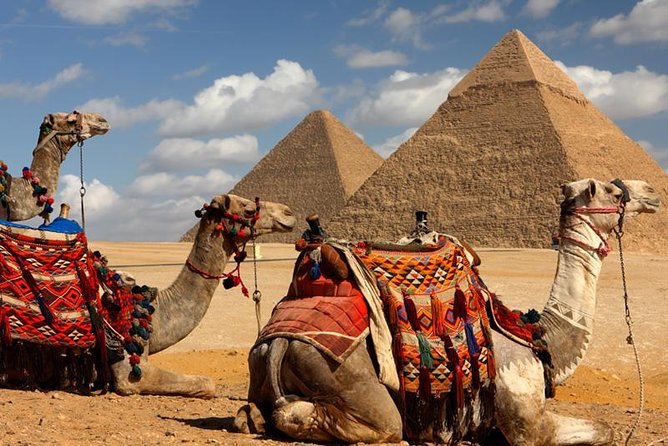
Your first full sightseeing day puts ancient Egypt right in front of you. At Giza, you visit the pyramids of Khufu, Khafre, and Menkaure, then see the Sphinx guarding the complex.
The scale is the point. Photos flatten the pyramids, while your guide can explain how the monuments differ and how the Sphinx fits into the royal setting. Admission is included, but the itinerary does not specify interior pyramid access, so ask if entering one of the pyramids matters to you.
After lunch at a local restaurant, you continue to Saqqara for Djoser’s Step Pyramid. This is a useful pairing. Giza shows the mature pyramid form, while Saqqara lets you see an earlier experiment in monumental stone building linked with the architect Imhotep.
Allow for a full eight-hour day. The combination is rewarding, but Cairo traffic and heat can make the schedule feel demanding. Wear shoes that can handle uneven ground, bring water, and use the included bottled water rather than relying on finding supplies at every stop.
The Egyptian Museum, the Citadel, and Khan el Khalili
Day 3 shifts from pyramids to Cairo’s museums, Islamic monuments, and old market streets. The Egyptian Museum visit lasts about three hours and includes pharaonic objects and the Mummies’ Room.
This is an important stop for context. After seeing tombs and temples in later days, you will better understand the objects displayed here. The itinerary specifically highlights King Tutankhamen and the royal mummies, though museum displays can change, so do not assume every object will be presented in the same arrangement.
After lunch, you visit the Citadel of Salah El-Din. For more than 700 years it served as a seat of power and helps explain how Cairo was defended and governed after the age of the pharaohs.
The day ends at Khan el Khalili, Cairo’s famous bazaar. I would treat this as a place to browse rather than rush into purchases. You will find plenty of activity and sales talk, but the value is in seeing a working market area and getting a feel for Cairo beyond its ancient monuments.
Luxor starts with Karnak and Luxor Temple
On Day 4, you check out, fly from Cairo to Luxor, and transfer to the Nile cruise by private van. Embarkation is scheduled before noon, so an early start is likely.
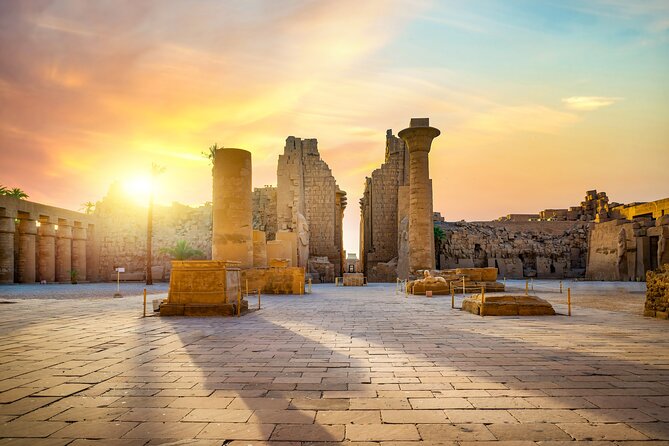
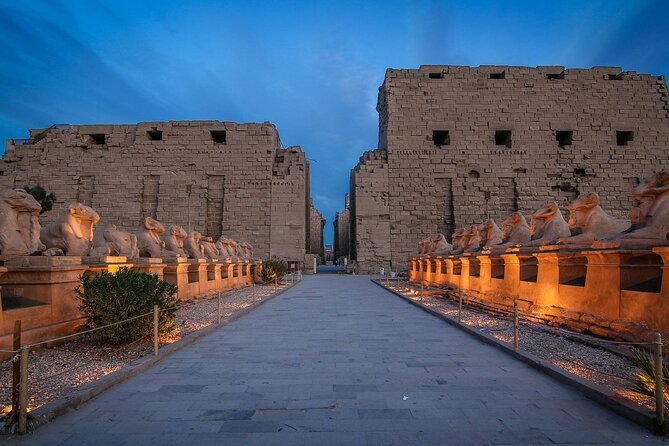
The afternoon focuses on Luxor’s East Bank. Karnak is the largest temple complex on the route and can feel almost like an ancient city of columns, courts, and processional spaces. Your guide is particularly useful here because the site was built and altered over many generations.
Luxor Temple offers a different mood. It sits in the heart of ancient Thebes and was linked with the god Amun-Ra. Its connection with major rulers, including Ramses II, helps show how Egyptian rulers used temples to connect political power with religion.
You return to the ship for dinner and an Egyptian folkloric show operated by the staff. This is a pleasant first night on board, though the exact entertainment can vary. The cruise becomes your hotel for several nights, which cuts down on packing and unpacking.
A few more river trips around Cairo worth comparing
- 2-Hour Nile River Dinner Cruise From Cairo
★ 4.5 · 672 reviews - ViP Private Effective Nile River Dinner Cruise in Cairo
★ 4.5 · 370 reviews - Nile River Dinner Cruise on a Yacht with Open Buffet
★ 4.5 · 292 reviews - Cairo Dinner Cruise in Nile River With Belly Dancer & Tanora show
★ 4.5 · 256 reviews
The Valley of the Kings reveals royal Egypt
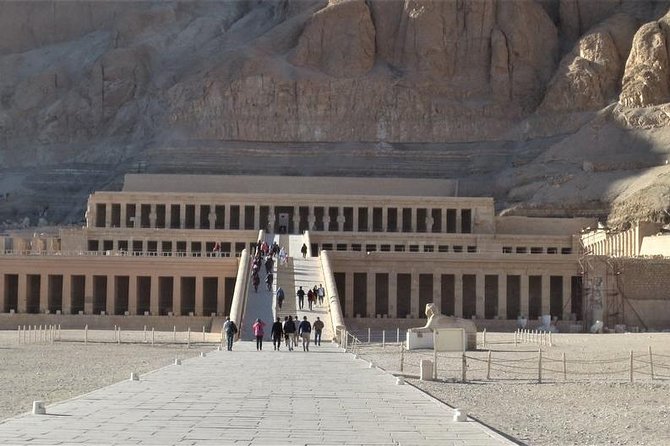
Day 5 crosses to Luxor’s West Bank, where the Valley of the Kings served as a burial ground for Theban rulers. The itinerary allows about three hours here, followed by the Temple of Hatshepsut and the Colossi of Memnon.
The valley is not about grand exteriors. Its importance lies underground, where tombs were cut into the hills and decorated for the afterlife. Entry to individual tombs can be governed by current site rules, so ask your guide which tombs are included and whether extra tickets are needed.
Hatshepsut’s temple at Deir el Bahari is one of the day’s strongest sights. Its broad terraces and cliff setting make it visually different from Karnak and Luxor Temple. Your guide can also explain Hatshepsut’s unusual position as a female ruler who adopted royal imagery.
The Colossi of Memnon take only about 30 minutes. They are a short photo stop, not a full museum visit, but their size makes them a fitting final stop before returning to the ship for lunch and free time.
Edfu and Kom Ombo make the cruise worthwhile
The Nile cruise earns its place in this itinerary on Day 6. Instead of changing hotels, you sail toward Edfu and Kom Ombo while meals are served on board.
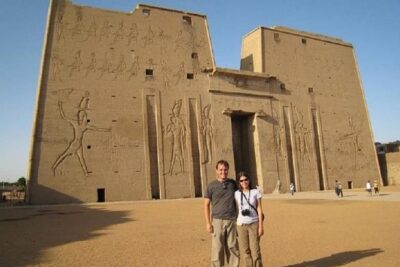
At Edfu, you visit the Temple of Horus, one of Egypt’s best-preserved temples. Its condition makes it easier to imagine how a functioning temple might have looked, with monumental walls, carved scenes, and a strong sense of enclosure.
The ship then sails toward Kom Ombo. This temple is unusual because it served two gods, Sobek and Haroeris. The paired dedication gives your guide a good chance to explain how Egyptian religious practice could bring different divine traditions together in one place.
The schedule includes touring, meals, sailing, and time to rest on the sun deck. I like this rhythm after the packed Cairo days. You can watch the Nile banks pass by instead of sitting in a road vehicle, though the cruise schedule still leaves little room for independent exploration at each port.
Abu Simbel is spectacular, but Day 7 is long
Abu Simbel is the farthest major sight on the route and one of the most memorable. From Aswan, you travel by private air-conditioned van, visit the temples built by Ramses II, and return by road. The listed touring time is about eight hours, with the drive back to Aswan taking roughly three hours.
The larger temple is dedicated to Ramses II and the god Rahorakhty. The smaller temple honors Queen Nefertari as well as the king. Their scale and carved facades make this more than a routine temple visit.
I would not treat Abu Simbel as an optional extra unless you strongly dislike long road days. It is one of the clearest reasons to choose this itinerary over a shorter Cairo and Luxor trip. At the same time, the day can be tiring, particularly after several early starts. Carry snacks, water, sun protection, and anything you need for a long vehicle ride.
Aswan combines engineering, worship, and stonework
Day 8 covers three very different Aswan sights before your flight back to Cairo. The High Dam shows modern Egypt’s effort to control the Nile floods, while the ancient sites show how much earlier societies depended on the same river.
A motorboat carries you to Agilkia Island for the Temple of Philae. The temple was built during the Greco-Roman period and dedicated to Isis, the mother of Horus. Its island setting makes the approach by boat part of the experience, not just a means of transport.
The Unfinished Obelisk offers a close look at ancient stoneworking. Carved from red granite and dedicated to Amun-Ra, it shows how a massive monument could remain incomplete when a flaw affected the stone.
After the Aswan touring, a representative takes you to the airport for your flight back to Cairo. This is a packed day, so keep your luggage easy to handle and expect little free time before the flight.
Alexandria adds a Greek and Roman chapter
The Alexandria day trip begins with a drive from Cairo and visits the modern Alexandria Library, built on the site associated with the ancient center of learning. The library is not an ancient building, but it connects the modern city with Alexandria’s role in the ancient world.
You then visit the Roman Amphitheatre, followed by Pompey’s Pillar. These stops shift the focus from pharaonic Egypt to the Greco-Roman period. That broader timeline is one of the tour’s strengths.
The itinerary also includes Sultan Qaitbay Citadel from outside. Since this is an exterior visit, confirm how much time is planned there if the fortress is a priority for you. After sightseeing and lunch, you drive back to Cairo for the night.
Alexandria is a worthwhile addition for history fans, but it creates another long day on the road. If you prefer slow travel, this is one of the places where you may wish for an overnight stay. On this tour, the benefit is fitting another major Egyptian city into the same trip.
Cairo’s Islamic and Coptic quarters complete the picture
Day 10 is one of the most culturally varied days. You begin with Ahmed Ibn Tulun Mosque, described as the oldest intact, functioning Islamic monument in Cairo. You then see Sultan Hassan Mosque and Madrasa, followed by El Refa’i Mosque.
These buildings add architectural depth to a trip that could otherwise focus almost entirely on ancient Egypt. The scale and design of Sultan Hassan in particular help you understand Cairo as a major Islamic capital, not simply a gateway to the pyramids.
After lunch, the Coptic portion includes the Hanging Church, Church of St. Sergius and Bacchus, and Ben Ezra Synagogue. The Church of St. Sergius is associated with the story of the Holy Family’s flight from Herod, while Ben Ezra is described as Egypt’s oldest synagogue, dating to the ninth century.
I appreciate this inclusion because it gives you a fuller view of Egypt’s religious past and present. Clothing should be respectful at religious sites, and your guide can explain local customs as you go.
Private touring and the human side of the trip
The private format is a major advantage. You travel in a private air-conditioned vehicle, receive private airport and hotel transfers, and tour with an English-speaking Egyptologist guide. That structure gives you more control than a large group, though the daily schedule remains full.
The agency has received strong praise for prompt communication, airport assistance, drivers, and organization. Guides named Amani, Safwat, and Shimaa Esmail have earned particular praise in past tour experiences, so I would ask whether one of them is available when you book. Hany is also mentioned for helping with communication and planning.
The feedback is not entirely perfect. One account raised concerns about guide trust, which is a reminder to confirm what is included at each site and to keep optional costs clear. Most of the praise centers on reliable transfers, attentive service, and a trip that keeps moving without leaving you to solve every problem alone.
The tour is recommended by 90 percent of its published participants and carries a 4.8 rating from 10 reviews. That is encouraging, but the sample is small. I would value the strong pattern of praise for organization while still asking detailed questions before departure.
Who should book this Egypt itinerary?
I would choose this tour if you want to see Egypt’s major ancient sights in one organized trip and prefer private service to a large coach. It suits first-time visitors, history fans, families with an adult accompanying children, and people who want airport and hotel logistics handled for them.
I would hesitate if you want long afternoons free, independent wandering, or slow stays in Alexandria and Aswan. The route is ambitious, and Abu Simbel plus the Alexandria drive require stamina.
Cancellation terms are strict close to departure. A full refund is available when you cancel at least six full days before the start time, a 50 percent refund applies two to six days before, and cancellations less than two days before receive no refund. Confirmation is expected within 48 hours, subject to availability.
Should you book it?
Book this tour if your priority is coverage, comfort, and guidance. For $3,333, you receive a carefully connected route with domestic flights, a Nile cruise, private vehicles, most meals, and major admissions included.
Before paying, confirm the hotel names, cruise vessel, pyramid interior access, current visa requirements, tipping expectations, and the exact inclusions at Philae and other sites. If those details suit you, this is a strong way to see Egypt’s greatest monuments without spending your holiday negotiating every transfer.
FAQ
Is this a private Egypt tour?
Yes. It is a private tour and only your group participates. Private transfers, vehicles, and an English-speaking Egyptologist guide are included.
What cities and sites does the tour visit?
The route includes Cairo, Giza, Saqqara, Luxor, Edfu, Kom Ombo, Aswan, Abu Simbel, and Alexandria. Major sites include the Pyramids of Giza, the Egyptian Museum, Karnak, Luxor Temple, the Valley of the Kings, Philae, and several Cairo mosques and churches.
Are domestic flights included?
Yes. The tour includes a flight from Cairo to Luxor and a flight from Aswan to Cairo.
Is Nile cruise accommodation included?
Yes. The itinerary includes accommodation on a Nile cruise between Luxor and Aswan.
How many meals are included?
The package includes 11 breakfasts, eight lunches, and four dinners. Extra meals not listed are not included.
Is the Egypt entry visa included?
No. The entry visa is excluded from the tour price.
Are children allowed on the tour?
Yes, but children must be accompanied by an adult.
Is a vegetarian meal available?
Yes. A vegetarian option is available, but you should request it when booking.
What is the cancellation policy?
You can receive a full refund if you cancel at least six full days before the experience starts. A 50 percent refund applies when cancelling two to six full days before, while cancellations less than two days before are not refunded.
Just added around Cairo
- night-tour Nile dinner cruise with open buffet and belly dancer★ 5.0 · 9 reviews
- Dinner Nile Cruise belly dancer open buffer tanora show sailing on Nile★ 5.0 · 9 reviews
- 8 Day Stunning Cairo Pyramids and Nile cruise and Hurghada All inclusive★ 5.0 · 43 reviews
- Private Full Day Tour Giza Pyramids ,Museum & Nile Felucca Boat★ 4.0 · 3 reviews
- Cairo dinner Nile cruise with belly dancer show on Nile river★ 5.0 · 2 reviews
- Cairo Private layover tour Giza pyramids,sphinx&Nile Felucca Boat★ 4.5 · 13 reviews
- Private Tour Giza Pyramids , Sphinx & Dinner Nile cruise Show★ 4.5 · 3 reviews
- VIP Private Tour Giza Pyramids ,Nile Dinner Cruise&Pyramid Inside★ 5.0 · 3 reviews
Nile Cruises, compared.
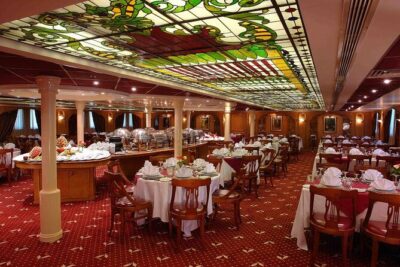
4-Days Nile Cruise From Aswan To Luxor including Abu Simbel and Hot Air Balloon
Read our review →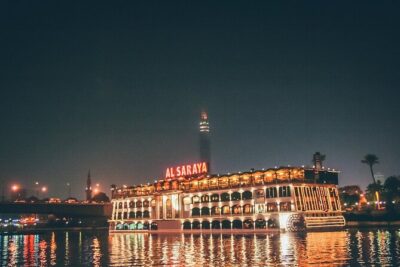
Dinner Cruise on the Nile River with Entertainment
Read our review →
4-Day 3-Night Nile Cruise from Aswan to Luxor&Abu Simbel+Balloon
Read our review →
Nile Dinner Cruise with Belly Dancer Show with Pickup
Read our review →
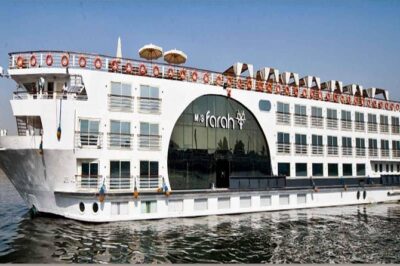
4-Day 3-Night Nile Cruise from Aswan to Luxor including Abu Simbel, Air Balloon
Read our review →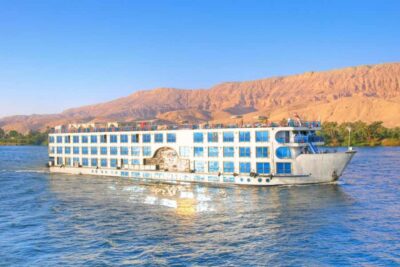
4-Day Nile Cruise from Aswan to Luxor with Guide
Read our review →Browse the lists this tour appears in