
Review · NILE CRUISES
Private 7-day Egypt Highlights Tour with Nile River Cruise
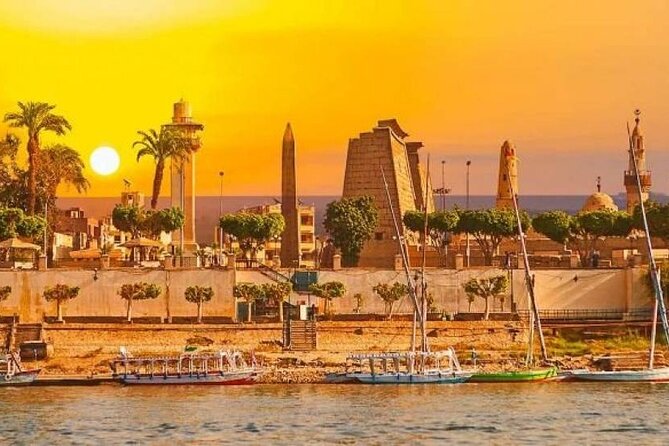
Egypt in one week is possible. This private package links Cairo’s pyramids with a three-night Nile cruise from Aswan to Luxor, giving you ancient temples, royal tombs, and major museums without arranging each transfer yourself. I especially like the private vehicle and guide, plus the full-board cruise that takes care of meals while you move between Egypt’s best-known monuments.
I also like the sensible mix of famous sights and less obvious stops, from the unfinished obelisk in Aswan to Old Cairo’s churches and synagogue. The main drawback is the pace. Abu Simbel requires a very early, roughly eight-hour excursion, and the itinerary packs a great deal into seven days. You will see a lot, but this is not a slow holiday.
Key points to know before booking
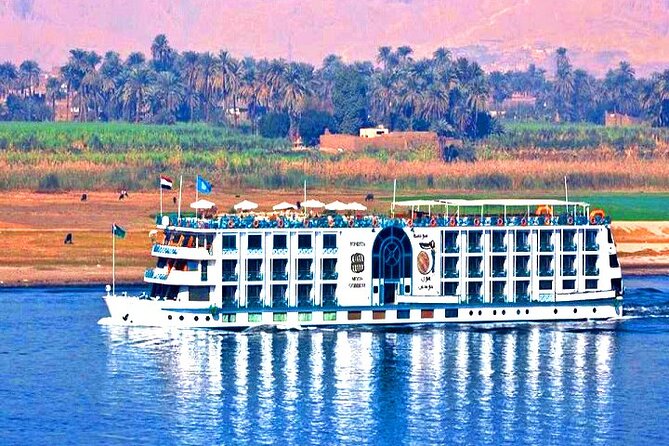
- Three nights on the Nile: The cruise links Aswan, Kom Ombo, Edfu, and Luxor, with breakfast, lunch, and dinner included on board.
- A private touring setup: Your group receives private transfers and a private Egyptologist guide rather than joining a large sightseeing bus.
- Abu Simbel is the long day: The temples are extraordinary, but the visit takes about eight hours from Aswan.
- Cairo and Luxor both get proper attention: You see the pyramids, Egyptian Museum, Valley of the Kings, Karnak, Luxor Temple, and more.
- Meals and flights are built in: The package includes three Cairo nights, three cruise nights, domestic flights, entrance fees, and several meals.
- The price is $1,879.30 per person: That is a substantial sum, but it covers many costly moving parts for a short Egypt trip.
Why this seven-day route works
Egypt is spread out, and the distances can make independent planning tiring. Cairo sits in the north, while Aswan and Luxor are far south along the Nile. This route uses flights to bridge the gap, then lets the cruise handle the river section.
That structure gives you three different kinds of Egypt. Cairo brings the giant monuments and crowded city life. The cruise offers a calmer rhythm between temple visits. Luxor gives you the greatest concentration of ancient sites, especially on the west bank.
I like that the tour does not use all seven nights on the ship. Two nights in Cairo at the beginning give you time to see the pyramids and Egyptian Museum before heading south. You return to Cairo for the final night and spend the last day at the Citadel, Old Cairo, and Khan el-Khalili.
The tradeoff is that the schedule leaves very little spare time. If you want extra museum hours, long meals, or independent wandering, you may find the program tight. If you have only a week and want the main sights covered, the route makes good practical sense.
More Nile Cruises in Cairo:
- Cairo: Dinner Cruise on the Nile River with Entertainment
★ 4.2 · 2,190 reviews - Cairo: Nile Dinner Cruise with Belly Dancer Show with Pickup
★ 4.4 · 835 reviews - Cairo: Dinner Cruise on the Nile River
★ 4.2 · 741 reviews
Day 1: A simple arrival in Cairo
Your arrival begins at Cairo International Airport, where a representative meets you and arranges a private, air-conditioned transfer to your hotel. The stated meeting time is 9:00 am, although your actual arrival details will determine how this works in practice.
This first day is intentionally light. You check in and sleep in Cairo rather than trying to force a sightseeing program after an international flight. That is a good choice. Egypt’s airport, traffic, heat, and time change can make arrival day more tiring than expected.
Three nights in Cairo are included on a bed-and-breakfast basis. Meals beyond breakfast are not generally included during the Cairo stay, so you should allow for those extra costs.
Day 2: The pyramids and Cairo’s Egyptian Museum
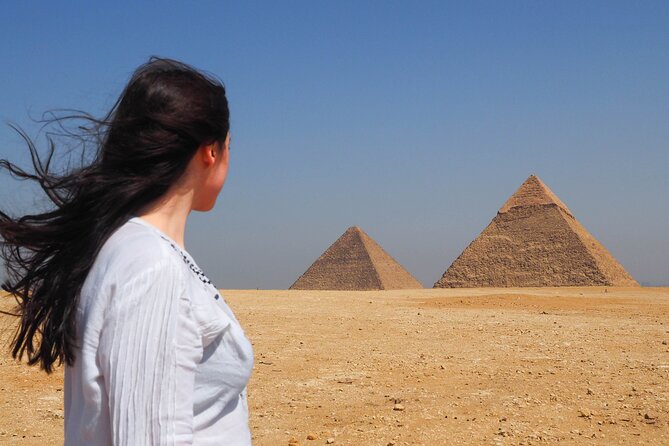
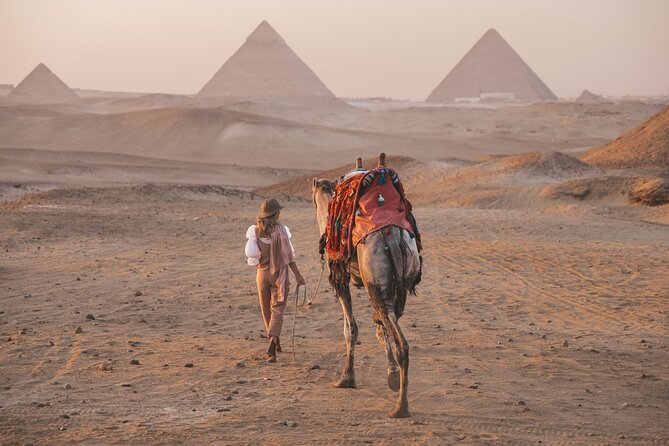
The second day begins with the Pyramids of Giza, including Cheops, Chephren, and Mykerinus. You also visit the Great Sphinx and the Valley Temple. The scheduled pyramid visit lasts about two hours, with admission included.
The pyramids are not a quick photo stop. Their size is difficult to understand until you are close to them, and the surrounding desert edge contrasts sharply with Cairo’s dense city. Your private guide can help explain the purpose of the pyramid complex and point out how the Sphinx and Valley Temple fit into the larger site.
The two-hour estimate is useful, but you should not read it as a guarantee of a leisurely visit. Crowds, traffic, heat, and optional access inside a pyramid can affect the pace. The listed entrance covers the planned visit, but you should ask your guide about any additional internal-ticket costs before agreeing to them.
The Egyptian Museum follows, with another scheduled two hours. Its collection includes more than 250,000 artifacts covering about 5,000 years, including the famous Tutankhamun treasures, gold, and jewelry. The museum is a powerful counterpoint to the outdoor monuments because it puts small objects, funerary goods, and royal possessions close to your eyes.
Admission to the museum is included, but the Mummies Room costs extra. If you care about royal mummies, ask about the additional fee and available time before entering. Two hours will give you a strong introduction, but not enough time to inspect every gallery.
You return to your Cairo hotel for the night. I would keep this evening simple. The next day requires an early transfer south, and the program becomes more demanding.
Day 3: Aswan, Philae, and the start of the Nile cruise
The southern section begins with the flight arrangements included in the package, followed by transfer to the cruise. Lunch is served on board, and the afternoon focuses on Aswan.
Philae Temple is the main attraction. Dedicated to Isis, it was among the last temples built in the classical Egyptian style, with construction beginning around 690 BC. Its island setting gives the visit a different feel from the huge temple complexes at Luxor. The monument was moved to higher ground after the Aswan High Dam threatened the original site, an important part of its modern story.
The schedule also includes the Aswan High Dam, completed in the 1960s and officially opened in 1971. The dam created Lake Nasser and changed Egypt’s control of the Nile, farming, electricity supply, and flood management. The stop lasts about 30 minutes, so expect a brief view and explanation rather than a long visit.
At the Unfinished Obelisk, you see a huge granite monument still attached to the quarry floor. Three sides of the shaft were completed, but cracks stopped the work. Had it been finished, the obelisk would have weighed about 1,168 tonnes. This stop helps you understand the difficult stonework behind Egypt’s polished temples and monuments.
The day also includes a felucca ride around Elephantine. The program gives about an hour to the unfinished obelisk and two hours to Philae, with lunch and dinner on board. You spend the night on the cruise, beginning three full nights on the Nile.
A few more river trips around Cairo worth comparing
- 7 Days Egypt Tour Package to Cairo and Nile Cruise
★ 5.0 · 62 reviews - 7 Days & 6 Nights by Flight Cairo Pyramids & Nile cruise Aswan To Luxor(Private)
★ 5.0 · 38 reviews - 7 Day Pyramids & Nile Cruise By Air
★ 5.0 · 30 reviews - Best of Egypt Tour 7 Days Discover Cairo & Nile Cruise Domestic Flights Inc
★ 5.0 · 5 reviews
Day 4: Abu Simbel and Kom Ombo
Abu Simbel is the most demanding part of the trip. The early excursion from Aswan takes about eight hours, including the long road journey and the temple visit. Breakfast and lunch are included on the cruise, but you should be prepared for a very early start and a full day away from the ship.
The two temples were carved into the mountain during the reign of Ramses II, between about 1274 and 1244 BC. The Great Temple features four huge statues of Ramses II, while the smaller temple honors Queen Nefertari and the goddess Hathor.
The temples were dismantled and rebuilt on higher ground to protect them from the rising waters created by the Aswan High Dam. That rescue project is one reason Abu Simbel matters beyond its spectacular facade. You are looking at both an ancient royal monument and a major modern conservation effort.
Admission is listed as free for this stop, but the long drive is the real cost in time and energy. If Abu Simbel is high on your Egypt wish list, the effort is worthwhile. If you prefer a relaxed cruise schedule, this is the day most likely to test you.
After returning, the ship sails to Kom Ombo. The temple here is unusual because it honors two gods, Sobek, the crocodile god, and Horus, the falcon god. Much of the existing complex dates from the Ptolemaic and Roman periods, between 332 BC and AD 395.
You continue toward Edfu, dine on board, and spend the night on the ship. A Galabeya party is also scheduled, giving the cruise a light social evening after two days of heavy sightseeing.
Day 5: Edfu Temple and Luxor by river
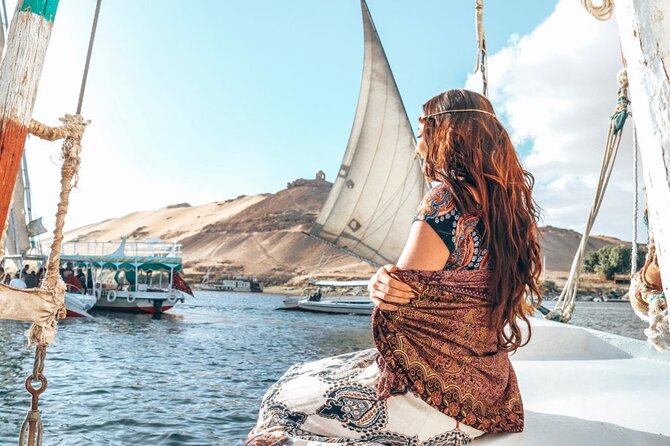
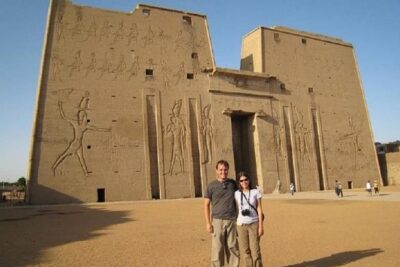
Edfu Temple is one of the best-preserved temples on the route. Dedicated to Horus, it was built during the Ptolemaic period, beginning under Ptolemy III in 246 BC. Its wall scenes include the mythic struggle between Horus and Seth, which may once have been performed as a religious drama.
The visit lasts about two hours, followed by sailing toward Luxor through the Esna Lock. Locks are a reminder that the cruise is not just transport between monuments. You are moving through a working river system, with the ship adjusting to the changing water level.
The day continues with Luxor Temple. Amenhotep III began much of the temple, while Tutankhamun and Ramses II added to it. Ramses II built the first pylon and decorated it with scenes connected to the Battle of Kadesh.
An evening visit can be especially appealing because the temple’s columns and courtyards take on a different character after sunset. The itinerary allows about two hours here, then you return to the ship for dinner and another night on board.
The cruise is full board, which is one of the package’s practical strengths. You do not need to find food between every temple visit, though drinks, tips, and personal purchases are not included.
Day 6: Luxor’s west bank and the return to Cairo
The west bank of Luxor is the most concentrated sightseeing day. You visit the Valley of the Kings, the Colossi of Memnon, the Temple of Hatshepsut, and Karnak.
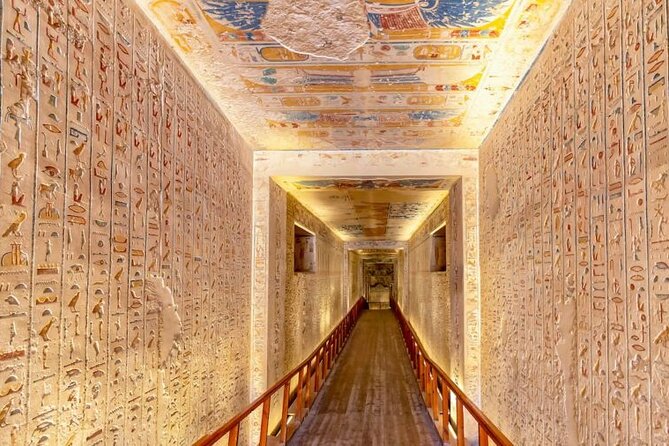
The Valley of the Kings occupies an isolated desert valley behind Deir el-Bahari. Pharaohs were placed in rock-cut tombs here, including richly decorated burial chambers. The number of tombs open to the public can change, and the standard entry normally covers a limited selection, so ask your guide which tombs are available and what extra tickets may apply.
The Colossi of Memnon take only about 15 minutes. These two massive statues, about 18 meters high, are the remains of a much larger complex built by Amenhotep III. It is a short stop, but the scale is impressive and it breaks up the drive between the main west-bank sites.
The Temple of Hatshepsut rises in broad terraces against the limestone cliffs. Its design makes strong use of the natural setting, and it tells the story of one of Egypt’s most prominent female rulers. Allow about two hours here, including time to walk through the terraces.
The final major sight is Karnak, a huge religious complex devoted to the Theban gods Amun, Mut, and Khonsu. It includes sanctuaries, pylons, kiosks, and obelisks built and expanded by many rulers. Two hours gives you a meaningful look, but Karnak rewards extra time if your schedule allows it.
Lunch is included during the day. After sightseeing, you fly back to Cairo and transfer to your hotel for the final night. The included flight arrangements are valuable because the overland alternative would consume much more of your last day.
Day 7: The Citadel, Old Cairo, and Khan el-Khalili
The final day begins at 8:00 am with the Citadel of Saladin. Built on the Mokattam Hills in 1183, the fortress offers broad views across Cairo. The Mosque of Muhammad Ali Pasha is the main attraction, with alabaster walls and a design by the Turkish architect Yousif Boushnaq.
The Citadel visit is listed at about two hours. Its elevated position also gives you a useful view of Cairo’s scale before you return to street level.
Old Cairo follows, with the Hanging Church, Ben Ezra Synagogue, Church of St. Barbara, and Church of Abu Serga. These sites show a side of Cairo that the pyramids cannot provide. The area’s Coptic churches and historic synagogue add religious and architectural variety to the final day.
You finish at Khan el-Khalili, a maze of alleys that has served as a trading center since the 14th century. This is the place to browse, bargain, and buy small souvenirs, though you should keep your belongings close and agree on prices before purchasing anything.
After the bazaar, private transport takes you to Cairo airport for your international departure. The timing is important: this is a sightseeing day followed by an airport transfer, so I would avoid booking a flight that leaves too early.
What the $1,879.30 price includes
At $1,879.30 per person, this is not a budget package. The value comes from the number of services bundled into one price:
- Three Cairo hotel nights with breakfast
- Three full-board nights on the Nile cruise
- Private transfers
- Domestic flights listed in the package
- Entrance fees for the scheduled sights
- Five lunches, three dinners, and three breakfasts
- Private guided touring
The price is most attractive if you value convenience and want one company handling the complicated parts. Flights, cruise space, transfers, admission fees, and guides can be difficult to coordinate separately in a seven-day trip.
You still need a budget for tips and extras. The package specifically excludes tipping and additional expenses. The Egyptian Museum Mummies Room also costs extra, and the data does not specify every optional ticket or beverage charge.
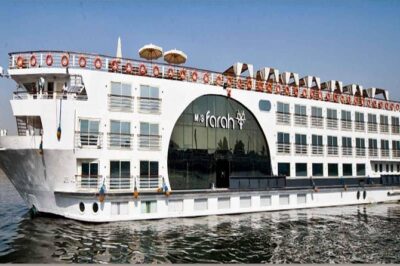
The cruise ship may be the M/S Queen of Hansa, based on the available trip details. Cabin service can vary, but cabin steward Mustafa is specifically praised for helping with water, coffee, and daily needs. That suggests the onboard experience may be attentive, though I would not treat one named staff member as a guaranteed assignment.
Who should book this private Egypt tour?
I would recommend it to a first-time visitor with only seven days who wants the major monuments without managing domestic transport. Families and small groups may also like the private format because the schedule can feel more personal than a large coach tour.
The tour is also a good fit if you value a guide at complex sites. The pyramids, Karnak, and the Valley of the Kings are much easier to appreciate when someone explains what you are seeing.
I would hesitate if you dislike early starts, long road trips, or tightly arranged days. Abu Simbel is especially demanding, and the itinerary leaves little time for unplanned stops. A longer trip would let you slow down in Cairo, add more time in Luxor, or rest between major sites.
Should you book it?
Book this tour if your priority is coverage: Cairo, Aswan, Abu Simbel, Kom Ombo, Edfu, Luxor, and Old Cairo all fit into one organized week. The private transfers, guide, cruise, flights, entrance fees, and included meals make the high price easier to justify.
Skip it if you want a loose schedule or need plenty of downtime. For a short first visit, though, this is a strong route with one clear warning: expect early mornings and long sightseeing days, especially around Abu Simbel. The reward is a remarkably full introduction to Egypt without spending your holiday solving transport problems.
FAQ
Where does the tour begin?
The tour begins at Cairo International Airport in Heliopolis, Cairo Governorate, with a stated start time of 9:00 am.
How long is the experience?
The tour lasts approximately seven days.
Is this a private tour?
Yes. The experience is private, and only your group participates.
How many nights are spent in Cairo?
The package includes three nights in Cairo, based on bed and breakfast.
How many nights are spent on the Nile cruise?
The package includes three nights on a full-board Nile cruise between the Aswan and Luxor portion of the route.
Are domestic flights included?
Yes. The package includes flight tickets listed as Cairo to Aswan, Aswan to Hurghada, and Hurghada to Cairo.
Is Abu Simbel included?
Yes. The itinerary includes an early visit to Abu Simbel from Aswan, with a scheduled duration of about eight hours.
Is the Egyptian Museum Mummies Room included?
No. The Egyptian Museum entrance is included, but admission to the Mummies Room is not included.
Are meals included?
Yes. The package includes five lunches, three dinners, and three breakfasts. The Nile cruise is based on full board, while Cairo accommodation is based on bed and breakfast.
What happens if I cancel?
You can cancel up to 24 hours before the experience begins for a full refund. Cancellations or changes made less than 24 hours before the start time are not refunded or accepted.
Just added around Cairo
- night-tour Nile dinner cruise with open buffet and belly dancer★ 5.0 · 9 reviews
- Dinner Nile Cruise belly dancer open buffer tanora show sailing on Nile★ 5.0 · 9 reviews
- 8 Day Stunning Cairo Pyramids and Nile cruise and Hurghada All inclusive★ 5.0 · 43 reviews
- Private Full Day Tour Giza Pyramids ,Museum & Nile Felucca Boat★ 4.0 · 3 reviews
- Cairo dinner Nile cruise with belly dancer show on Nile river★ 5.0 · 2 reviews
- Cairo Private layover tour Giza pyramids,sphinx&Nile Felucca Boat★ 4.5 · 13 reviews
- Private Tour Giza Pyramids , Sphinx & Dinner Nile cruise Show★ 4.5 · 3 reviews
- VIP Private Tour Giza Pyramids ,Nile Dinner Cruise&Pyramid Inside★ 5.0 · 3 reviews
Nile Cruises, compared.
4-Days Nile Cruise From Aswan To Luxor including Abu Simbel and Hot Air Balloon
Read our review →
Dinner Cruise on the Nile River with Entertainment
Read our review →
4-Day 3-Night Nile Cruise from Aswan to Luxor&Abu Simbel+Balloon
Read our review →
Nile Dinner Cruise with Belly Dancer Show with Pickup
Read our review →
4-Day 3-Night Nile Cruise from Aswan to Luxor including Abu Simbel, Air Balloon
Read our review →
4-Day Nile Cruise from Aswan to Luxor with Guide
Read our review →Browse the lists this tour appears in