
Review · NILE CRUISES
16 Day Cairo with Lake Nasser and Nile Cruise from Aswan to Luxor
Egypt rewards patient sightseeing. This 16-day journey links Cairo’s pyramids and Islamic monuments with Abu Simbel, Lake Nasser, and a classic Nile cruise from Aswan to Luxor. I especially like the rare three-night Lake Nasser sailing and the useful combination of domestic flights, hotels, guides, entrance fees, and transfers in one package.
I also like the range of experiences: you get ancient temples, Coptic churches, Alexandria’s Greco-Roman remains, Nubian culture, and time on the water. The main drawback is the pace. Several days are long, and the package price of $7,499.98 per person is a serious outlay, so you should be comfortable with organized travel and a full sightseeing schedule.
Key points to know before booking

- Abu Simbel comes early: You fly from Cairo to Aswan on Day 2, then visit Abu Simbel before settling into the Lake Nasser cruise.
- Lake Nasser is the unusual part: The three-night sailing reaches Amada, Wadi El Seboua, Dakka, Kalabsha, and the Tomb of Pennut.
- The Nile cruise covers the famous middle stretch: Philae, Kom Ombo, Edfu, Karnak, Luxor Temple, the Valley of the Kings, and Hatshepsut’s temple all feature.
- Cairo gets proper attention: You visit Saqqara, Giza, the Egyptian Museum, the Citadel, Islamic Cairo, Coptic Cairo, and Khan El Khalili.
- Alexandria takes two days: The itinerary includes the catacombs, Roman amphitheater, Qaitbay Citadel, Pompey’s Pillar, and the modern Alexandria Library.
- Good coordination is a major strength: Hass and the Love Egypt Tours team are praised for quick replies, custom planning, airport help, and competitive pricing. Guides named in the feedback include Abdul and Mohamed Fathi.
How the 16 days are arranged
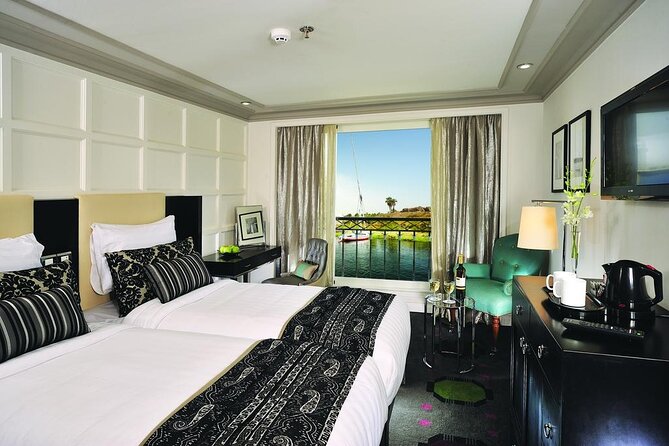
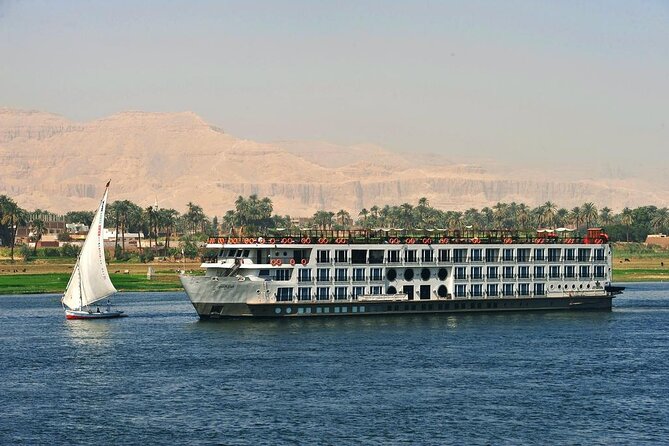
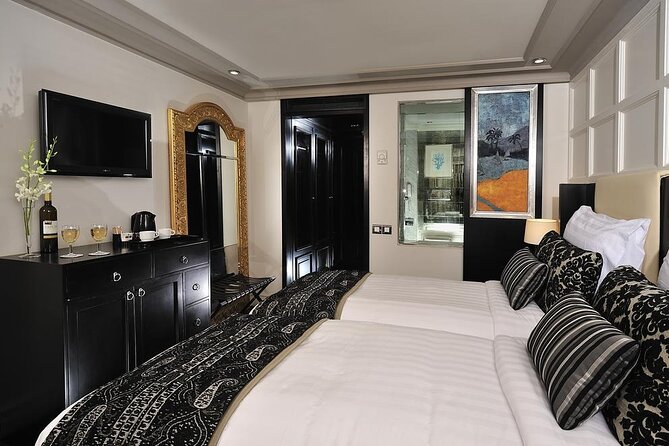
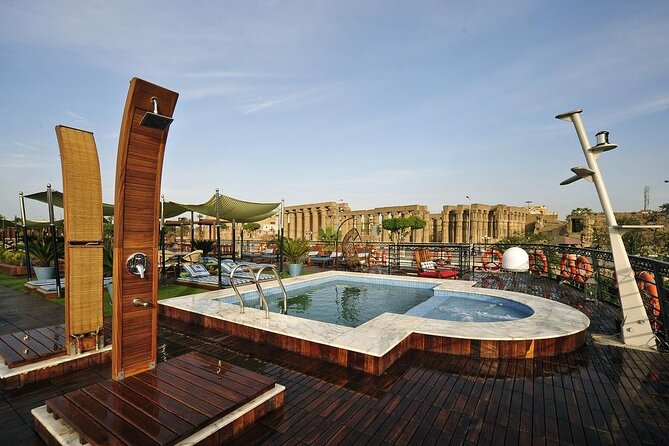
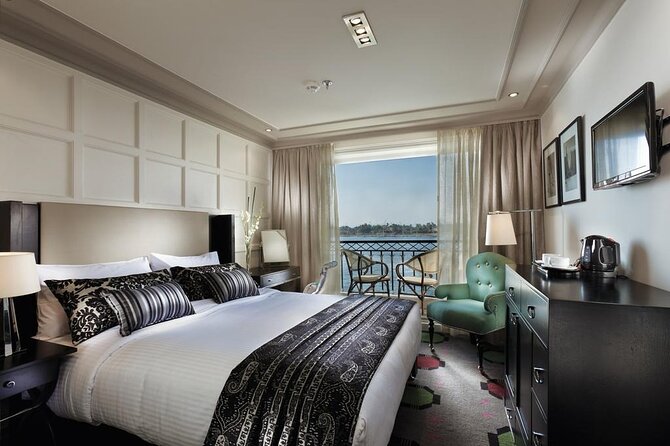
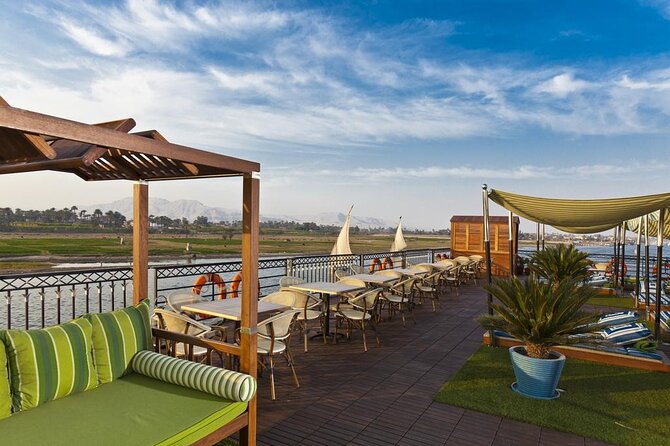
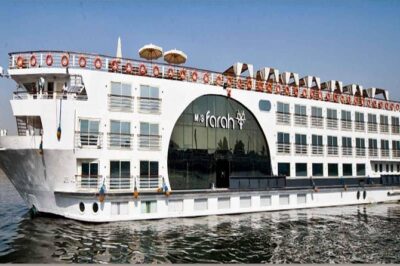
This is not a simple Cairo and Nile package. It moves through four distinct areas: Cairo, southern Egypt, Alexandria, and the two major waterways. You spend six nights in a five-star Cairo hotel, three nights on the five-star Movenpick Prince Abbas Lake Nasser cruise, two nights in Luxor, three nights on a five-star Nile cruise, and one night in Alexandria.
That adds up to 15 nights across 16 calendar days, which is normal for a departure day after breakfast. The included domestic flights are important. Flying Cairo to Aswan and Luxor to Cairo saves you from long overland transfers and gives the program a practical shape.
Transport is listed in deluxe cars, with English-speaking Egyptology guides and entrance fees for the stated visits. Eleven lunches, 15 breakfasts, and five dinners are included. Extra meals, personal spending, optional shows, tipping, and activities marked as optional are not included.
More Nile Cruises in Cairo:
- Cairo: Dinner Cruise on the Nile River with Entertainment
★ 4.2 · 2,190 reviews - Cairo: Nile Dinner Cruise with Belly Dancer Show with Pickup
★ 4.4 · 835 reviews - Cairo: Dinner Cruise on the Nile River
★ 4.2 · 741 reviews
Days 1 and 2: Easy arrival, then Abu Simbel
The first day is deliberately simple. A representative meets you inside Cairo International Airport, helps with arrival procedures, and transfers you to your hotel. That airport welcome is useful after a long flight, especially if this is your first visit to Egypt.
Day 2 begins with a hotel pickup and a flight to Aswan. After landing, you transfer to the Lake Nasser cruise and have lunch on board before visiting Abu Simbel. This is an ambitious first sightseeing day, but it puts one of Egypt’s greatest monuments near the front of the trip.
Abu Simbel consists of two huge rock-cut temples built near the border with Sudan. The larger temple honors Ramesses II, while the smaller temple is associated with Nefertari. The site was moved in modern times when the waters of Lake Nasser rose, a fact that adds another layer to the visit.
The scheduled Abu Simbel visit lasts about seven hours, including the cruise-related movements. You can also pay extra for the evening sound and light show. I would treat that show as optional rather than essential, since the temple visit itself is the day’s main event and you may already be tired from flying and sightseeing.
The cruise remains overnight in Aswan. That arrangement saves you from changing hotels and lets the waterway become your base for the next few days.
Days 3 to 5: The quieter side of Lake Nasser
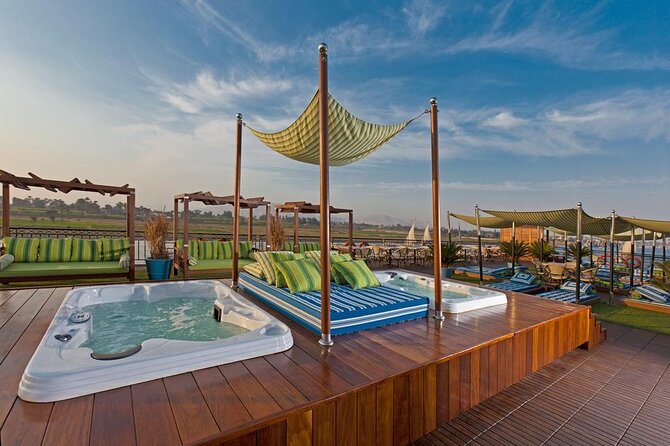
Lake Nasser is the strongest point of difference in this program. Many Egypt trips sail only between Aswan and Luxor, but this route reaches monuments in Nubia that are less familiar to first-time visitors.
On Day 3, you view Qasr Ibrim from the sundeck. You do not disembark there according to the schedule, so the experience is mainly a passing look at a historic site surrounded by the lake. After lunch, you visit the Temple of Amada, one of the oldest Egyptian temples still present along Lake Nasser.
The route then continues to Wadi El Seboua and the Tomb of Pennut. The tomb contains scenes of offerings, funerary rites, and judgment before the gods. Much of the inscription has been damaged or removed, but that partial survival is part of what makes the small site feel different from the grand temples.
An evening Nubian show party is planned on board. The ship stays at Wadi El Seboua.
Day 4 includes the Wadi El Seboua temples and the Valley of Lions, followed by the Temple of Dakka. Dakka was dedicated to Thoth, the god associated with wisdom, and its Greco-Roman character adds variety after the New Kingdom sites.
The schedule repeats Wadi El Seboua in the Day 4 description, so you should expect clarification from the operator about exactly when each temple is visited. That is a small planning point, but worth checking before departure.
The cruise then sails back toward Aswan. An Egyptian show is planned in the evening, with dinner and another overnight on board.
Day 5 brings the Temple of Kalabsha after breakfast and disembarkation from the Lake Nasser vessel. Kalabsha is an important late Egyptian temple, and it gives you one final look at monuments relocated or preserved around the reservoir.
You then board the regular Nile cruise before lunch. An optional afternoon visit to a Nubian village is available for an extra cost. The village visit is described as a chance to see colorful mud-brick homes, gardens, local handicrafts, farming, and henna work. Since it is not included, ask for the current price and exact timing before deciding.
Days 6 to 8: The classic Nile cruise
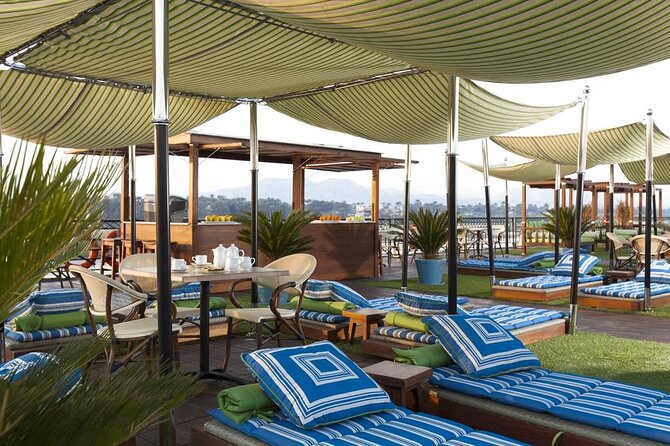
Day 6 begins with the Aswan High Dam, Philae Temple, and the Unfinished Obelisk. The High Dam explains why Lake Nasser exists and why so many Nubian monuments had to be moved or protected.
Philae requires a boat ride to its island location, although the listing does not specify the exact transfer arrangements. The temple complex is associated with Isis and is one of Aswan’s most memorable settings. The Unfinished Obelisk, still attached to the quarry floor, shows how ancient stoneworkers shaped enormous monuments and where a flaw in the granite could halt the entire project.
After lunch, the cruise sails to Kom Ombo. Its double temple is unusual because it serves two religious traditions in one structure, including the crocodile god Sobek and the falcon god Horus. The cruise then continues to Edfu for the night.
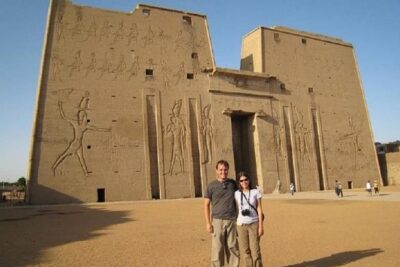
On Day 7, you visit the Temple of Horus at Edfu. This Ptolemaic temple is among Egypt’s best preserved, with large reliefs and clear architectural lines. It is one of the easiest places on the trip to picture a functioning ancient temple rather than a damaged ruin.
The ship sails to Luxor after lunch. Once there, you visit Karnak and Luxor temples on the East Bank. Karnak is huge, and two hours gives you a useful introduction, though not time to inspect every chapel and enclosure. Luxor Temple feels more compact and urban, with its setting beside modern Luxor adding to the contrast.
Day 8 crosses to the West Bank. The Valley of the Kings includes tombs associated with Tutankhamun, Ramses III, and Seti I, although the exact tombs open on a given day can vary. Entry to some tombs, including special tombs, may require an extra charge, so ask your guide what is covered.
Hatshepsut’s temple at Deir el Bahari is a fine counterpoint to the underground tombs. Its broad terraces sit against the cliffs and show how a royal memorial could use the natural setting as part of the design. The Colossi of Memnon is a quick stop, usually enough for photographs and a look at the two giant statues.
The days are hot and busy, and the ancient sites often involve uneven stone, stairs, or exposed ground. Good walking shoes, water, and a hat matter more here than stylish luggage.
A few more river trips around Cairo worth comparing
- 2-Hour Nile River Dinner Cruise From Cairo
★ 4.5 · 672 reviews - ViP Private Effective Nile River Dinner Cruise in Cairo
★ 4.5 · 370 reviews - Nile River Dinner Cruise on a Yacht with Open Buffet
★ 4.5 · 292 reviews - Cairo Dinner Cruise in Nile River With Belly Dancer & Tanora show
★ 4.5 · 256 reviews
Day 9: A free day with an excellent optional detour
Day 9 is described as a more relaxed day in Luxor, with an optional trip to Dendera. That flexibility is welcome after the cruise and the West Bank visits.
Dendera Temple, dedicated to Hathor, is one of Egypt’s best-preserved temple complexes. Its reliefs include the famous Dendera Zodiac and an image of Cleopatra VII. The visit lasts roughly two hours, with another hour and a half listed for the Temple of Hathor itself, and entrance fees are not included.
If you want every major site on the route, Dendera is a sensible addition. If you are tired, keeping the day open may be the better choice. The program already includes a large number of temples, so the option lets you control the pace.
Day 10: Return to Cairo
You have a leisurely portion of the day in Luxor, followed by a transfer to Luxor International Airport and a flight to Cairo. On arrival, a representative meets you and takes you to your Cairo hotel.
This flight breaks up the long distance between Upper Egypt and the capital. It also gives you a second stay in Cairo, which works well because the city’s main sights are spread across several areas.
Days 11 and 12: Saqqara, Giza, and the Egyptian Museum
Day 11 is devoted to Saqqara, one of the most important stops for understanding how Egyptian pyramids developed. The Step Pyramid of Djoser, designed by Imhotep, is recognized as the first monumental stone structure in Egypt.
You also see the Pyramid of Unas and mastaba tombs belonging to officials and nobles. These smaller tombs can be as revealing as the famous pyramids because their wall scenes show food, work, ceremonies, and daily life. Lunch is included, and you return to your Cairo hotel.
Day 12 brings the Great Pyramids of Giza, the Sphinx, and a panoramic viewpoint for photographs. The three main pyramids belong to Khufu, Khafre, and Menkaure. Entering Khufu’s pyramid is optional and costs extra.
The Great Pyramid interior is narrow and physically demanding, so you should not feel obliged to pay for entry if you dislike confined spaces. Seeing the monuments from outside is already a powerful experience.
After lunch, you visit the Egyptian Museum. The collection includes more than 120,000 objects, with Tutankhamun’s gold mask, mummies, jewelry, and statues among the major highlights. Two hours is enough for a guided introduction, but not enough for every gallery. Listen closely to the guide’s selections and return to anything that catches your eye if time allows.
Day 13: Saladin’s Citadel and Cairo’s religious quarters
Day 13 shifts from pharaohs to Cairo’s Islamic and Christian heritage. At the Citadel, you visit the Mohamed Ali Mosque, also called the Alabaster Mosque. The hilltop position gives broad views over Cairo, though the city air can affect visibility.
The Sultan Hassan Mosque and Madrasa is one of Cairo’s great Mamluk buildings. Its scale is impressive, and the nearby Al-Rifa’i Mosque provides a useful contrast in design and function. Al-Rifa’i also serves as a mausoleum for Egyptian royals.
Khan El Khalili follows. You can browse spices, jewelry, souvenirs, and traditional cafés. It is a good place to practice polite bargaining, but do not let the shopping turn the entire day into a sales stop.
The final part of the route covers Coptic Cairo. The Hanging Church, Church of Saints Sergius and Bacchus, and Ben Ezra Synagogue show the religious variety that has shaped the capital. The Church of Saints Sergius and Bacchus is linked with the Holy Family’s flight into Egypt, while Ben Ezra offers a look at Cairo’s Jewish heritage.
This is one of the most varied days, but also one of the longest. Six or seven stops require steady movement, so tell your guide if you need a short pause.
Days 14 and 15: Alexandria by road
Day 14 takes you from Cairo to Alexandria. The Catacombs of Kom el Shoqafa date to the second century AD and combine Egyptian, Greek, and Roman features. You descend by a spiral staircase to tomb chambers, statues, and a triclinium, a room used for memorial meals.
The Roman Amphitheater is a smaller archaeological stop, with 13 tiers of marble seating and a museum displaying finds from the excavation. These sites give Alexandria a different character from Cairo and Luxor, with more direct evidence of its Greco-Roman past.
You spend the night in an Alexandria five-star hotel. That overnight matters because it avoids reducing the city to a rushed day trip.
Day 15 covers the Fort of Qaitbay, built on the site associated with the ancient Lighthouse of Alexandria. The fort sits on the Mediterranean coast and offers harbor views.
Pompey’s Pillar is a tall granite column erected in honor of Emperor Diocletian. Nearby remains include the Serapeum, once dedicated to Serapis. The modern Alexandria Library completes the day, with reading halls, museums, galleries, and a planetarium listed among its features.
After the library, you return to Cairo for the final overnight. The schedule is practical, but the road trip means you should expect a full day before reaching your hotel.
What the $7,499.98 price delivers
The price is high, but it covers a great deal: five-star accommodation, two cruises, domestic flights, deluxe ground transport, English-speaking Egyptology guides, stated entrance fees, breakfasts, most lunches, and five dinners.
The biggest value comes from coordination. You do not need to arrange separate airport transfers, internal flights, hotel changes, cruise bookings, or site visits across four regions. The trip also includes Lake Nasser, which is often sold separately from a standard Cairo and Nile itinerary.
Still, the price does not cover everything. Tipping, extras, the Abu Simbel sound and light show, the Nubian village, Dendera, and entry into the Great Pyramid are outside the listed inclusions. Confirm which meals are served on each cruise and ask for a current list of optional charges.
Feedback about the company points to quick communication, custom planning, and competitive pricing. Hass is identified as the person who handled arrangements for several groups. Abdul received especially strong praise as a guide, with one account noting his archaeology background, while Mohamed Fathi was singled out for helpful service. A separate comment concerns a review that was attached to the wrong company, so I would not use that particular item to judge this tour.
Who should book this Egypt journey?
I would choose this trip if you want Egypt’s major sights but also want the less common Lake Nasser route. It suits couples, families, and private groups who value having one team manage the moving parts. The private format is especially useful because only your group participates.
You should be ready for early starts, long sightseeing days, flights, airport transfers, heat, and frequent ancient-site walking. It is not the right choice if you want a slow beach holiday or prefer arranging each day independently.
Free cancellation is available up to 24 hours before the experience starts. Inside that window, the amount paid is not refunded, and changes are not accepted. Most people can participate, but anyone with mobility concerns should ask the operator about specific sites, boats, stairs, and vehicle transfers before booking.
FAQ
How long is the tour?
The experience lasts approximately 16 days, with departure on the final morning after breakfast.
Which flights are included?
The package includes a domestic flight from Cairo to Aswan and a domestic flight from Luxor to Cairo.
How many nights are spent on the cruises?
You spend three nights on the Movenpick Prince Abbas Lake Nasser cruise and three nights on a separate Nile cruise.
Is Abu Simbel included?
Yes. The Abu Simbel Temple Complex visit is included on Day 2. The evening sound and light show costs extra.
Are meals included?
Breakfast is included for all 15 nights, along with 11 lunches and five dinners. Additional meals and extras are not included.
Is the tour private?
Yes. It is a private activity, and only your group participates.
Are optional visits included in the price?
No. The Nubian village, Dendera Temple, Abu Simbel sound and light show, and Great Pyramid interior are listed as optional or extra-cost activities. Their fees are not included in the package price.
Should you book it?
Book this tour if you want a well-organized Egypt route with strong coverage of Cairo, Alexandria, Abu Simbel, Lake Nasser, and the Nile Valley. Its best feature is the rare southern itinerary, backed by flights, guides, cruises, and transfers that remove much of the usual planning burden.
Skip it if the price feels too high or if you want plenty of unplanned time. For the right reader, though, this is a serious sightseeing journey with unusual depth, not just a quick collection of pyramid photographs.
Just added around Cairo
- night-tour Nile dinner cruise with open buffet and belly dancer★ 5.0 · 9 reviews
- Dinner Nile Cruise belly dancer open buffer tanora show sailing on Nile★ 5.0 · 9 reviews
- 8 Day Stunning Cairo Pyramids and Nile cruise and Hurghada All inclusive★ 5.0 · 43 reviews
- Private Full Day Tour Giza Pyramids ,Museum & Nile Felucca Boat★ 4.0 · 3 reviews
- Cairo dinner Nile cruise with belly dancer show on Nile river★ 5.0 · 2 reviews
- Cairo Private layover tour Giza pyramids,sphinx&Nile Felucca Boat★ 4.5 · 13 reviews
- Private Tour Giza Pyramids , Sphinx & Dinner Nile cruise Show★ 4.5 · 3 reviews
- VIP Private Tour Giza Pyramids ,Nile Dinner Cruise&Pyramid Inside★ 5.0 · 3 reviews
Nile Cruises, compared.
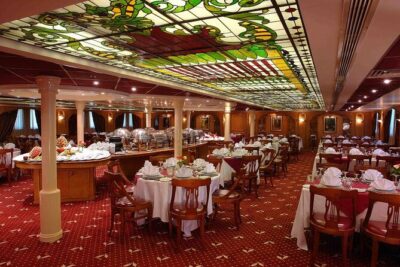
4-Days Nile Cruise From Aswan To Luxor including Abu Simbel and Hot Air Balloon
Read our review →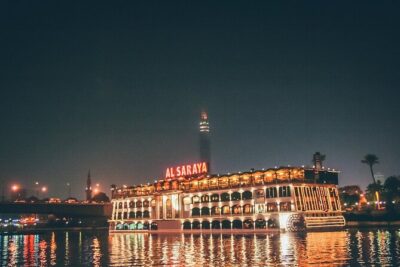
Dinner Cruise on the Nile River with Entertainment
Read our review →
4-Day 3-Night Nile Cruise from Aswan to Luxor&Abu Simbel+Balloon
Read our review →
Nile Dinner Cruise with Belly Dancer Show with Pickup
Read our review →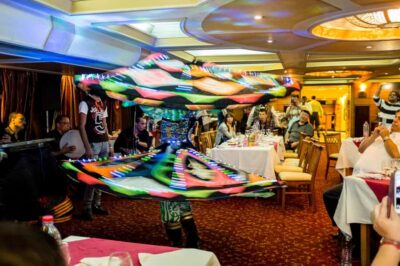
4-Day 3-Night Nile Cruise from Aswan to Luxor including Abu Simbel, Air Balloon
Read our review →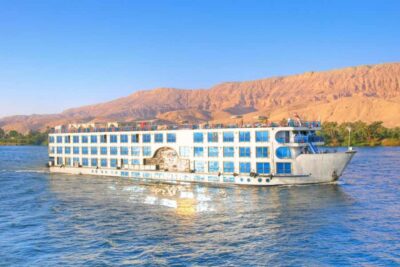
4-Day Nile Cruise from Aswan to Luxor with Guide
Read our review →Browse the lists this tour appears in