
Review · POLAND RIVER CRUISES
Cruises on the Motlawa River
Gdansk looks different from the Motlawa. This short cruise gives you water-level views of the historic center, including the medieval Crane, Granary Island, Olowianka Island, and the old river gates. I like the low price and the chance to fit the ride into almost any sightseeing day. The retractable canopy is another plus when the weather is clear.
I also like the small group size, capped at 10 people, and the easy mobile ticket. The main drawback is the commentary: on some departures, the English guide is hard to hear, and the information may come on a printed sheet rather than through a strong live explanation.
Key points before you book
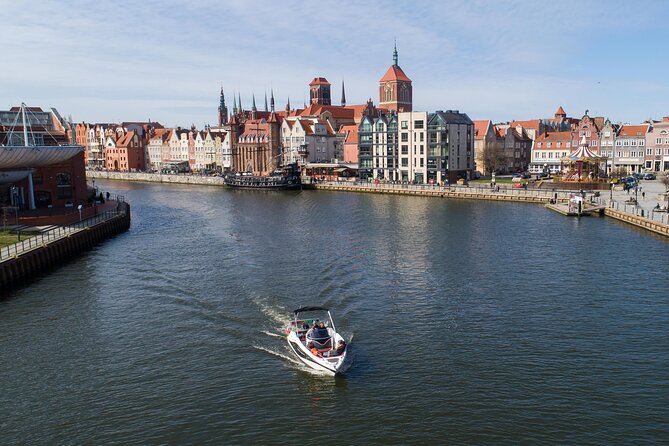
- A 45-minute route from Green Bridge: The boat returns to the same meeting point after cruising past Gdansk’s main waterfront sights.
- Small boat, small group: The maximum is 10 people, which feels more personal but gives you less room than a large sightseeing vessel.
- Excellent value at $19.86: The price is notably lower than nearby boat rental options mentioned by one passenger.
- Best views of the Crane: The route places you close to the huge medieval port crane, one of Gdansk’s defining sights.
- Useful in changeable weather: The canopy can retract fully, and life jackets and blankets were provided for children on one windy departure.
- Commentary quality can vary: English information is offered, but some people found the audio difficult to hear.
Why seeing Gdansk from the Motlawa matters
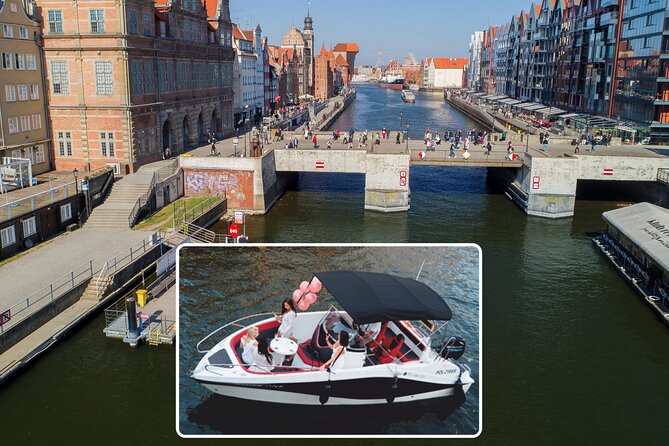
Gdansk is a city of handsome facades, church towers, and long streets. But its waterfront explains how the city worked. The Motlawa was not just a pretty edge to the old center. It was the working route for trade, food, shipping, storage, and access to the city.
From the boat, you get a useful second view of the old center. The waterfront gates open directly into the city, while the Crane shows how goods were lifted from ships and moved into storage. Granary Island and Olowianka Island add another layer, showing the commercial and industrial side of Gdansk rather than only its postcard streets.
I would not treat this as a full historical tour. It is a compact sightseeing ride with historical information along the way. Its value comes from seeing several major landmarks in one sweep, without spending half a day on a formal guided walk.
A few more river trips around Poland worth comparing
- Kraków: Evening or Night River Cruise
★ 4.0 · 7,386 reviews - Krakow: Sightseeing Cruise by Vistula River
★ 4.1 · 1,897 reviews - Warsaw: Traditional Galar Cruise on The Vistula River
★ 4.6 · 1,640 reviews
Starting at Green Bridge in the old center
The meeting point is at Green Bridge on the Stara Motlawa. That is a practical starting place because you are already near Gdansk’s central waterfront, Stagiewna Street, and the old town sights.
The activity ends back at Green Bridge, so you do not need to plan a return journey from a different part of the city. It also makes the cruise easy to place between other stops. You could take it before visiting the waterfront museums, after walking the main streets, or during a pause when your feet need a break.
One practical warning: finding the exact boat can take attention. One family arrived at the wrong spot and had to wait, while the captain called to check on them and held the boat. I would still arrive early and confirm that you are at Green Bridge on the Stara Motlawa, not simply somewhere along the river.
The ticket is mobile, and confirmation arrives at booking. The boat operates in English, and departures are available at different times, which is helpful when you are arranging a busy day in Gdansk.
The Teutonic Castle wall and the old water gates
Early in the route, you see remains of the wall associated with the Teutonic Castle. These fragments are easy to miss when you are walking through the center, but they make more sense from the river. The waterway once formed part of the city’s defense and commercial system.
The cruise then follows the Long Seacoast, known in Polish as Dlugi Pobrzeze. This waterfront is lined with gates that once allowed direct movement between the river and the city. From the boat, you can look toward the entrances and understand how closely Gdansk’s streets were tied to the water.
This is one of the strongest reasons to choose the cruise over a simple boat rental. A rental gives you movement and views, but this route points out why the buildings are there. The historical detail may be delivered by a guide or through written material, depending on the departure.
The Crane, Gdansk’s great waterfront symbol
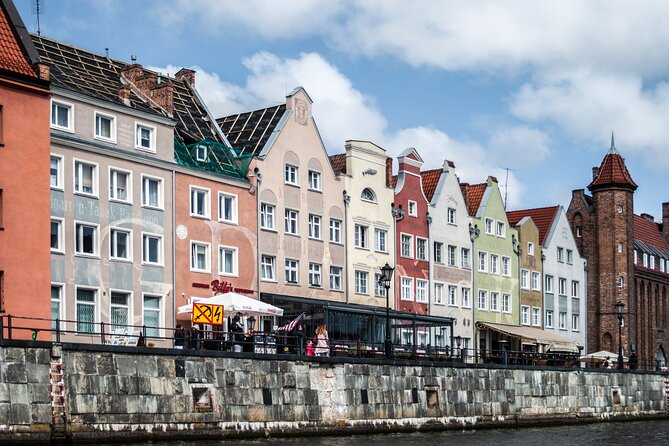
The 15th-century Crane is the headline sight. It is described as the largest medieval crane in Europe, and its heavy wooden structure makes an immediate impression from the river.
The Crane was built for practical work, not decoration. Its machinery helped load and unload ships, and its position beside the waterfront shows how trade shaped the city. From land, you see the structure as part of the waterfront facade. From the boat, you see its working relationship with the river.
I would pay close attention here and keep your camera ready. The route gives you a close, unusual angle on one of Gdansk’s most recognizable buildings. The retractable canopy is especially useful for photography because it can open fully when conditions allow.
The boat is small, so you may not have a wide upper deck with endless space to move around. That is the tradeoff. You get a more intimate ride, but you should not expect the open-air freedom of a large sightseeing ship.
Same water, a completely different day out:
- Krakow: Day or Night Vistula River Cruise with Audio Guide
★ 4.5 · 1,303 reviews - Krakow: 1-Hour Evening Vistula River Cruise
★ 4.1 · 952 reviews - Krakow: Sightseeing Cruise on Vistula River with Audio Guide
★ 4.4 · 480 reviews - Krakow: Vistula River Cruise with Historical Views
★ 3.5 · 357 reviews
Church towers, the Town Hall, and St. John’s Church
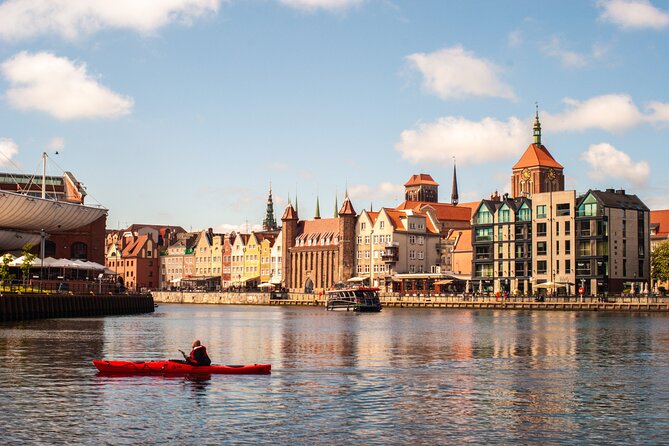
As the boat moves along the waterfront, the towers of Gdansk’s churches and the Town Hall come into view. The angle from the river lets you pick out the skyline without weaving through streets or stopping at every corner.
Behind St. John’s Church, you can see what is described as the world’s largest brick church. This is an important visual moment, even if the cruise does not provide a long stop for a detailed explanation. The church towers help you connect the waterfront with the wider old center.
You should keep your eyes on the upper parts of the city. The most rewarding views are not always directly beside the boat. Look above the waterfront buildings for towers and rooflines, then turn back toward the river for the gates, docks, and historic structures at water level.
The commentary matters here. Some people found the audio guide difficult to hear across the whole route. Others appreciated being able to read along with an English printed sheet. If you want a detailed account of every building, bring your own notes or use the cruise as a visual introduction before exploring the city on foot.
Granary Island and its preserved storage walls
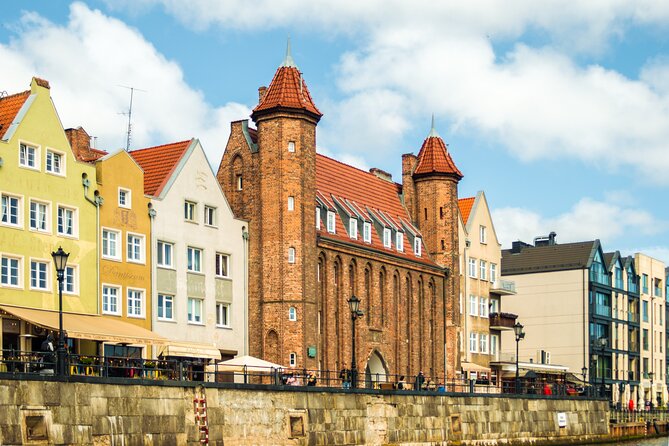
Granary Island is one of the most useful parts of the route for understanding Gdansk’s trade. The cruise passes the preserved wall of the Long Way granary, a reminder that the waterfront once held large storage buildings serving the port.
The island’s old granaries were tied to the movement of grain and other goods. Even without a long stop, the river view shows why the buildings were placed where they were. Ships could approach the water side, and goods could move toward the city.
This section may appeal most to you if you enjoy seeing how a city functioned, not just photographing its prettiest facades. The structures are less instantly famous than the Crane, but they complete the story.
The route also passes Stagiewna Street, which crosses Granary Island and begins at Green Bridge. Seeing this street from the boat gives you another sense of how the island connects the riverfront with the central city.
Olowianka Island and layers of city history
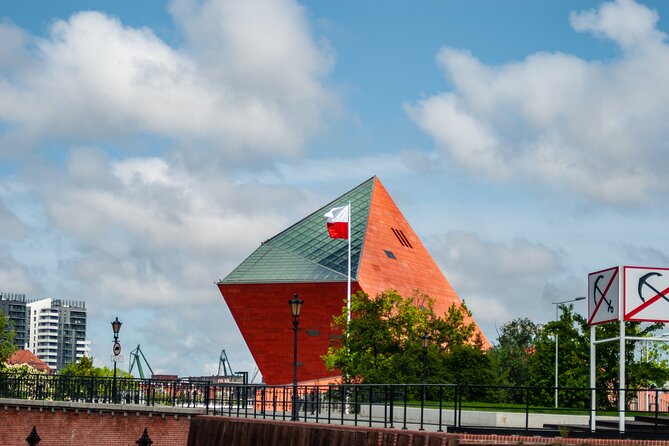
Olowianka Island is a particularly interesting stop in the visual sense, although the boat may not pause for a long visit. Its story reaches back to the Teutonic Order, which used the area as an economic base for the commander’s castle.
That detail helps explain why the island is more than a patch of land in the river. Its location made it useful for storage, trade, and administration. From the water, you see how islands helped organize Gdansk’s working waterfront.
I like this part of the trip because it broadens the usual old-town picture. Gdansk is often presented through its rebuilt streets and decorative buildings. Olowianka points toward the city’s practical past and shows how several periods of urban history overlap beside the same waterway.
The ride also passes the Marina of Gdansk before returning toward Green Bridge. This gives you a modern waterfront view alongside the older structures. The change is brief, but it helps you see that the river remains part of the city’s daily life.
Fish Market and the smaller waterfront details
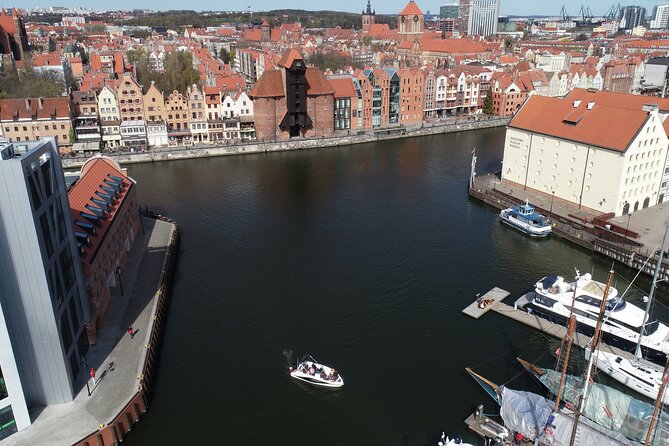
The Fish Market is another point along the route. Gdansk once had more such markets, so this sight works as a small reminder of the city’s food trade and riverside commerce.
Do not expect a major stop or a long walking visit here. The boat keeps moving, and the appeal is the sequence of sights rather than a detailed examination of each one. Still, short observations like this help make the cruise feel connected to ordinary city life rather than focused only on monumental buildings.
The route then returns toward Green Bridge. Depending on the exact timing, the ride is advertised at about 45 minutes, while one passenger described it as roughly 50 minutes. Plan for a short cruise rather than relying on a precise minute-by-minute schedule.
What the boat is really like
This is a small private motorboat, not a large river vessel. The maximum group size is 10 people, which can make boarding and sightseeing feel simple and personal. It also means that seating and sightlines may be more limited.
One person found the boat quite small and had difficulty hearing the guide. Another described the ride as gentle and comfortable. Those two comments fit together: the boat can offer a soft ride and good proximity to the sights, but the small space may not suit someone expecting a roomy sightseeing deck.
The canopy retracts fully in suitable weather. That is a real benefit in Gdansk, where wind and rain can change the feel of a river ride quickly. On a windy trip, children aged 3 and 9 received life jackets and blankets, which is reassuring for families, though you should still expect conditions on the river to affect comfort.
The cruise requires good weather. If poor weather cancels it, you can receive a full refund or move to another date. For the best chance of an open canopy and clear photographs, choose a calm, dry time if your schedule allows.
Commentary, language, and the value of the ticket
The cruise is offered in English. The information may be spoken, printed, or supported by an audio system, and the quality can vary by departure. One passenger found the printed English sheet useful because it could be read while the boat moved, while another felt disappointed that a sheet replaced a proper live explanation.
That difference is important. Book this for the route and the river views first. Think of the historical information as a helpful extra rather than the sole reason to go. If you need every landmark explained clearly and at length, this may feel too light.
At $19.86 per person, the value is strong for a short city cruise. A passenger specifically compared it favorably with nearby boat rentals, saying it cost about a third as much and included historical information. The price is low enough that the cruise can work as a simple add-on to a Gdansk visit, especially if you want a different perspective without committing to a longer excursion.
The 91 percent recommendation rate and 4.7 rating from 66 ratings suggest that the overall experience is reliable for most people, though the lower scores point to the same concern: the boat is small and the commentary is not always easy to hear.
Who should book the Motlawa cruise?
I would recommend it to you if you want a short, affordable overview of Gdansk from the water. It suits first-time visitors, families, photographers, and anyone who has already walked the old center and wants to see how it fits together from the river.
It is also a good choice for a spare hour between major sights. The return to Green Bridge keeps the plan simple, and the range of departure times gives you room to adjust your day.
I would be more cautious if you want a large, stable vessel, extensive seating, or a polished audio tour. The small motorboat can feel cramped, and the guide may be hard to hear. You should also avoid booking it as your only history lesson about Gdansk.
Should you book it?
Yes, if you value the views more than a fully scripted tour. For about $19.86, you get a compact route past the Crane, Granary Island, Olowianka Island, the old water gates, church towers, the Fish Market, and the Marina. That is a lot of Gdansk in less than an hour.
Book it when the weather looks promising, arrive early at Green Bridge, and bring realistic expectations about the commentary. If an inexpensive river ride with useful historical context sounds right, this is a sensible buy. If clear audio and a spacious boat matter most, choose carefully or consider seeing the waterfront on foot instead.
FAQ
Where does the Motlawa River cruise start?
The cruise starts at Green Bridge on the Stara Motlawa in Gdansk, Poland.
Where does the cruise finish?
The activity ends back at the meeting point at Green Bridge.
How long is the cruise?
The advertised duration is approximately 45 minutes. One description of the ride refers to about 50 minutes, so allow roughly that amount of time.
How much does the cruise cost?
The listed price is $19.86 per person.
Is the cruise offered in English?
Yes. The experience is offered in English, with information provided by guide, audio, or printed material depending on the departure.
What sights can I see from the boat?
The route includes the remains of the Teutonic Castle wall, Long Seacoast, the historic water gates, the 15th-century Crane, Olowianka Island, Granary Island, Stagiewna Street, the Fish Market, the Marina of Gdansk, church towers, and the Town Hall.
How many people can join the cruise?
The activity has a maximum of 10 participants.
Does the boat have a roof?
Yes. The canopy roof can retract fully when the weather allows.
Can I cancel for a refund?
Yes. You can cancel at least 24 hours before the start time for a full refund. If poor weather cancels the cruise, you are offered another date or a full refund.
Just added around Poland
- Toruń: Sightseeing Cruises on the Vistula River★ 5.0 · 58 reviews
- Oder river cruise and walking tour of Wroclaw★ 4.8 · 5 reviews
- Krakow: Sightseeing Cruise on the Vistula River★ 4.5 · 65 reviews
- Krakow: Vistula River Sightseeing Cruise ️★ 3.9 · 20 reviews
- Krakow: Vistula River Cruise and Wieliczka Salt Mine Tour★ 4.6 · 3 reviews
- Krakow: Vistula River Panoramic Boat Tour ️★ 3.5 · 192 reviews
- Krakow: Scenic River Cruise★ 4.0 · 5 reviews
- Krakow: Sightseeing Cruise on the Vistula River★ 4.1 · 6 reviews
Poland River Cruises, compared.
Traditional Galar Cruise on The Vistula River
Read our review →
Day or Night Vistula River Cruise with Audio Guide
Read our review →
Sightseeing Cruise on Vistula River with Audio Guide
Read our review →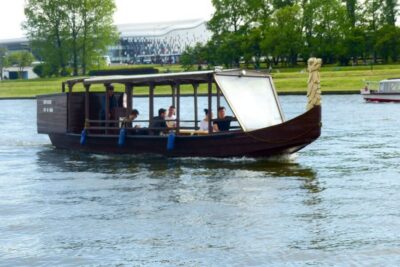
Vistula River Sightseeing Cruise with Audio Guide
Read our review →Browse the lists this tour appears in