
Review · NILE CRUISES
From Luxor: 4-Day Nile Cruise to Aswan with Balloon Ride
Wake before dawn, and Luxor rewards you. This four-day journey links the great temples of Upper Egypt with a hot-air balloon ride, private transfers, an Egyptologist, and three nights aboard a Nile cruise. I especially like the strong range of sights, from Luxor Temple and Karnak to Abu Simbel, and the easy door-to-door transport between them.
The trip also gives you time to enjoy the Nile from a ship rather than race between hotels. Guides including Andrew, Mido, and Malak have earned praise for clear communication and thoughtful service. The main concern is that the advertising can overpromise, especially about the balloon flight, luxury level, sailing schedule, and included transport.
Key points to know before booking
- Four major temple areas in four days: Luxor, the Valley of the Kings, Edfu, Kom Ombo, and Abu Simbel all fit into one demanding route.
- A 4 a.m. start is part of the plan: You need to be ready for very early departures on the balloon morning and Abu Simbel day.
- Entrance fees are extra: The $860 price covers transport, guiding, the cruise, taxes, and service charges, but not admission tickets.
- The cruise may not sail as expected: A ship can remain moored in Luxor for part of the trip, depending on conditions and operations.
- Balloon conditions can vary: The flight may not follow the advertised path, and safety communication needs close attention.
- Good communication is a real strength: The operator has been praised for prompt replies, punctual transfers, and practical help when plans change.
What the $860 price really buys you
At $860 per person, this is not a budget sightseeing package. You are paying for three nights on a claimed five-star Nile ship, private pickup and drop-off, an English-speaking guide, a VIP balloon ride, an air-conditioned vehicle, and organized visits across Upper Egypt.
That can be good value if you want one booking to handle the hard parts. Luxor and Aswan are not places where every transfer is simple, and this plan combines road transport, a cruise, early-morning excursions, and several major archaeological sites.
But you need to add the entrance fees for every attraction. Airport and train station transfers are also excluded. If you want a Spanish, German, or French guide, there is an added charge, and some language support on the ship may not be available.
I would compare the final cost with a standard cruise package before paying. The price makes more sense for you if the private transport and guide service matter more than getting the lowest possible fare. It makes less sense if you mainly want a relaxed cruise with plenty of time on deck.
A current score of 3.3 out of 5, based on six ratings, points to an uneven experience. Some people received punctual service, good guides, and a comfortable ship. Others dealt with a canceled balloon ride, poor communication, illness after a meal, or a ship that did not leave Luxor on schedule.
More Nile Cruises in Luxor:
- From Luxor: 3-Night Nile Cruise to Aswan and Hot Air Balloon
★ 3.7 · 297 reviews - 5 Days Private Guided Nile River Cruise Tour from Luxor to Aswan
★ 5.0 · 229 reviews - Historia Hotel Nile Cruise, Mon. from Luxor 4 nts inc. Excursions
★ 5.0 · 185 reviews
Day one: Luxor Temple, Karnak, and your first night aboard
Your representative collects you from your Luxor accommodation and begins with the East Bank. This is a sensible opening because Luxor Temple and Karnak give you the basic story of Thebes before you see royal tombs and later temples farther south.
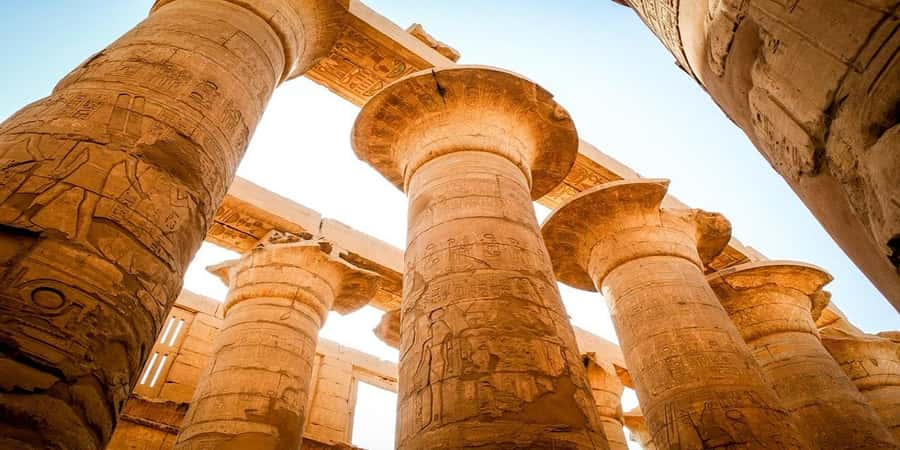
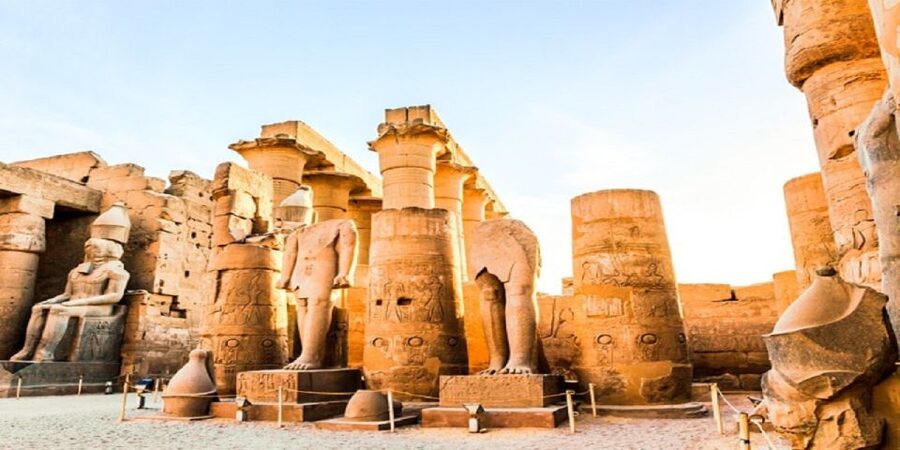
Luxor Temple is especially atmospheric late in the day, when its columns and statues take on warm light. It was closely connected with the annual Opet festival, a major religious celebration that linked the temple with Karnak.
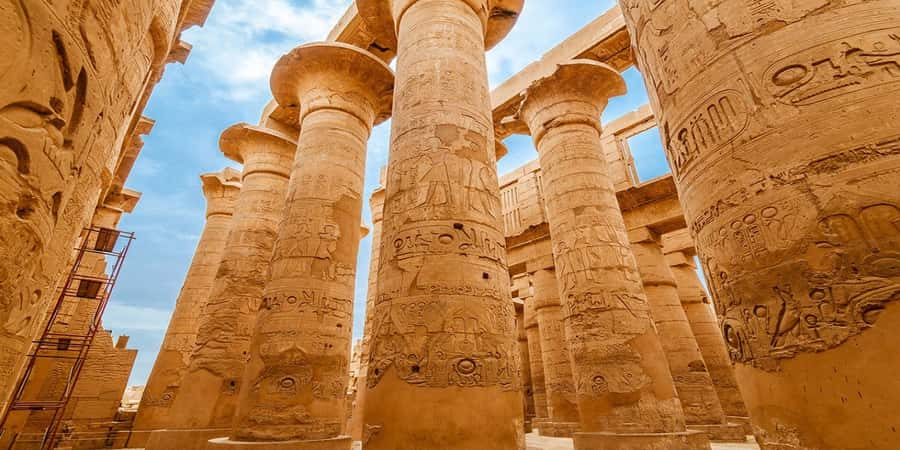
Karnak is much larger and more spread out. It is not one single building, but a huge complex containing three main temple areas, smaller enclosed temples, and outer structures added across roughly 1,500 years. You will see how different rulers left their mark in the same sacred precinct.
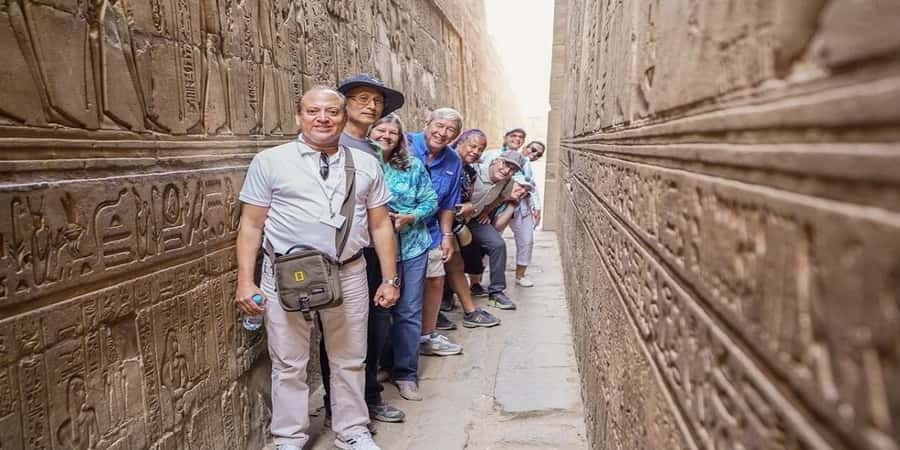
Your guide is important here. Without context, Karnak can feel like a field of giant columns and broken walls. With a good Egyptologist, you can follow the purpose of the courts, gateways, halls, and inscriptions instead of simply taking photographs.
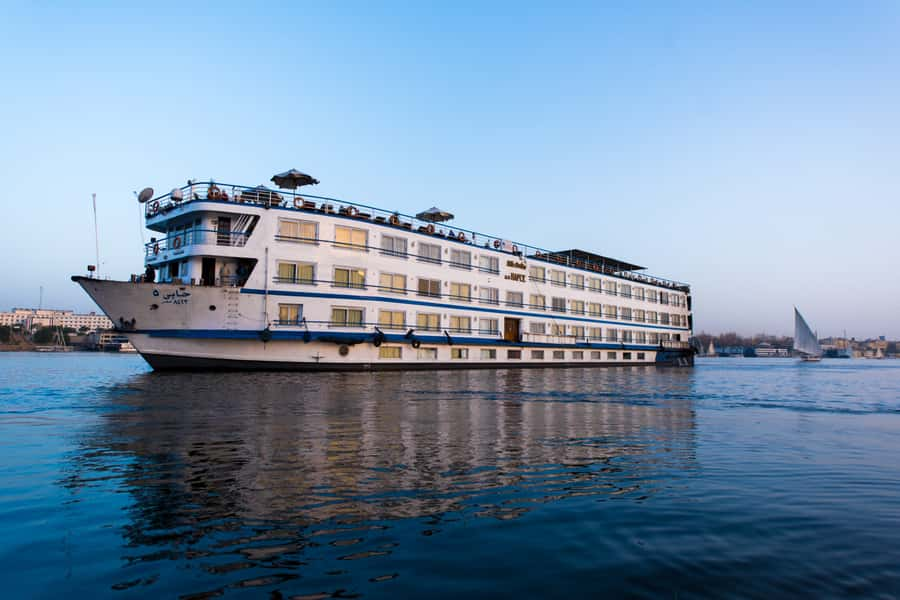
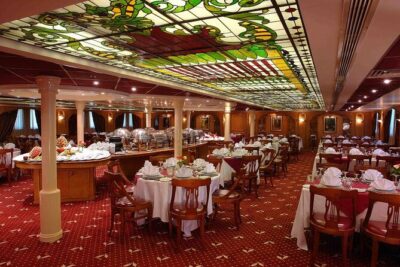
Lunch is served aboard the cruise ship, followed by time to settle in. The ship is advertised as five-star, with accommodation and onboard facilities included. Some reports describe the cabins and public areas as clean, the staff as friendly, and the food as enjoyable, especially the desserts.
Still, keep your expectations measured. One account described the food as below luxury-ship standards, and another said the ship remained tied up in Luxor for two days. A Nile cruise is more than a hotel with water outside your window. If sailing is central to your decision, ask for the current vessel name and planned departure schedule before booking.
Day two: balloon flight, royal tombs, and Hatshepsut
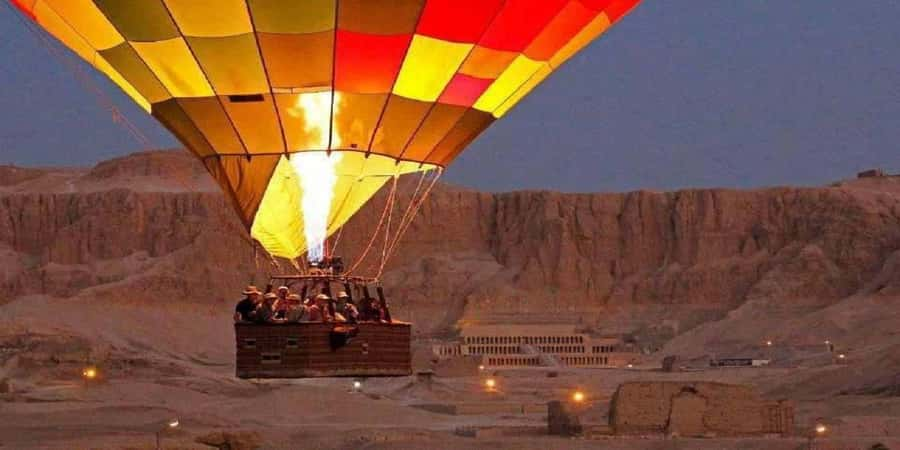
The balloon pickup is usually around 4 a.m. That is brutally early, but it gives you the chance to see Luxor from above while the day is beginning.
The advertised view includes fields, temples, the Nile, and the West Bank. In practice, the flight route depends on wind and aviation conditions. One flight reportedly passed over residential areas rather than the Valley of the Kings and river views described in the promotion. Another booking did not include a balloon flight at all, with no refund reported.
Safety deserves careful attention. A passenger reported burns from the balloon burner. That is a serious warning, even if it was an isolated incident. Listen closely to the crew, keep clear of the burner area, and raise any safety concern immediately.
After the flight, your private guide and driver take you to the West Bank. The Valley of the Kings looks plain from outside, a dry gorge cut into the hills. Inside the tombs, the mood changes quickly. Painted walls, burial texts, and chambers show how much effort ancient rulers put into preparing for the next life.
Your admission typically covers a limited number of open tombs, while special tombs can cost extra. The supplied information does not specify which tombs are included, so ask before entering. Tutankhamun’s tomb is a separate choice in many visits, and its small chamber contains far fewer objects than you may expect because the famous treasures are displayed elsewhere.
That does not make it worthless, but it does change the reason to visit. You go for the location and the royal burial context, not a room packed with gold.
Next comes the Temple of Hatshepsut, one of the most striking buildings on the West Bank. Its terraces rise against the cliffs, and the wall scenes tell the story of Hatshepsut’s birth and her trading expeditions to Punt, a place associated with regions near modern Somalia or the Arabian Peninsula.
The final stop is the Colossi of Memnon. These huge seated statues once guarded a much larger temple complex. Today they are an easy stop for photographs, and the brief visit provides a change of pace after the tombs and terraces.
You return to the ship for lunch before sailing toward Edfu. This is one of the longest days, and the early balloon pickup can leave you tired. Pack water, wear shoes suited to uneven ground, and do not expect the cruise to feel like a slow holiday every hour.
Day three: Edfu and the two-sided temple at Kom Ombo
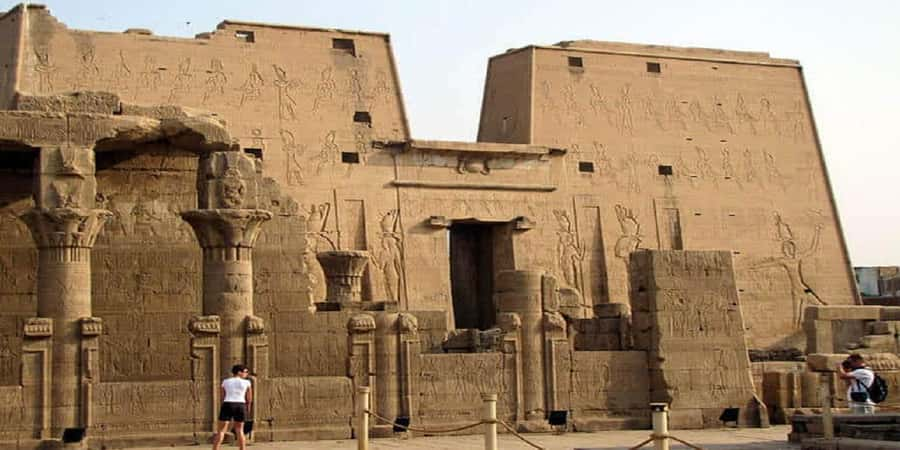
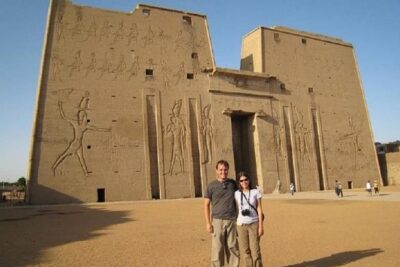
After breakfast, you leave the ship to visit the Temple of Horus at Edfu. Built during the Ptolemaic period, it is among Egypt’s best-preserved large temples. Its walls retain extensive reliefs and inscriptions, which makes it easier to understand the structure of an ancient temple than at many more ruined sites.
The scale is part of the appeal. You can trace the progression from the entrance through courts and halls toward the inner sanctuary. Your guide can explain how the temple reflects a later phase of Egyptian religious art, when Greek and Egyptian traditions existed side by side.
The trip then continues by ship toward Kom Ombo. This temple is unusual because its plan is doubled. One side honored Sobek, the crocodile god, while the other honored Horus, the falcon-headed god.
The two-part layout gives your guide a clear way to explain the temple’s religious purpose. Separate gateways, chapels, and rooms mirror the paired dedication. It is a compact visit, but the design is memorable because you can see the division with your own eyes.
Horse carriage transport may be used for access to one temple. This is not clearly explained in the main description, so ask before the visit. One passenger objected to the condition of the horses and was initially told that a carriage was the only option. After several complaints, a taxi was arranged.
That detail matters if animal welfare is important to you. Ask the guide for an alternative before getting into a carriage, and do not assume every transport option is included in the original price.
After Kom Ombo, you return to the ship and prepare for another very early departure. The rhythm is impressive but tiring: ancient sites in the morning, sailing or road transfers in the afternoon, and another early alarm before sunrise.
More Nile Cruise and Balloon Packages in Luxor:
- From Luxor: 5-Day Nile Cruise to Aswan with Balloon Ride
★ 4.2 · 168 reviews - From Aswan: 4-Day 3-Night Nile Cruise with Hot Air Balloon
★ 4.5 · 50 reviews - From Luxor: 3-Day Nile Cruise to Aswan with Balloon Ride
★ 3.6 · 43 reviews - From Luxor:7-Night Luxury Nile River Cruise & Hot Air Balloon
★ 5.0 · 35 reviews
Day four: the long road to Abu Simbel
The Abu Simbel excursion usually begins around 4 a.m. You check out before leaving and store your luggage at the ship’s reception. An air-conditioned vehicle takes you from the cruise area to the temples, then back to collect your bags before the final drop-off at your Aswan accommodation.
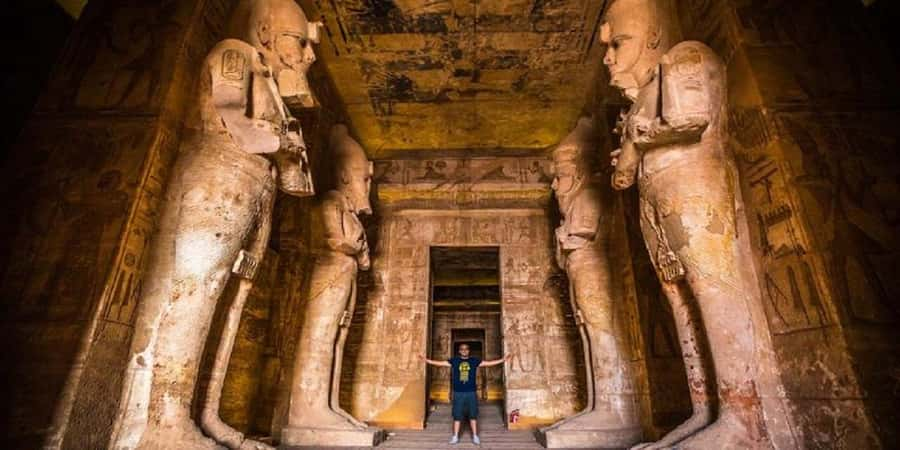
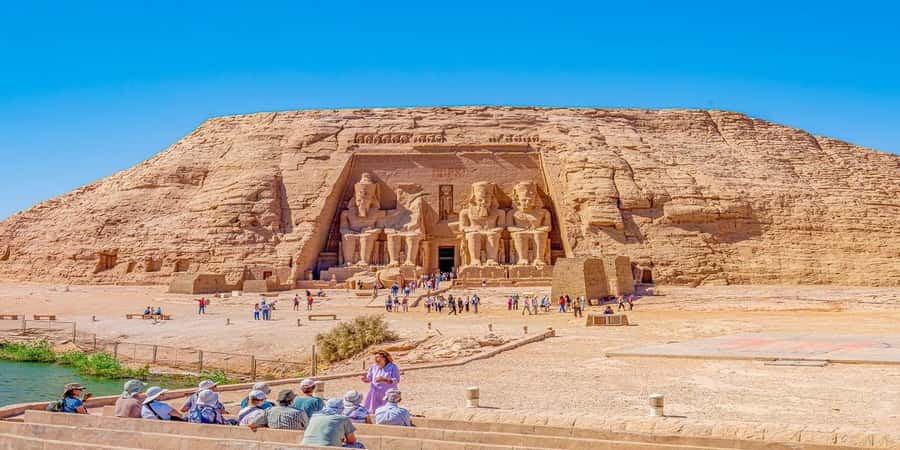
The drive is long, but Abu Simbel is the reward. The Great Temple was dedicated to Amun, Ra-Horakhty, Ptah, and Ramesses II himself. Four enormous seated figures dominate the facade, making this one of Egypt’s most recognizable monuments.
Inside, the halls and chambers carry the same political and religious message as the facade. Ramesses presents himself as a powerful ruler linked to the gods. The scale is not accidental. It was built to impress visitors and reinforce royal authority at the southern edge of Egypt.
The return to Aswan makes this a practical final stop. You finish the cruise route, collect your luggage, and are dropped at your accommodation. But the day is long, and you should not plan an important flight or train immediately afterward unless you have allowed plenty of time.
Guides, language, and the human side of the trip
The strongest part of the service is the personal attention when communication works well. Andrew, Mido, and Malak were praised for clear messages, punctual transfers, and kindness toward a parent traveling with a child. The guides were also credited with making the Luxor visits easy to follow.
That matters because the schedule has several moving parts. You need the right vehicle at the right time, a guide who knows when the ship leaves, and someone who can react if a balloon flight or road transfer changes.
English is included. Arabic, French, German, and Spanish are listed as available, but a non-English guide may cost extra. One Spanish-speaking passenger found that tours were led in English and that no Spanish-speaking person was available on the ship. If language is important, confirm it in writing before paying.
Prompt replies from the operator are another positive. Even when internet access on the ship was limited, communication was reported to remain workable. That kind of support is useful in Egypt, where timing changes and transport details can affect the whole day.
The weak point is consistency. A promised alternative to horse transport was not offered at first, and one ship departure was missed while passengers were still at a shop. The ship later returned, but this should not happen. Keep the vessel’s departure time visible, and do not let a shopping stop take priority over getting back on board.
Shopping stops and what to watch closely
The schedule may include visits to shops, even though they are not clearly highlighted in the main description. One passenger felt taken to too many souvenir shops and nearly missed the ship because of it.
You can handle this simply. Ask at the start of each day if a shop stop is planned, how long it will last, and whether it is optional. If the ship has a fixed departure, treat that time as non-negotiable.
The tour includes service charges and taxes, but that does not mean every expense is covered. Entrance fees, airport or train station transfers, special language services, meals outside the ship, and personal purchases may require extra payment. Ask for a written list of exclusions before departure.
Who should book this four-day route?
I would recommend it to you if you have limited time and want the main Luxor to Aswan sights arranged in one package. It suits people who value a private driver and guide, families who want help with transfers, and first-time visitors who do not want to organize several separate excursions.
It is also a good fit if Abu Simbel is high on your list. Reaching it independently takes planning, and this route folds the visit into the final day.
I would be cautious if you want a slow, polished cruise with guaranteed sailing. The early mornings are hard, the route is packed, and the claimed five-star standard has not been consistent. You should also think twice if a balloon ride is the main reason you are booking, since flights can be canceled or follow a different route.
The strongest version of this trip depends on the local team assigned to you. A good guide can turn a busy schedule into an engaging journey. Poor communication can turn the same schedule into missed departures, unwanted shopping, and avoidable stress.
Should you book this Nile cruise?
Book it if you want maximum sightseeing in four days and are comfortable with early starts, extra entrance fees, and some uncertainty around the cruise and balloon flight. The temple route is excellent, the private transport is useful, and the guide service can be warm and well organized.
Before booking, confirm four points: the ship’s name and sailing plan, the exact balloon arrangements, the language of your guide, and every admission fee. Also ask how the operator handles a canceled balloon flight, since one passenger reported receiving no refund.
At $860, this is a time-saving Egypt package, not a guaranteed luxury escape. Go in with realistic expectations, keep your schedule flexible, and you may find the convenience worth the cost.
FAQ
How long is the experience?
The experience lasts four days and includes three nights aboard a Nile cruise.
Where does the tour begin?
Pickup begins from your accommodation in Luxor. Airport and train station pickup and drop-off are not included.
Where does the tour finish?
After returning from Abu Simbel, the driver collects your luggage from the ship and drops you at your accommodation in Aswan.
Is the hot-air balloon ride included?
Yes. A VIP hot-air balloon ride is listed as included, but actual flights can be affected by conditions, and one booking reported that the activity did not take place.
What time does the balloon pickup usually happen?
The balloon pickup is usually around 4 a.m.
What time does the Abu Simbel pickup usually happen?
The Abu Simbel pickup is usually around 4 a.m. You should check out first and leave your luggage at the ship’s reception.
Are entrance fees included?
No. Entrance fees to the attractions in the itinerary are not included in the price.
What language is included for the guide?
English is included. Arabic, French, German, and Spanish are available, with an additional cost for some language options.
Is airport or train station transport included?
No. The included transfers cover private pickup and drop-off connected with the tour, but airport and train station transfers are excluded.
What cancellation terms apply?
You can cancel up to 24 hours in advance for a full refund. You can also reserve now and pay later.
More 4-Day Experiences in Luxor
- Luxor: 4 Days Nile Cruise with Guided Tours & Abu Simbel
★ 4.5 · 104 reviews - From Cairo: 4-Day Nile Cruise to Aswan w/ Balloon & Flights
★ 3.6 · 86 reviews - Aswan to Luxor: 4-Day Luxury Dahabiya Nile Cruise Adventure
★ 4.7 · 28 reviews - From Cairo: 4-Day Nile Cruise from Aswan to Luxor with Meals
★ 4.4 · 24 reviews
Just added around Luxor
- From Luxor: 3-Day Nile Cruise to Aswan with Private Guide★ 4.2 · 147 reviews
- Marsa Alam: 4 Days Nile River Cruise with Guided Tours★ 4.2 · 4 reviews
- Luxor: Nile River 2-Night Cruise to Aswan with Meals★ 3.2 · 5 reviews
- Luxor to Aswan: 6-Day Dahabiya Nile Cruise with Ancient Tour★ 4.3 · 5 reviews
- Luxor: 8 Days Nile Cruise, Balloon, Guided Tours, Abu Simbel★ 4.6 · 8 reviews
- Luxor: All-Inclusive 3-Night Nile Cruise to Aswan & Balloon★ 3.7 · 4 reviews
- Luxor: 4 Days Nile Cruise with Guided Tours & Abu Simbel★ 4.5 · 104 reviews
- Luxor: 3-Day Nile Cruise to Aswan with Hot Air Balloon★ 3.9 · 6 reviews
Nile Cruises, compared.
4-Days Nile Cruise From Aswan To Luxor including Abu Simbel and Hot Air Balloon
Read our review →
Dinner Cruise on the Nile River with Entertainment
Read our review →
4-Day 3-Night Nile Cruise from Aswan to Luxor&Abu Simbel+Balloon
Read our review →
Nile Dinner Cruise with Belly Dancer Show with Pickup
Read our review →
4-Day 3-Night Nile Cruise from Aswan to Luxor including Abu Simbel, Air Balloon
Read our review →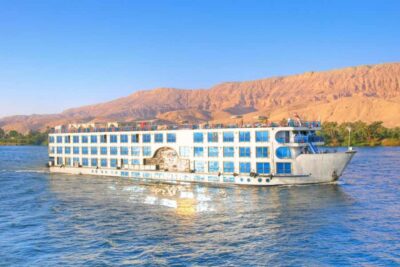
4-Day Nile Cruise from Aswan to Luxor with Guide
Read our review →Browse the lists this tour appears in