
Review · SEINE RIVER CRUISES
Paris: Hop-On Hop-Off Seine Cruise Pass with 9 Stops
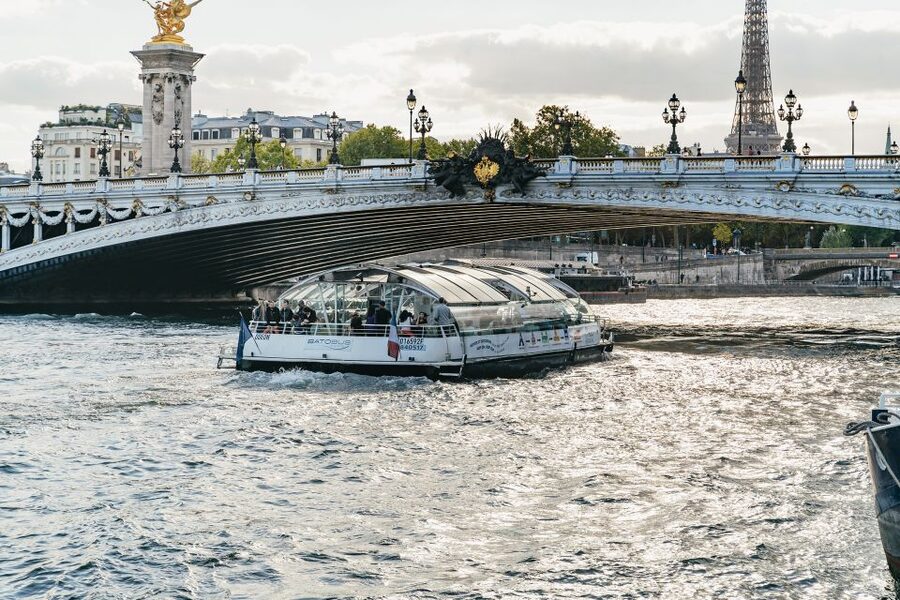
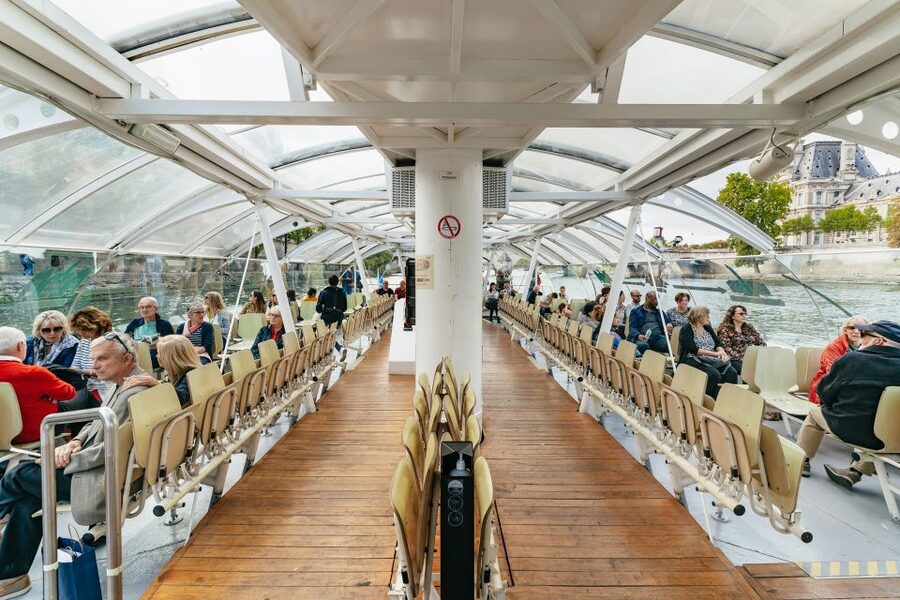
Paris looks different from the Seine. The Batobus pass makes that change of viewpoint useful, not just pretty, with nine stops linking the Eiffel Tower, Louvre, Notre-Dame, and major neighborhoods. I like the freedom to hop off when you want and the calm ride between sights. I also like the heated, glass-covered boats and outdoor terrace for photos. The main catch is that this is transport with sightseeing value, not a fully narrated cruise, and the glass can feel hot or look blurry on sunny days.
For $27 per person, the 24-hour pass is a solid deal if you plan to use the boat several times. The 48-hour option makes more sense for a relaxed visit, especially if you want to pair river rides with long museum stops. You will need a charged phone for the multilingual webapp, and the service is not suitable for wheelchair users.
Six smart reasons to consider the Batobus pass
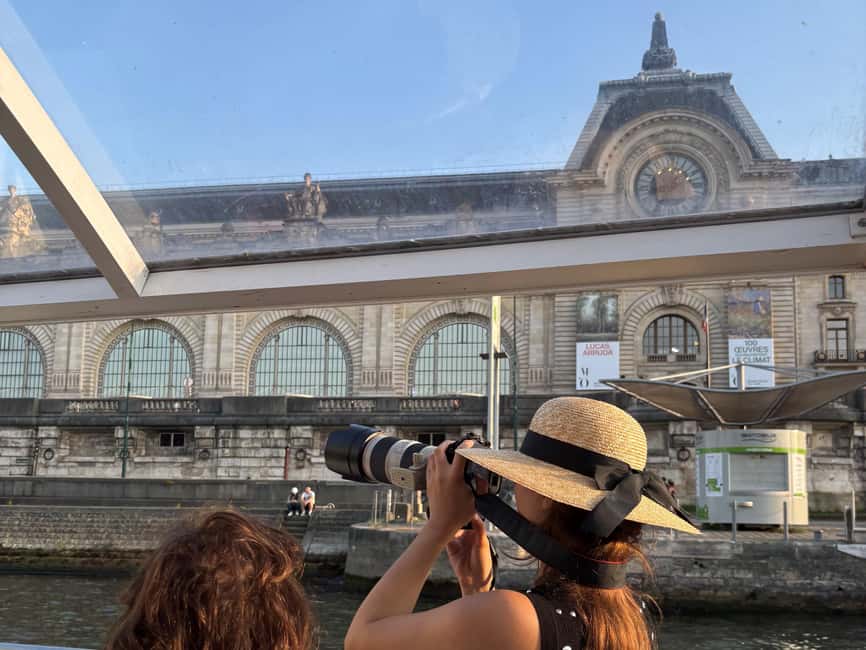
- Nine useful Seine stops: Reach the Eiffel Tower, Musée d’Orsay, Saint-Germain-des-Prés, Notre-Dame, Jardin des Plantes, Hôtel de Ville, Louvre, Place de la Concorde, and Invalides.
- A two-hour scenic loop: Ride the full circuit first to understand how the stops fit together, then use the boat as transport.
- A 24-hour pass starts on first use: You can wait to scan your ticket until you are ready to begin your sightseeing day.
- The terrace improves your photos: Step outside for clearer views of bridges and monuments, though seats can fill up.
- The webapp replaces a standard audio guide: Commentary is available in English, French, Italian, Spanish, and German.
- Winter boats are heated: From November 3, 2025, through March 31, 2026, first departures from the Eiffel Tower are at 10 a.m.
What the Batobus experience is really like
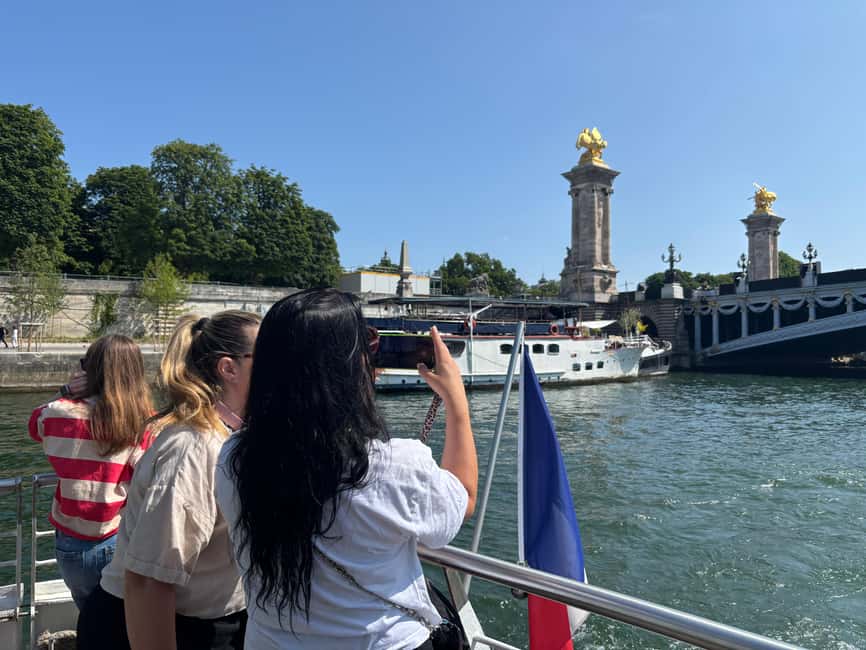
Batobus works best when you treat it as a river shuttle with a built-in sightseeing ride. You are not locked into one short cruise. You can board at any of the nine stops, stay aboard for the full circuit, or get off near a museum or neighborhood and return later.
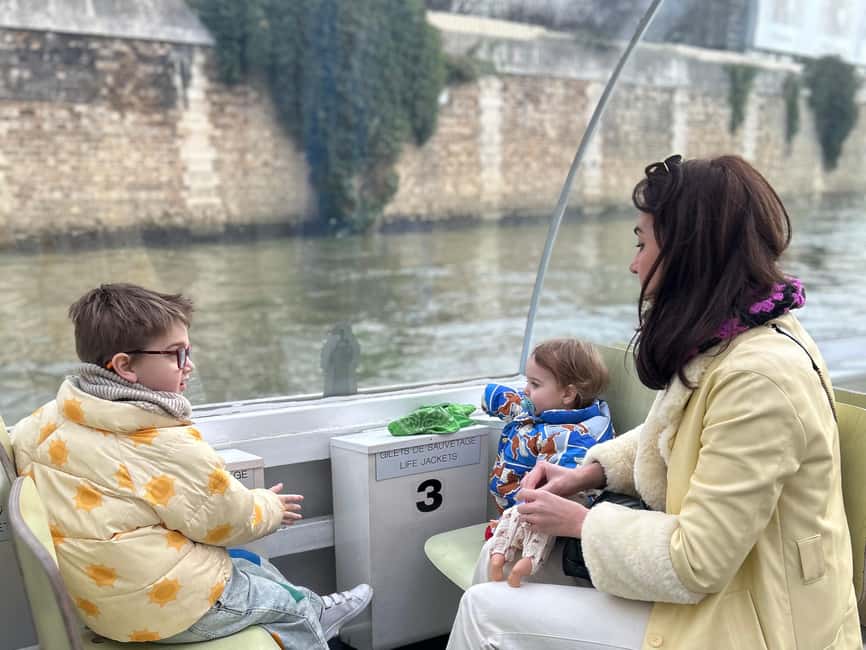
The boats are glass-covered, with heating and a terrace. That gives you shelter in cool weather and open-air photo opportunities when the weather is kind. In winter, the warm cabin is a real advantage. In hot weather, the glass can trap heat, and some riders found the inside uncomfortable on sunny days.
The service is also a pleasant break from Paris sidewalks and Metro stairs. I would not use it for every short trip, since the boat follows the river rather than the most direct street route. But for a day built around the Seine, it can save energy while giving you views you would miss underground.
Boats commonly arrive about every 20 to 25 minutes, according to the operating information and recent experience with the service. A complete loop takes about two hours. That timing matters. If you get off at the Louvre for a long museum visit, you are not waiting for the same boat. You simply scan your pass again when the next one arrives.
There is no standard onboard audio narration. The interactive webapp supplies information about monuments and things to do near each stop. Download or open it before leaving Wi-Fi if possible, and keep your phone charged. Without it, the ride is mainly visual.
More Seine River Cruises in Paris:
- Paris: 1-Hour Seine Cruise departing from the Eiffel Tower
★ 4.4 · 77,472 reviews - Paris: Seine Cruise & Crepe Tasting near the Eiffel Tower
★ 4.4 · 11,231 reviews - Paris: Seine River Panoramic Views Dinner Cruise
★ 4.3 · 10,611 reviews
Starting at the Eiffel Tower
The official starting point is Port de la Bourdonnais, beside the Eiffel Tower, but you can board at any of the nine stops. This is a useful place to begin because the tower gives you an unmistakable landmark and the Seine puts the city into perspective immediately.
From the boat, the Eiffel Tower looks less crowded and more complete than it often does from the lawns below. The terrace is the best place for pictures, though you may need to wait for a clear spot at busy times. A full ride from here gives you an easy introduction to central Paris before you decide where to get off.
Near this stop, the Cité de l’Architecture is an option for anyone interested in French buildings and design. It is a good pairing with the boat because the river shows you the city’s grand façades while the museum provides a closer look at architectural history.
The stop is called Tour Eiffel, but the boat does not take you into the monument. You still need a separate ticket for the tower itself.
Musée d’Orsay and Saint-Germain-des-Prés
The Musée d’Orsay stop, at Quai de Solférino, is one of the strongest pairings on the route. The museum is a short walk away and houses famous works by Monet, Renoir, and Van Gogh. If you want to spend several hours inside, the 48-hour pass is especially handy because you can leave the boat service for later.
The river route also gives you a useful visual transition from the grand museums toward Saint-Germain-des-Prés. At Quai Malaquais, you are close to the Institut de France, Café de Flore, and Les Deux Magots. The surrounding streets are good for a slower wander, with bookshops, cafés, and the old literary character that makes this part of Paris feel distinct.
I would not plan to visit both the Musée d’Orsay and the Louvre in one rushed afternoon simply because the boat links them. Both deserve time. Use Batobus to connect them, not to turn major museums into quick photo stops.
Notre-Dame and the Latin Quarter
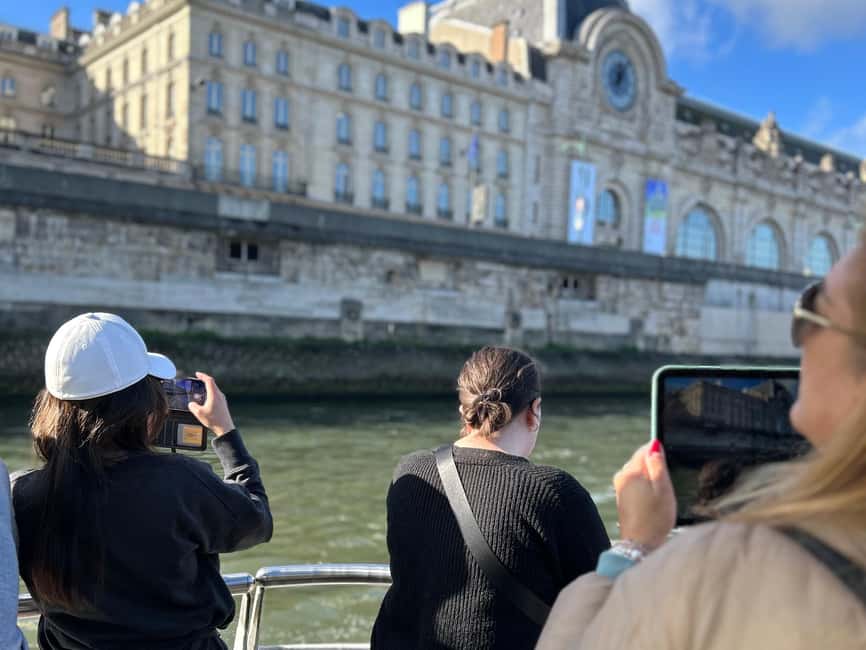
The Notre-Dame stop, at Quai de Montebello, is among the most useful on the whole route. From here, you can reach Notre-Dame Cathedral and walk into the Latin Quarter, where cafés, bookshops, and student life fill the streets around the island and left bank.
This is a good place to build in a meal or coffee break. One recent itinerary paired the stop with a French breakfast near Notre-Dame, which points to the real strength of the pass: you can fit ordinary Paris moments between major sights instead of racing from one attraction to the next.
The boat gives you a different view of the cathedral and the riverbanks, but the stop itself is not a substitute for visiting the cathedral area on foot. Allow time to walk, look up, and cross the nearby bridges. The boat can get you there, but your feet do the interesting work.
More Hop-On Hop-Off River Boats in Paris:
- Paris: Tootbus Hop-on Hop-off (Optional River Cruise)
★ 4.3 · 15,279 reviews - Paris Big Bus Hop-On Hop-Off Tour with Optional River Cruise
★ 4.0 · 6,534 reviews - Paris: Hop-on Hop-off Bus Tour & Seine Cruise Bundle Tour
★ 4.4 · 3,009 reviews - Paris: Big Bus Hop-on Hop-off Tour and Seine River Cruise
★ 4.4 · 1,101 reviews
Jardin des Plantes and Cité de la Mode
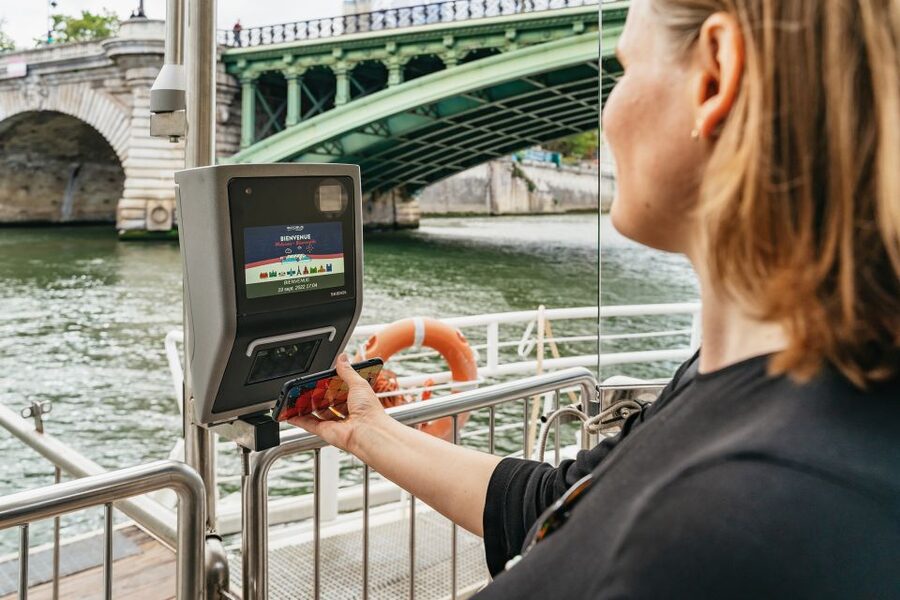
At Quai Saint-Bernard, the Jardin des Plantes stop offers a quieter change of pace. The Jardin des Plantes is Paris’s main botanical garden, so this is a useful stop when you need a break from museums and monumental squares.
The nearby Cité de la Mode et du Design offers a very different mood, focused on contemporary creativity. You can choose between greenery and modern design without having to cross the city by road.
This stop may be less important for a first-time visitor with only one day, particularly if the Eiffel Tower, Louvre, and Notre-Dame are your priorities. With a 48-hour pass, it becomes easier to add. It is also a sensible choice for families or anyone who wants a less intense stretch in the middle of a sightseeing day.
Hôtel de Ville and the Marais
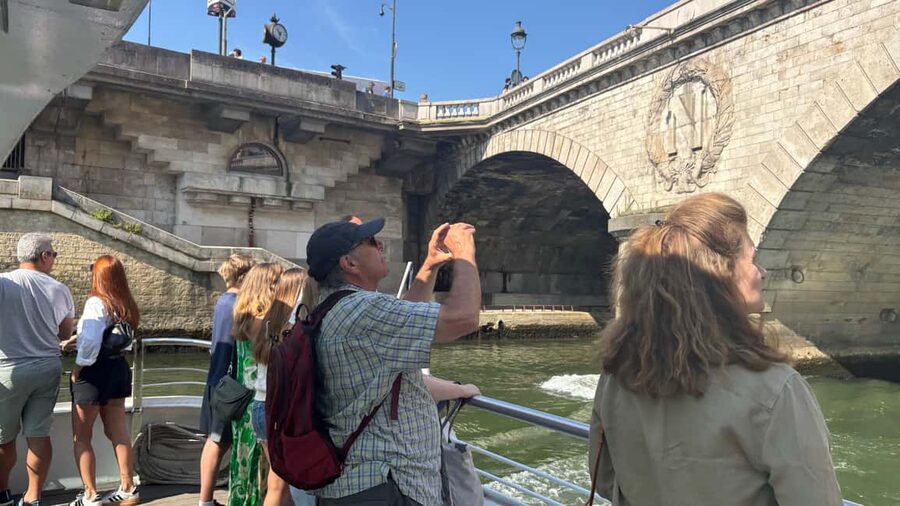
The Hôtel de Ville stop sits at Pont d’Arcole, close to Paris City Hall and the Pompidou Centre. It also puts you near the Marais, a district filled with galleries, boutiques, cafés, and historic streets.
This is one of the best stops for combining a landmark with wandering. You can visit the Pompidou Centre, look around the City Hall area, then explore the Marais before returning to the river. The boat removes the need to retrace your steps by Metro.
Do not expect the stop to place you at the door of every attraction. The route is close to the main sights, but you will still walk between the quay and the district streets. That is part of the appeal, since the most enjoyable details here are found between the major destinations.
The Louvre from Pont Royal
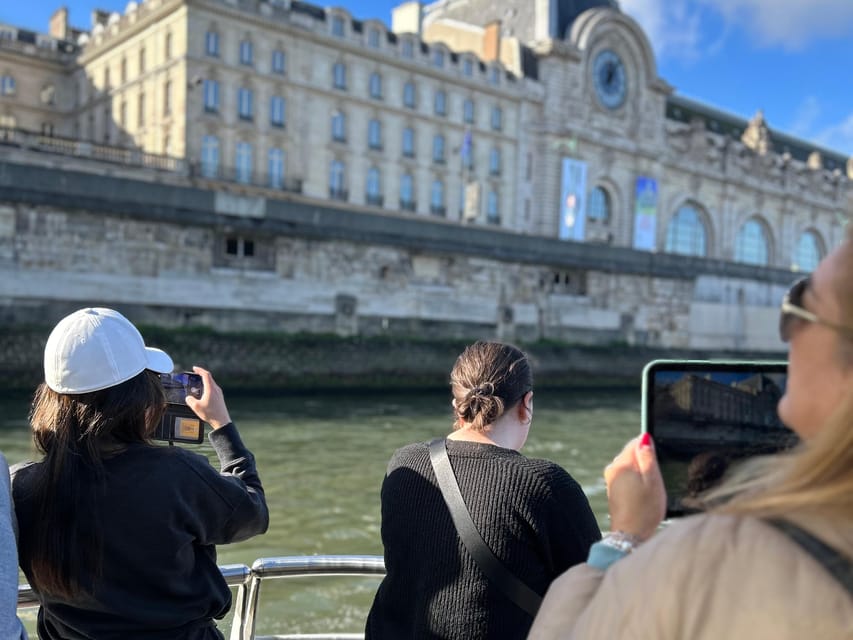
The Louvre stop covers Pont Royal and Pont du Carrousel, placing you close to one of Paris’s biggest attractions. This is a particularly practical use of Batobus because the museum can take most of a day, and the river gives you an easy way to continue afterward.
The Louvre holds centuries of art and culture, from ancient civilizations to Renaissance works. You cannot see it properly in a quick visit, so decide in advance how much time you want inside. If your plan includes the Louvre, a 48-hour pass gives you more room to stop, explore, eat, and board again without squeezing everything into one validity period.
From the river, you also get a broad view of the museum buildings and the bridges around them. The terrace is useful for photographs, but the glass-covered cabin is better when the weather turns poor.
Place de la Concorde and Invalides
The Place de la Concorde stop opens a grand stretch of central Paris. From here, you can walk across one of the city’s best-known squares and continue toward the luxury shops of Avenue Montaigne, the Grand Palais, or the Petit Palais.
This stop works well for a late afternoon route because you can combine open space, museums, and a long walk without committing to another underground journey. It is also a good point to get off if you want a more architectural view of Paris rather than another major indoor attraction.
The Invalides stop, at Port des Invalides, is near the Hôtel des Invalides and Napoleon’s tomb. Nearby Pont Alexandre III is one of the city’s most ornate bridges, and the river offers an excellent angle on its decoration.
Invalides is not included in the numbered pass highlights as a separate early stop, but it is one of the nine boarding locations and an important part of the route. Check the direction of travel before boarding. The river loop is easy to understand after one ride, but the wrong side or direction can cost you time.
Choosing 24 hours or 48 hours
The 24-hour pass costs $27 per person and is best for a concentrated sightseeing day. Start early, ride a full circuit to get your bearings, then use the service for two or three planned stops. It is also useful if you want one day without the Metro.
The 48-hour pass is the better choice if you dislike rushing. You can spend one day on the Eiffel Tower, Musée d’Orsay, and Saint-Germain side of the route, then use the second day for Notre-Dame, the Louvre, the Marais, and Invalides.
The pass is consecutive, not a total number of riding hours. Its validity begins when you first scan it on a boat, so do not activate it casually the night before you plan to sightsee. You can use the ticket up to 30 days after the booked date, which adds some flexibility.
At this price, the value depends on use. A single scenic ride may not justify the pass by itself, but repeated boarding plus transport between major sights can make $27 reasonable. The strongest value comes when you combine sightseeing, rest, and movement in the same ticket.
Practical details that affect your day
You can board at Port de la Bourdonnais, Musée d’Orsay, Saint-Germain-des-Prés, Notre-Dame, Invalides, Jardin des Plantes, Hôtel de Ville, Louvre, or Place de la Concorde. Scan your ticket each time you board.
Bring only what you need. Large bags and luggage are not allowed. Baby carriages are permitted only if they fold, and non-folding strollers are not allowed.
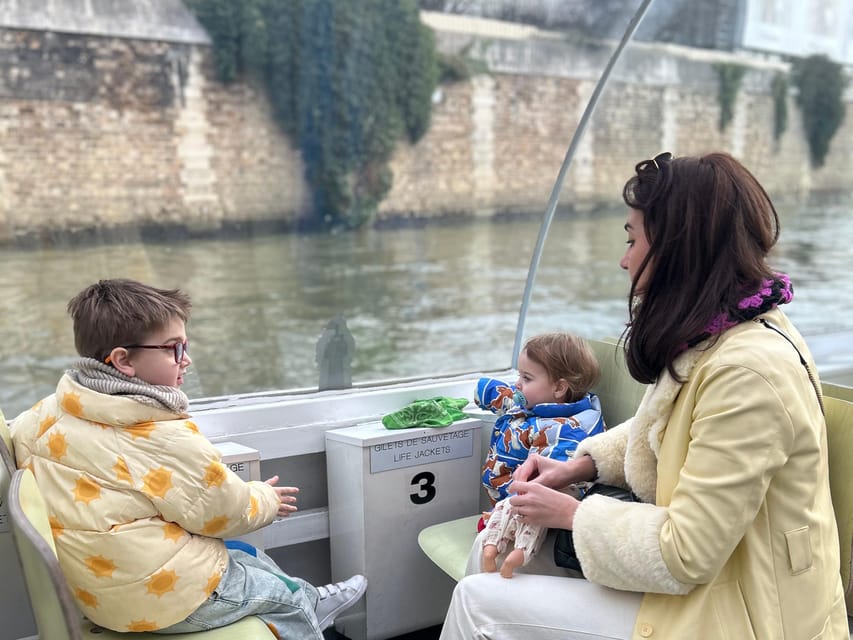
The service is not suitable for wheelchair users. Some people with mobility concerns found the boat gentler than the Metro, but seating and boarding conditions can vary. One practical issue is crowding: at busy times, children and pushchairs can make it harder to find a comfortable seat.
Seasonal hours matter. From November 3, 2025, through March 31, 2026, the first and last departures from the Eiffel Tower are listed as 10 a.m. to 5 p.m. Monday through Thursday, and 10 a.m. to 7 p.m. Friday through Sunday. Check the current schedule before planning a late ride.
Who will enjoy Batobus most
I would recommend it most strongly to first-time visitors who want the major sights without spending every hour underground. Families benefit from the chance to sit down between stops, and the river ride can be easier than managing Metro stairs with young children.
It also suits repeat visitors who want a slower look at Paris. You can use the stops to connect familiar museums with neighborhoods you might otherwise skip.
The pass is less suitable if you need fast point-to-point transport or want a detailed live guide explaining every building. The webapp helps, but you must use your phone, and the boats do not provide a conventional audio tour.
Should you book the Paris Batobus pass?
Book it if you want a relaxed way to connect the Eiffel Tower, Louvre, Notre-Dame, Musée d’Orsay, and central neighborhoods. The best plan is to choose 48 hours when your schedule allows it, ride the full loop once, and then use the boat selectively.
Choose 24 hours if you have one full sightseeing day and will board several times. Skip it if you mainly want a narrated cruise, need wheelchair access, or expect the fastest possible route across Paris.
For most visitors, Batobus earns its place through flexibility. You get transport, a Seine cruise, outdoor photo views, and a welcome pause from city streets in one pass.
FAQ
How long is the Batobus pass valid?
You can choose a 24-hour or 48-hour consecutive pass. Validity begins when you first use the ticket on a boat.
Where can I board the Batobus?
You can board at Tour Eiffel, Musée d’Orsay, Saint-Germain-des-Prés, Notre-Dame, Invalides, Jardin des Plantes, Hôtel de Ville, Louvre, or Place de la Concorde.
Does the pass include the Eiffel Tower or Louvre entrance?
No. The pass provides riverboat transport and stops near these attractions. Admission to museums and monuments is not included.
Is there commentary on the boat?
The experience includes an interactive webapp with information about monuments and nearby activities. It is available in English, French, Italian, Spanish, and German.
Is the boat heated?
Yes. The boats are heated and glass-covered, and they also have a terrace. The glass can feel hot in strong sunshine.
How often do the boats arrive?
Boats commonly arrive about every 20 to 25 minutes, though schedules can vary.
Can I bring a stroller?
You can bring a fold-up stroller. Non-folding strollers are not allowed.
Can I bring luggage or large bags?
No. Luggage and large bags are not allowed on board.
Is the service suitable for wheelchair users?
The experience is listed as not suitable for wheelchair users.
Just added around Paris
- Fashion Design Workshop & Brunch on a Seine River Boat Paris★ 5.0 · 2 reviews
- Eiffel Tower Guided Tour & Seine River Cruise★ 5.0 · 4 reviews
- Paris: Eiffel Tower Summit Access Tour and River Cruise★ 3.2 · 19 reviews
- Private 5-Hour Paris Tour with Local Guide + Seine Cruise★ 3.9 · 3 reviews
- Paris: Cruise from The Canal Saint Martin to The Seine River★ 4.6 · 224 reviews
- Paris: Seine River Private Cruise★ 5.0 · 237 reviews
- Private Tour, Luxury Eiffel Tower Lunch, Seine Cruise & Louvre★ 4.5 · 39 reviews
- Paris: 3-Course-Dinner Cruise with Wine on the Seine River★ 4.5 · 431 reviews
Seine River Cruises, compared.

1-Hour Seine Cruise departing from the Eiffel Tower
Read our review →
Seine Cruise & Crepe Tasting near the Eiffel Tower
Read our review →
Eiffel Tower Access by Elevator & Seine River Cruise
Read our review →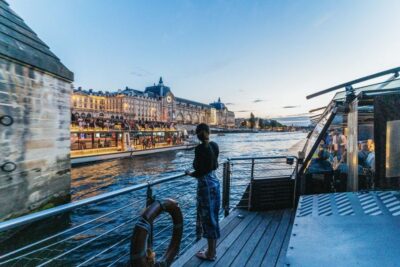
3-Course-Dinner Cruise on the Seine with live music
Read our review →
3-Course Gourmet Dinner Cruise on Seine River
Read our review →
2-Hour River Seine Lunch Cruise with 3-course-menu
Read our review →Browse the lists this tour appears in