
Review · NILE CRUISES
Private Tour: 7 Nights Pyramids & Nile Cruise +Flights from Cairo
Ancient Egypt comes at you fast. This 8-day package combines Cairo’s Pyramids, the Egyptian Museum, and Coptic Cairo with a 4-night Nile cruise from Luxor to Aswan, using domestic flights and private transfers to connect the pieces. I like the efficient route, and I like that airport pickups, hotel transfers, most meals, and major sightseeing are wrapped into one price.
The main caution is that the trip can feel tightly scheduled, and some important details may arrive late. Hotel and flight changes have caused frustration, while the cruise may spend more time tied up than first-time Nile cruisers expect.
The essential facts at a glance
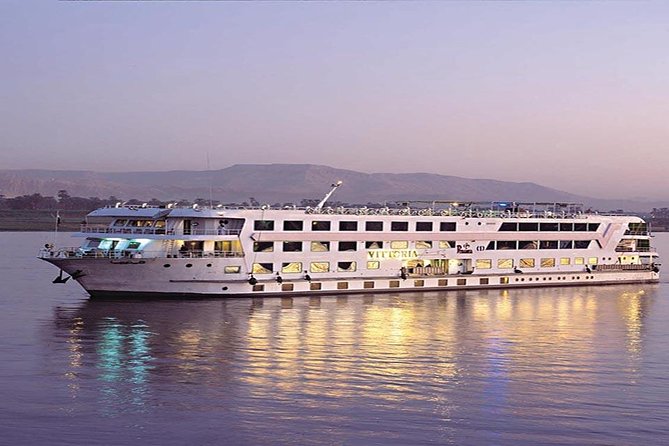
- Four nights on a five-star Nile cruise: Your ship links Luxor, Edfu, Kom Ombo, and Aswan, with full-board meals onboard.
- The classic Cairo sights are included: You visit the Great Pyramid, the Sphinx, the Egyptian Museum, Coptic Cairo, and Khan El Khalili.
- Domestic flights save long overland transfers: The route flies Cairo to Luxor, then Aswan back to Cairo.
- Private transfers reduce arrival stress: Representatives meet you at the airports and arrange air-conditioned transportation to hotels, ports, and airports.
- The price covers most major costs: At $1,500 per person, the package includes hotels, cruise accommodation, domestic flights, many meals, entrance tickets, guides, and transfers.
- Allow extra money for tips and optional activities: Tipping, Egypt’s entry visa, personal spending, and optional tours are not included.
Is $1,500 a good value?
At $1,500 per person, this is a strong package for someone who wants Egypt’s main sights without arranging every flight, hotel, transfer, and guide separately. Three nights in Cairo, four nights on a full-board cruise, domestic flights, entrance fees, and private transportation make the price easier to justify.
The value is especially good if you are visiting Egypt for the first time. Cairo traffic, airport procedures, hotel check-ins, and Nile cruise schedules can be tiring to manage alone. Here, a representative meets you on arrival, takes you to your hotel, and explains the next day’s plan.
Still, $1,500 is not the final spending figure. You need to budget for Egypt’s entry visa, tips, personal expenses, and optional tours. One person who added several extra day and evening activities spent about $500 more. You can skip those additions, but the base package focuses on the scheduled sights and does not fill every spare hour.
The most important value question is not just the price. It is how much you value having someone handle the connections. If you prefer independent travel and have time to compare hotels, flights, guides, and cruise ships, you may find a self-planned trip more flexible. If you want a ready-made route, this package removes much of the work.
More Nile Cruises in Cairo:
- Cairo: Dinner Cruise on the Nile River with Entertainment
★ 4.2 · 2,190 reviews - Cairo: Nile Dinner Cruise with Belly Dancer Show with Pickup
★ 4.4 · 835 reviews - Cairo: Dinner Cruise on the Nile River
★ 4.2 · 741 reviews
Cairo begins with pyramids, museums, and crowded lanes
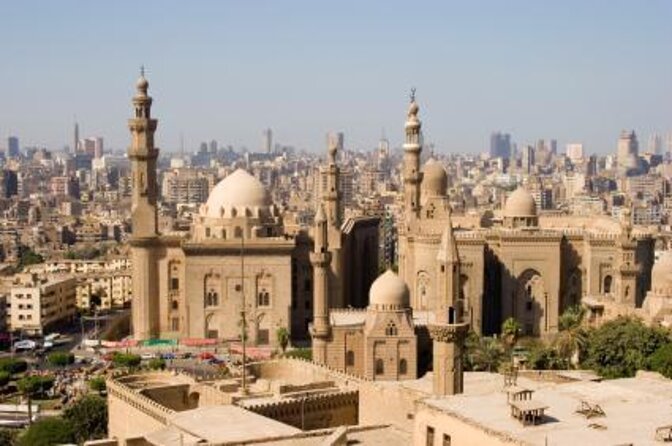
Your first day is mostly arrival and hotel check-in. A representative meets you at Cairo International Airport, provides a private transfer in an air-conditioned car, and gives information about the following day. The scheduled start time is listed as noon, but the first day’s timing depends on your arrival.
On day two, the Great Pyramid of Khufu is the headline act. You also see the pyramids of Khafre and Menkaure, the Sphinx, and the Valley Temple. The visit is scheduled for about two hours, so you should expect a focused introduction rather than unlimited time around every monument.
The scale of the pyramid complex is difficult to grasp in photographs. The Sphinx and Valley Temple add useful context, especially because the Valley Temple was linked with the mummification process of Khafre. If entering a pyramid matters to you, ask your guide about current availability and any extra charge before the visit.
The Egyptian Museum follows, with about two hours to see pharaonic objects including the Tutankhamun collection. Two hours goes quickly. I would listen closely to your guide’s explanation of the key pieces rather than trying to see every room at equal speed.
The afternoon continues to Coptic Cairo, where you visit the Hanging Church and Ben Ezra Synagogue. The day ends at Khan El Khalili, the old market area dating from 1382. This is a good contrast to the monumental sites. You move from royal tombs and statues to religious buildings and shop-lined lanes where bargaining is part of the experience.
Cairo is also the least predictable part of the trip. Traffic, crowds, shop visits, and persistent sales pitches can make the day feel noisy. Patience helps. A few people praised Cairo guides such as Mohamed Gaia, Mahamed, and Hesham for explaining sites clearly and helping with practical matters. The quality of the guide matters here because a good guide can turn a hectic day into a coherent story.
Flying to Luxor keeps the route moving
On day three, you leave your Cairo hotel and transfer to the airport for the flight to Luxor. The domestic flight is a major time saver. An overland journey would take much longer and would leave you with less time for the temples and cruise.
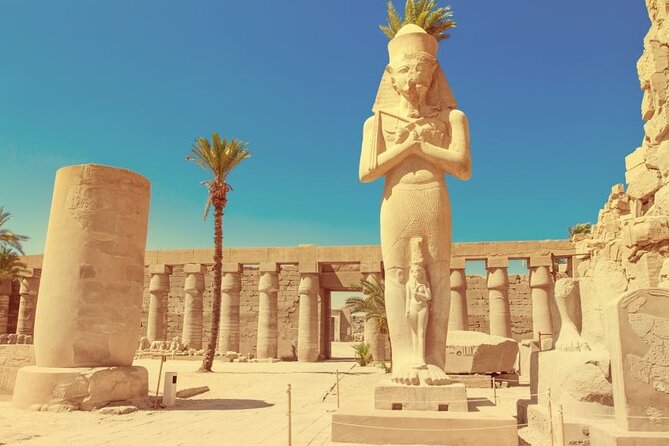
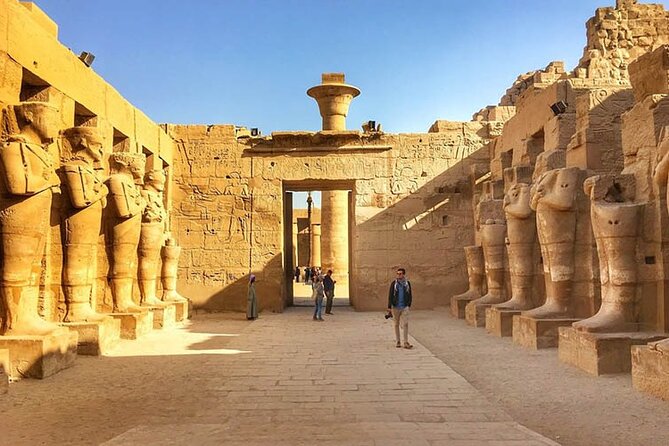
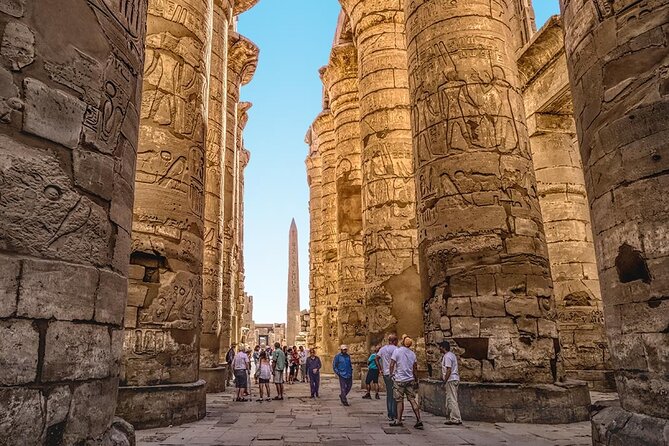
After meeting the Luxor representative, you board the Nile cruise ship and have lunch. The afternoon brings Karnak Temple and Luxor Temple, followed by dinner and your first night onboard.
Karnak is not one single building. It is a huge religious complex with courts, columns, gateways, and sacred spaces built and altered across many centuries. Luxor Temple feels more compact and easier to follow, with a direct connection to the city beside it. Seeing both on the same day gives you a useful first lesson in how Egyptian rulers used temples for worship, ceremony, and royal display.
The timing is practical but full. You may be tired from the flight and hotel checkout, yet the first afternoon packs in two major sites. I recommend carrying water, wearing shoes suited to uneven ground, and keeping your camera ready without letting photography replace the guide’s explanation.
The west bank gives you tombs, cliffs, and royal ambition
Day four crosses to Luxor’s west bank for the Valley of the Kings. The valley contains royal tombs, including those linked with Thutmose I, Thutmose III, Tutankhamun, Ramesses VI, Merenptah, and Amenhotep II.
Your admission normally covers the standard visit, but the number of tombs open and any photography rules can vary. One important practical point: a guide may assume you do not want to pay extra for photography inside the Valley of the Kings. Ask directly if taking photographs is important to you, since permission and fees may not be handled automatically.
The tombs are not all alike. Some are short and direct, while others lead farther into the rock. The paintings and carved texts are the reason to come, but the heat and walking make this a moderately active morning.
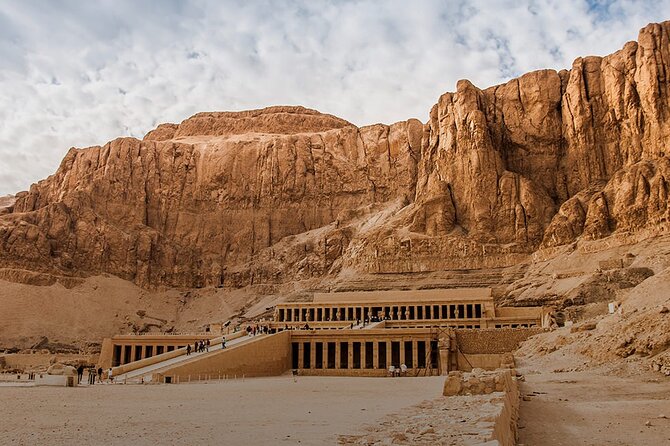
Next comes the Temple of Hatshepsut at Deir el Bahari. Built into the cliffs, its broad terraces create a dramatic setting and give the site a different feel from the enclosed tombs. The visit lasts about an hour, followed by a short stop at the Colossi of Memnon for photographs.
You then return to the ship for lunch and sail toward Edfu. This is one of the most appealing parts of the schedule: the morning is devoted to tombs and temples, then the afternoon shifts to the river and the changing view from the deck.
A few more river trips around Cairo worth comparing
- 2-Hour Nile River Dinner Cruise From Cairo
★ 4.5 · 672 reviews - ViP Private Effective Nile River Dinner Cruise in Cairo
★ 4.5 · 370 reviews - Nile River Dinner Cruise on a Yacht with Open Buffet
★ 4.5 · 292 reviews - Cairo Dinner Cruise in Nile River With Belly Dancer & Tanora show
★ 4.5 · 256 reviews
Life onboard is calm, but the ship may not sail constantly
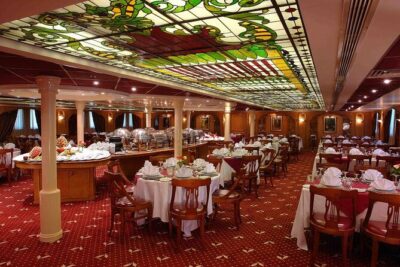
The cruise is sold as a five-day, four-night stay on a superior five-star ship with full-board meals. Breakfast, lunch, and dinner are included onboard, and the package lists four dinners, five lunches, and seven breakfasts across the trip.
Do not picture four straight days of continuous sailing. Nile cruise schedules depend on docking space and the movement of other ships. The itinerary can include long periods tied up, and some passengers have found that the ship remained in one place for much of the first two days. A neighboring vessel may block the cabin view, and engine noise can be noticeable when docked.
That does not make the cruise a poor choice. The ship gives you a comfortable base between early sightseeing stops, and the river is the thread that connects the major monuments. Just set your expectations correctly. You are buying a floating hotel and an organized route, not a nonstop scenic voyage.
Food is included, but bottled water has not always appeared as expected. I would carry extra water and confirm how much is supplied each day. Wi-Fi may require an additional payment, so do not assume you will have free internet throughout the cruise.
Edfu and Kom Ombo show Egypt beyond the famous icons
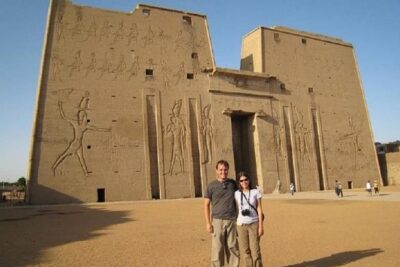
On day five, you visit the Temple of Horus at Edfu. This Ptolemaic temple is among the best-preserved major temples on the route, with large walls, carved scenes, and a strong sense of its original shape. A two-hour visit gives you time to walk through the main areas and hear how the temple was linked to Horus, the falcon-headed god.
The ship then continues to Kom Ombo. Its temple is unusual because it served two gods, Sobek and Horus. Sobek has a crocodile form, while Horus has the familiar falcon association. The paired design makes this site easy to remember, even after several days of monumental architecture.
Lunch is onboard, followed by continued sailing toward Aswan and dinner. These stops are shorter than Cairo’s pyramid visit, but they provide variety. You see different periods of Egyptian building and learn that the Nile route is not only about the most famous royal tombs.
Aswan closes the cruise with engineering and island temples
Day six begins with the Aswan High Dam. It is a modern engineering project rather than an ancient monument, and it controls much of Egypt’s water system. The stop gives you a useful reminder that the Nile remains a working river, not simply a backdrop for archaeological sites.
The Unfinished Obelisk comes next. The enormous stone was abandoned before completion, leaving visible evidence of how craftsmen shaped hard rock. The stated weight is 1,168 tonnes, which helps explain the scale of the undertaking.
The final major visit is Philae Temple, dedicated to Isis. The temple is associated with wisdom, marriage, and health, and its setting gives the stop a different character from the mainland temples. The visit lasts about two hours before you return to the ship.
The Aswan day is a good finish because it mixes modern infrastructure, ancient construction, and religious art. It is also another active sightseeing day, so comfortable clothing, sun protection, and water matter.
Returning to Cairo leaves little room for extras
After breakfast on day seven, you fly from Aswan back to Cairo and transfer to your hotel. This night is useful as a buffer before your international departure, but it is not a full sightseeing day.
Day eight is breakfast, checkout, and a private transfer to Cairo International Airport. The schedule provides seven breakfasts, but your departure time determines how much of that meal you can actually enjoy.
If you want extra Cairo visits, evening outings, or a Nubian village excursion, arrange them before the final days if possible. Optional tours cost extra, and the package does not promise a completely open schedule for additions.
Guides and service can make or break the trip
The strongest part of this experience is the human support. Several guides received praise for clear explanations, punctual pickups, patience with families, and help during unexpected problems. Names that received particular praise include Abdo, Mohamed Sayed, Mohammad, Ahmed Haroon, Youssef, Ismail, Allam, Hesham, Abdul, and Mohamed Gaia.
You should expect to work with different guides in Cairo, Luxor, and Aswan rather than one person for the entire journey. That can be helpful because local guides know their own sites, but the style may vary. Most service accounts describe guides as friendly and well informed, while one solo visitor found a Luxor guide intrusive and poor at explaining the daily plan.
Communication with the operator can also vary. WhatsApp contact was useful for some people when arranging the next day, but changes to flights, hotels, or the schedule were not always communicated before arrival. I would ask for the confirmed hotel names, flight times, cruise name, guide contacts, and day-by-day schedule before leaving home.
The tour is private for the sightseeing and transfers, but the cruise itself is a shared ship environment. That distinction matters if you want complete privacy. Children must be accompanied by an adult, and the company recommends a moderate level of physical fitness.
What to pack and what to budget
Pack light enough to manage airports, hotel changes, and ship boarding without help. Bring comfortable walking shoes, sun protection, a small day bag, and enough cash for tips and personal purchases.
Tipping is not included and is a normal part of service culture in Egypt. The precise amount is not given, so ask your tour representative for current guidance. You should also pay for the entry visa separately and keep money available for optional tours, souvenirs, drinks, photography fees, and possible Wi-Fi.
The package includes bottled water in its written inclusions, but at least one person did not receive it consistently. Carrying your own supply is sensible, especially on the west bank and around the open pyramid complex.
Who should book this Egypt package?
I would recommend it most strongly to a first-time visitor who wants the major sights with airport help, domestic flights, private transfers, and a guide at each important stop. Families can benefit from the organized transportation, and solo visitors may appreciate having someone meet them at every airport and hotel connection.
It is less suitable if you need full control over hotel quality, cruise selection, daily start times, or photography plans. It also may disappoint you if you expect the ship to sail constantly or if you want long, unhurried visits at every monument.
The overall rating is 4.7 from 157 ratings, with 93 percent recommending the experience. That matches the basic picture: the route is excellent, the included services offer good value, and the guides are often the trip’s strongest asset. The weak spots are late changes, uneven hotel or cruise details, extra costs, and a schedule that can feel rushed.
Should you book it?
Book this tour if you want Egypt’s classic route in eight days and value having the complicated pieces handled for you. The Pyramids, Egyptian Museum, Valley of the Kings, Karnak, Edfu, Kom Ombo, Philae, domestic flights, and Nile cruise create a powerful first visit for the price.
Before paying, ask for written confirmation of the hotel, cruise ship, domestic flight times, photography fees, bottled water arrangements, and any open time in Cairo. Bring cash for tips and extras, and accept that the Nile cruise includes docked periods. With those expectations in place, this is a sensible, well-priced introduction to Egypt.
FAQ
How long is the tour?
The tour lasts approximately eight days, with three nights in Cairo and four nights on a Nile cruise.
What cities does the tour visit?
The route includes Cairo, Luxor, Edfu, Kom Ombo, and Aswan.
Are domestic flights included?
Yes. The package includes flights from Cairo to Luxor, Aswan to Cairo, and the stated domestic flight arrangements connecting the itinerary.
Is the Nile cruise included?
Yes. Four nights on a superior five-star Nile cruise are included, with full-board meals.
Which Cairo attractions are included?
You visit the Great Pyramid of Khufu, the pyramids of Khafre and Menkaure, the Sphinx, the Valley Temple, the Egyptian Museum, the Hanging Church, Ben Ezra Synagogue, and Khan El Khalili.
Are meals included?
Yes. The package includes daily breakfast during the Cairo stays, full-board meals on the cruise, lunch during the Cairo touring, and the meals specified in the schedule. The listed totals are seven breakfasts, five lunches, and four dinners.
Are tips and the Egypt entry visa included?
No. The entry visa, tipping, personal expenses, and optional tours are excluded.
Can the booking be canceled for a full refund?
Yes, if you cancel at least 24 hours before the local start time. Cancellations made less than 24 hours before the start time are not refunded, and weather-related cancellations offer a different date or a full refund.
Just added around Cairo
- night-tour Nile dinner cruise with open buffet and belly dancer★ 5.0 · 9 reviews
- Dinner Nile Cruise belly dancer open buffer tanora show sailing on Nile★ 5.0 · 9 reviews
- 8 Day Stunning Cairo Pyramids and Nile cruise and Hurghada All inclusive★ 5.0 · 43 reviews
- Cairo dinner Nile cruise with belly dancer show on Nile river★ 5.0 · 2 reviews
- Cairo Private layover tour Giza pyramids,sphinx&Nile Felucca Boat★ 4.5 · 13 reviews
- Private Full Day Tour Giza Pyramids ,Museum & Nile Felucca Boat★ 4.0 · 3 reviews
- Private Tour Giza Pyramids , Sphinx & Dinner Nile cruise Show★ 4.5 · 3 reviews
- VIP Private Tour Giza Pyramids ,Nile Dinner Cruise&Pyramid Inside★ 5.0 · 3 reviews
Nile Cruises, compared.
4-Days Nile Cruise From Aswan To Luxor including Abu Simbel and Hot Air Balloon
Read our review →
Dinner Cruise on the Nile River with Entertainment
Read our review →
4-Day 3-Night Nile Cruise from Aswan to Luxor&Abu Simbel+Balloon
Read our review →
Nile Dinner Cruise with Belly Dancer Show with Pickup
Read our review →
4-Day 3-Night Nile Cruise from Aswan to Luxor including Abu Simbel, Air Balloon
Read our review →
4-Day Nile Cruise from Aswan to Luxor with Guide
Read our review →Browse the lists this tour appears in