
Review · NILE CRUISES
10 Day Ultimate Egypt Tour & Nile Cruise From Luxor to Aswan & Abu Simbel Inc
Ancient Egypt rewards a well-planned route. This 10-day program links Cairo, Luxor, Aswan, and Abu Simbel with an Egyptologist guide, a four-night Nile cruise, and included entry to the major sites. I especially like the excellent coverage of Egypt’s essential sights and the fact that meals, admissions, and transfers are bundled into one price. The main caution is hotel consistency, since one account describes several nights in very poor accommodation despite excellent guides.
This is a private experience for your own group, with pickup offered and a stated start time of 8:00 a.m. The 4.8 rating from 39 reviews and 97 percent recommendation rate point to a strong overall experience, but I would still confirm the exact hotels, cruise ship, and domestic flight arrangements before paying $2,905 per person.
Key reasons this Egypt itinerary works
- Four nights on the Nile: The cruise links Luxor, Edfu, Kom Ombo, and Aswan without requiring you to change hotels each night.
- Cairo’s main ancient and Islamic sights: You visit Giza, Saqqara, Memphis, the Egyptian Museum, Coptic Cairo, the Citadel, and Khan Al-Khalili.
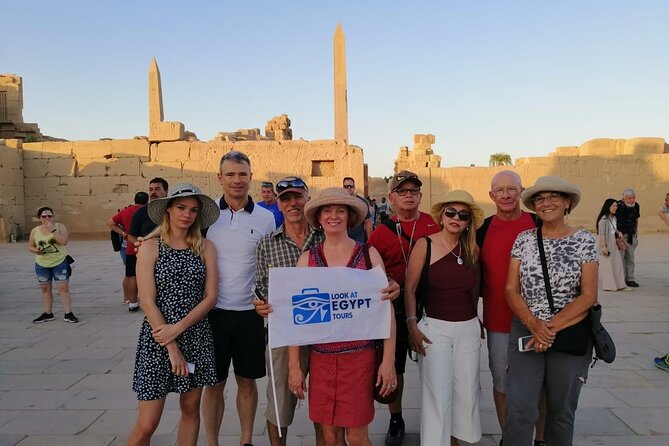
- A guide stays with you: An Egyptologist accompanies the program, giving context to temples, tombs, and royal monuments.
- Abu Simbel is included: The long nine-hour excursion reaches one of Egypt’s most memorable temple complexes.
- Meals and admission fees are covered: Seven lunches, four dinners, eight breakfasts, and entrance tickets are included.
- Private group format: Only your group participates, which may make the long days and transport easier to manage.
Cairo begins with pyramids, tombs, and a little dust
Your first day is mostly arrival day. Airport assistance helps with formalities, then you transfer to your hotel for the night. Since the schedule begins early the next morning, I would treat this as a recovery evening rather than plan anything ambitious.
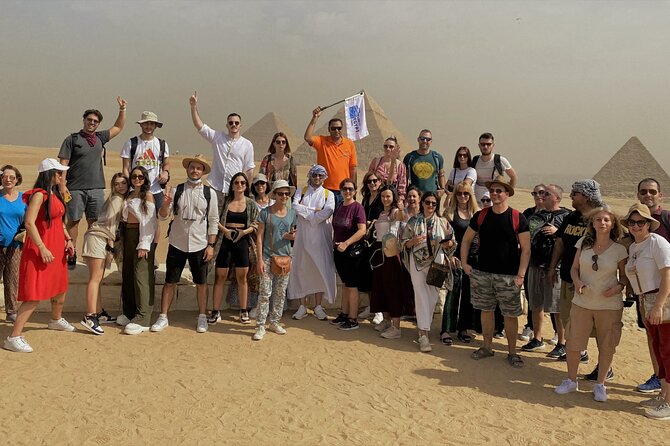
Day two goes straight to Egypt’s headline attraction: the Giza Plateau. You have about three hours for the Great Pyramids and Sphinx, with admission included. This is not a box-ticking stop. The scale is hard to grasp until you are close to the stone blocks, and the Sphinx gives the visit a second focal point beyond the pyramids themselves.
You will have time for photographs, but ask your guide how much free time is available around the plateau. The pyramids can feel rushed if you want to enter one, take several photographs, and listen to a full explanation. Any special pyramid entry should also be confirmed, since standard admission does not always cover every interior space.
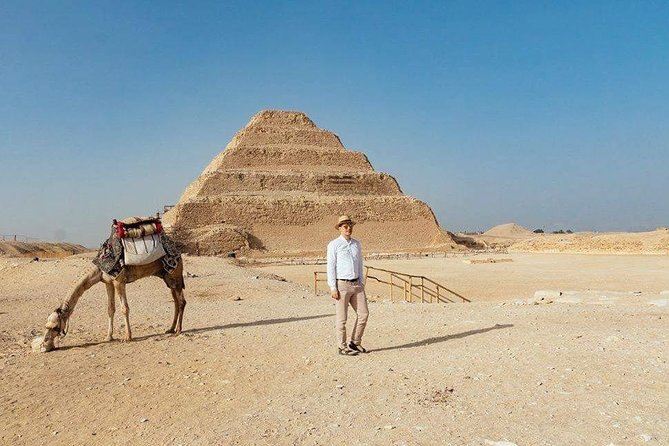
The route then moves to Saqqara and the Step Pyramid of Djoser. Built for the Third Dynasty ruler Djoser, it is generally regarded as Egypt’s earliest major stone monument. Its six rising levels show an early stage in pyramid design, before the smooth-sided form seen at Giza became standard.
Saqqara rewards attention. It is less instantly recognizable than Giza, but the site explains how Egyptian burial architecture developed. The visit also includes newly found tombs in the wider Saqqara area, according to the tour description, which adds a timely element to the stop.
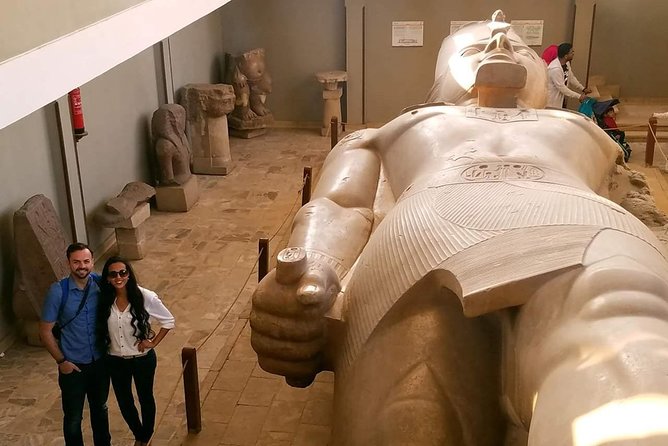
You continue to Memphis, the ancient capital of Lower Egypt. The open-air remains include the large statue of Ramses II and an alabaster sphinx associated with Hatshepsut. Memphis is not as visually intact as Giza, yet it helps explain the political importance of the region. Allow yourself to focus on the surviving sculpture rather than expecting a complete city.
Day three switches from open-air monuments to Cairo’s museums and old quarters. The Museum of Egyptian Antiquities contains about 120,000 objects, though only a portion is displayed at any one time. Two hours is enough for a guided introduction to major pieces, but not enough to examine everything. Let your guide set priorities and do not try to read every label.
Coptic Cairo follows, with the Babylon Fortress, the Coptic Museum, the Hanging Church, and the Greek Church of St. George among its historic sites. This stop adds Christian Egypt to the better-known pharaonic story. One hour is brief, so you should ask which buildings are included in your actual visit.
The Cairo Citadel occupies a hill above the city and once benefited from cooler air and broad views. Its importance is both defensive and religious, and it gives you a different sense of Cairo’s medieval Islamic period.
The day ends at Khan Al-Khalili, the famous bazaar in historic Islamic Cairo. One hour is enough for a first look, but not for a leisurely market wander. Expect shops, narrow lanes, and persistent sales pitches. If you want a particular souvenir, set a budget before entering and ask your guide for advice on prices.
More Nile Cruises in Cairo:
- Cairo: Dinner Cruise on the Nile River with Entertainment
★ 4.2 · 2,190 reviews - Cairo: Nile Dinner Cruise with Belly Dancer Show with Pickup
★ 4.4 · 835 reviews - Cairo: Dinner Cruise on the Nile River
★ 4.2 · 741 reviews
Luxor brings museums before the temple circuit
Day four includes the flight from Cairo to Luxor, followed by the Luxor Museum and Mummification Museum. The schedule names a two-hour visit at Luxor Museum, a sensible choice because its collection is smaller and more carefully arranged than Cairo’s huge museum.
The exhibits come largely from temples and burial sites around Thebes. You can expect a more controlled introduction to Luxor’s art and royal culture, with displays that are easier to absorb after the broad sweep of Cairo.
The Mummification Museum is listed as a one-minute stop, which is almost certainly a scheduling error or an extremely brief visit. In practice, confirm how much time is intended. The museum explains embalming methods and displays tools, painted coffins, mummified animals, and the mummy of the 21st Dynasty high priest Maserharti. A small statue of Anubis, the jackal-headed god linked with embalming, greets you at the entrance.
That museum is useful because it turns mummification from a vague idea into a practical process. If your interest is strong, you will want more than a token stop, so this is one of the itinerary details worth clarifying.
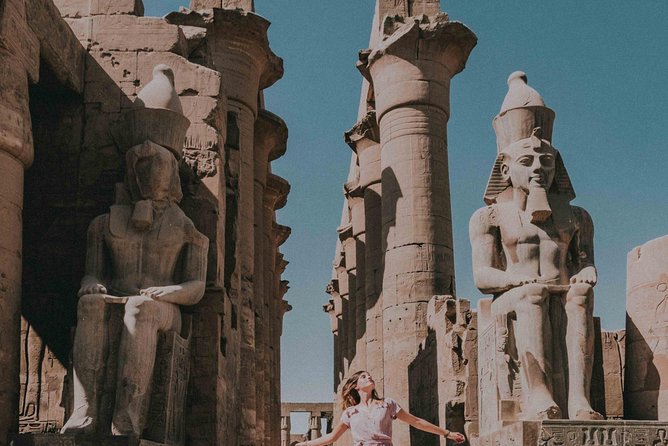
Day five covers the east bank of Luxor, beginning with Karnak Temple. Two hours gives you time to see the monumental avenues, columns, and sacred precincts, though the complex is large enough to reward a longer visit. Karnak grew over many centuries and was dedicated chiefly to Amun, making it one of the best places to see how successive rulers added to an existing religious center.
Luxor Temple follows for about an hour. Unlike Karnak, it sits within the modern city, which makes the contrast striking. Its setting helps you see how ancient monuments remain part of present-day Luxor rather than isolated museum pieces.
These two temples work well together. Karnak gives you scale and layers of construction, while Luxor Temple feels more compact and direct. Wear practical footwear and carry water, since the stops involve walking across broad stone surfaces.
The Valley of the Kings requires smart choices
Day six crosses to Luxor’s west bank for the Valley of the Kings, the burial ground of many New Kingdom pharaohs. A standard ticket allows entry to three tombs, but Tutankhamun’s tomb requires a separate ticket.
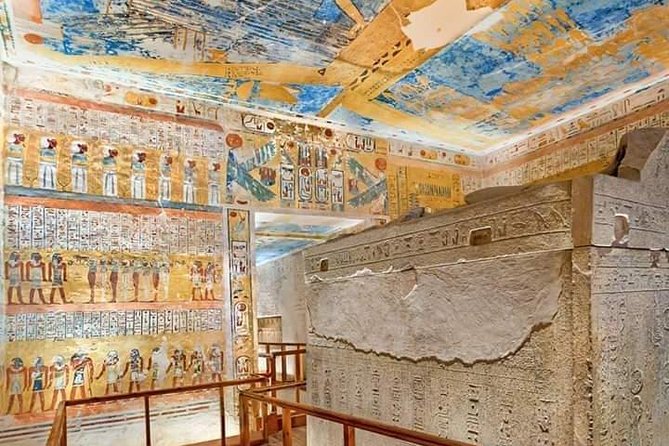
You will also find the tomb of Ramses IV among the accessible choices. The wall paintings and reliefs are the real prize, though the tombs have suffered from flooding, earlier looting, humidity, and heavy foot traffic. Photography rules can change, and flash photography is damaging, so follow the current instructions carefully.
Three hours gives you a useful amount of time, but the heat and walking can wear you down. Ask the guide which three tombs are open and which offer the best art on that day. Conditions vary, and some tombs may be closed for preservation.
The Temple of Hatshepsut at Deir el-Bahari follows. Its broad terraces rise against the cliffs, giving the monument a memorable setting. Hatshepsut ruled Egypt for about 16 years and presented herself as a male king, a decision tied to the political expectations of her time. Later damage removed many images and references to her, but the surviving structure still conveys her ambition.
The Colossi of Memnon are a shorter roadside-style stop, with two huge statues of Amenhotep III. They have watched over the Theban Necropolis for roughly 3,400 years. Do not expect a full visit here. The value is in seeing their size and position as part of the west bank route.
The Nile cruise turns long transfers into part of the trip
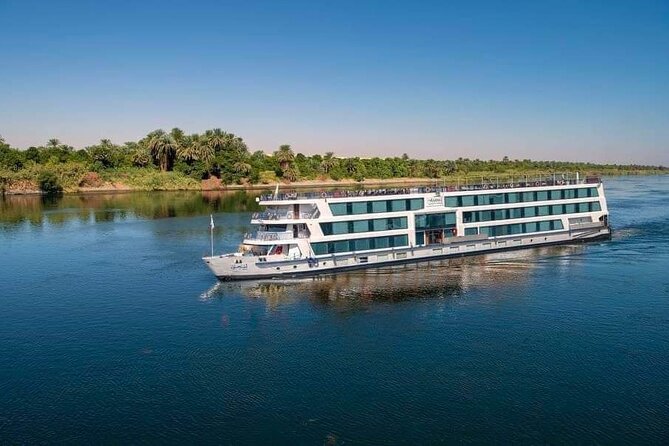
The four-night cruise is the organizing feature of the second half of this program. Instead of moving by road between every Upper Egyptian site, you travel by river while your accommodation moves with you. Full board is included on the cruise, with the vessel listed as MS Blue Shadow, MS Concerto, or a similar ship.
The exact ship matters. A similar vessel may not have identical cabins, deck space, or dining arrangements, so I would request the confirmed ship name before departure. The cruise is listed as five-star, but that label can vary between Egyptian operators. Ask for the cabin category and what similar means in this case.
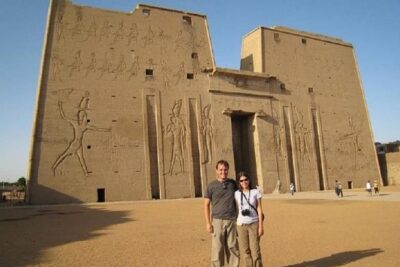
Day seven includes the Temple of Horus at Edfu, followed by Kom Ombo. Edfu was built during the Ptolemaic period between 237 and 57 BC and remains unusually complete because desert sand buried much of it after pagan worship ended. Its roof is intact, and the enclosed spaces can feel especially atmospheric.
The temple honors Horus, the falcon god and son of Isis and Osiris. Three hours allows you to study the reliefs and court without sprinting through the complex.
Kom Ombo is distinctive because it is a double temple. One section honors Sobek, the crocodile god, while the other is associated with Horus. The arrangement makes the site easy to remember, and two hours should give you enough time to understand its unusual layout and religious pairings.
The cruise also gives you a slower day between major monuments. That matters in Egypt, where several sites involve heat, stairs, uneven ground, and long explanations. Still, the schedule remains active, so do not assume the cruise is a fully restful holiday.
More Abu Simbel and Nile Cruise Tours in Cairo:
- 3 Night Luxor and Aswan Nile Cruise with Hot Air Balloon, Abu Simbel from Luxor
★ 5.0 · 76 reviews - Egypt 8 Day :Cairo, Aswan , Nile Cruise , Luxor, Abu Simbel,Hotel
★ 5.0 · 42 reviews - Egypt 9 Days- Cairo Pyramids and Nile Cruise from Luxor to Aswan and Abu Simbel
★ 5.0 · 36 reviews - 4 Day Luxor&Aswan Nile cruise&Abu Simbel by plane from Cairo.Hot deal
★ 5.0 · 31 reviews
Abu Simbel is the longest and most rewarding day
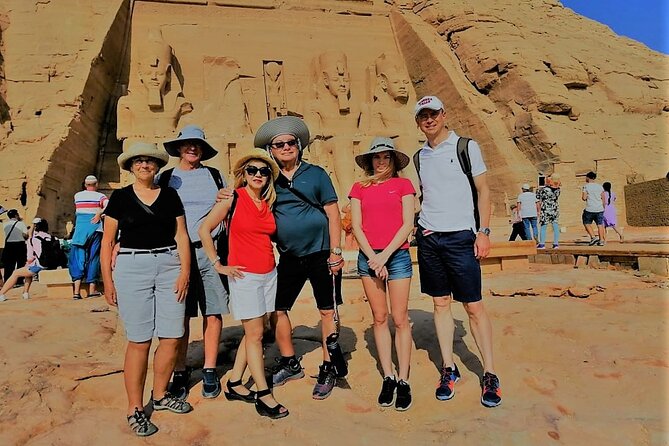
Day eight is devoted to Abu Simbel, with about nine hours assigned to the excursion. The two temples were cut into rock near the border with Sudan, on the western bank of Lake Nasser, about 230 kilometers southwest of Aswan.
The journey is the price of admission in practical terms. This is the longest day of the itinerary, and you should expect an early start and limited downtime. The payoff is the scale of the seated royal figures and the carved interiors, which make Abu Simbel unlike the temples along the main Nile route.
Because the day is so long, bring water, sun protection, and anything you need for the road. Confirm exactly how the transfer is arranged and how much time is spent at the temples. The tour includes entrance admission, but the schedule does not provide a detailed transport description.
Day nine begins with checkout after breakfast and the flight back to Cairo. Day ten is reserved for airport escort. This ending is efficient, though it leaves little room for delays. I would avoid booking an international flight too close to the stated airport transfer unless the operator confirms the timing.
What the $2,905 price really covers
At $2,905 per person, this is not a bargain-basement Egypt package. Its value comes from bundling the expensive and complicated pieces: a private guide, domestic transfers, a four-night full-board Nile cruise, entrance tickets, airport assistance, hotel nights, and most listed meals.
Included meals are seven lunches, four dinners, and eight breakfasts. The wording does not specify every hotel meal or every meal on travel days, so ask for a day-by-day meal chart before booking. Also confirm whether the Cairo to Luxor and Aswan to Cairo flights are included in the price or simply part of the planned route. The itinerary includes those flights, but the inclusion list does not clearly name airfare.
The strongest part of the cost is the guide. Egypt’s monuments make more sense when someone explains the gods, royal succession, burial customs, and layers of construction. The high rating and 97 percent recommendation rate support the view that guiding is a major strength.
The weak point is accommodation certainty. One serious account praised the guides but described several hotel nights as extremely dirty and said a requested room change was refused despite apparently empty rooms. That is not a small complaint. Get the hotel names in writing, ask what star category applies to each night, and request the process for handling room problems.
Who should book this Egypt trip?
I would choose this program if you want the major Egyptian sights in one organized route and prefer having an Egyptologist manage the details. It suits first-time visitors who want Cairo, Luxor, the Nile, Aswan, and Abu Simbel without arranging separate hotels, guides, tickets, and transfers.
It also works well for families or friends who value a private format. Only your group participates, and children must be accompanied by an adult. Most people can take part, but the long Abu Simbel day, hot temple grounds, and repeated walking deserve honest consideration.
I would hesitate if you need guaranteed luxury standards, a slow pace, or plenty of independent time. The program covers a lot in 10 days, and the schedule is ambitious. Before booking, confirm the hotels, cruise ship, flights, room arrangements, and the actual time allocated to the Mummification Museum.
Cancellation is generous only when handled early: cancel at least six full days before the start for a full refund. A cancellation two to six days before departure receives a 50 percent refund, while cancellations less than two full days before the start are nonrefundable.
Should you book the Ultimate Egypt Tour?
Book it if you want maximum historical coverage with a private guide and Nile cruise and you are comfortable with several early starts and long touring days. The route includes the monuments most first-time visitors hope to see, plus Saqqara, Coptic Cairo, the Mummification Museum, Edfu, Kom Ombo, and Abu Simbel.
My advice is to book only after getting the accommodation and airfare details confirmed in writing. If those pieces are clear and acceptable, the package offers strong practical value. If hotel quality is your top concern, compare alternatives before committing the full $2,905.
FAQ
How long is the Egypt tour?
The experience lasts approximately 10 days, beginning with arrival assistance in Cairo and ending with an airport escort on day 10.
Is the Nile cruise included?
Yes. The package includes a four-night full-board Nile cruise aboard MS Blue Shadow, MS Concerto, or a similar ship.
Which cities and regions does the tour visit?
The route includes Cairo, Giza, Saqqara, Memphis, Luxor, Edfu, Kom Ombo, Aswan, and Abu Simbel.
Is a guide included?
Yes. A qualified Egyptologist guide accompanies the tour.
Are entrance fees included?
Yes. Admission tickets are included for the listed attractions, including the pyramids, Saqqara, Cairo sights, Luxor monuments, Valley of the Kings, Edfu, Kom Ombo, and Abu Simbel.
How many meals are included?
The package includes seven lunches, four dinners, and eight breakfasts. The information provided does not specify every meal on every travel day.
Is this a private tour?
Yes. Only your group participates. Pickup is offered, the stated start time is 8:00 a.m., and round-trip private transfers are included.
Just added around Cairo
- night-tour Nile dinner cruise with open buffet and belly dancer★ 5.0 · 9 reviews
- Dinner Nile Cruise belly dancer open buffer tanora show sailing on Nile★ 5.0 · 9 reviews
- 8 Day Stunning Cairo Pyramids and Nile cruise and Hurghada All inclusive★ 5.0 · 43 reviews
- Private Full Day Tour Giza Pyramids ,Museum & Nile Felucca Boat★ 4.0 · 3 reviews
- Cairo dinner Nile cruise with belly dancer show on Nile river★ 5.0 · 2 reviews
- Cairo Private layover tour Giza pyramids,sphinx&Nile Felucca Boat★ 4.5 · 13 reviews
- Private Tour Giza Pyramids , Sphinx & Dinner Nile cruise Show★ 4.5 · 3 reviews
- VIP Private Tour Giza Pyramids ,Nile Dinner Cruise&Pyramid Inside★ 5.0 · 3 reviews
Nile Cruises, compared.
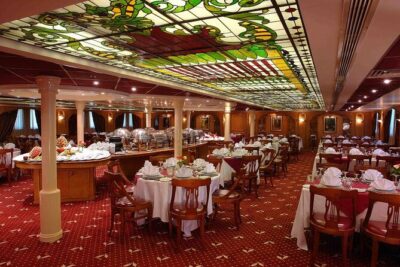
4-Days Nile Cruise From Aswan To Luxor including Abu Simbel and Hot Air Balloon
Read our review →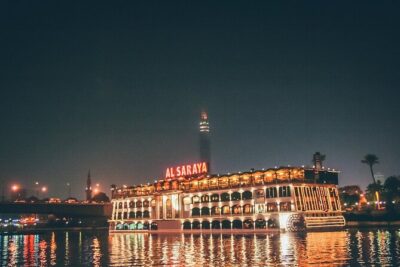
Dinner Cruise on the Nile River with Entertainment
Read our review →
4-Day 3-Night Nile Cruise from Aswan to Luxor&Abu Simbel+Balloon
Read our review →
Nile Dinner Cruise with Belly Dancer Show with Pickup
Read our review →
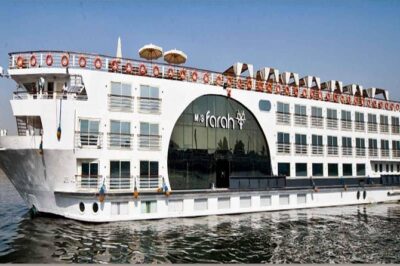
4-Day 3-Night Nile Cruise from Aswan to Luxor including Abu Simbel, Air Balloon
Read our review →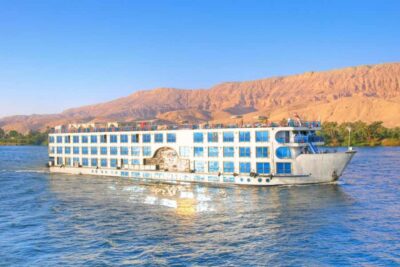
4-Day Nile Cruise from Aswan to Luxor with Guide
Read our review →Browse the lists this tour appears in